Are Night Vision Scopes Legal in California?
Wondering if you can legally own or use night vision scopes in California? The answer depends on how you plan to use them.
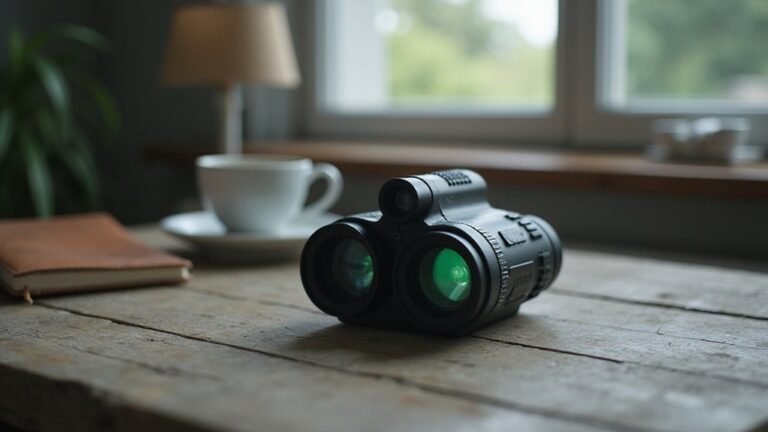
You can own handheld night vision devices for hobbies like stargazing or wildlife watching, but mounting one on a firearm crosses into illegal territory.
Stay tuned—this article will explain the rules around night vision scopes and how to avoid running into trouble with California law.
The Short Answer: Are Night Vision Scopes Legal or Illegal?
Night vision scopes are generally illegal for firearm use in California under Penal Code Section 468’s “sniperscope” definition. However, owning them for non-firearm purposes—such as wildlife watching, navigation, or security—is legal as long as you do not mount them on a gun. The law specifically targets devices adapted for firearms, such as those that fit a rifle, utilize infrared illumination, and incorporate electronic telescopes. If you possess a device that meets these criteria, you risk violating the law. Conversely, if you keep the device in your hand or use it for stargazing, you remain within legal boundaries. The key factor is whether the device is designed or intended for firearm use—intent or capability can be used as evidence of illegal possession. For context, understanding the difference between night vision and thermal imaging technologies can help you choose a legal non-firearm device for activities like wildlife observation. This distinction is important because the technology works by amplifying ambient light rather than detecting heat signatures, which influences what devices are legally classified for non-firearm use. Even if you legally own a night vision scope for stargazing, avoid carrying it near hunting areas where spotlighting deer is prohibited, as game wardens may view the device’s infrared capability as evidence of illegal hunting intent.
What Exactly Is a “sniperscope” Under PC 468?
A “sniperscope” under California Penal Code section 468 is specifically defined as a device that combines three elements: it must be mounted on a firearm, incorporate an active infrared (IR) light source to project infrared light, and include an electronic telescope or magnification system for nighttime targeting. This means the device isn’t just any scope or night vision equipment; it must actively emit infrared light to illuminate targets in darkness while providing a magnified view. For example, a DIY night vision camera built for non-firearm use would not meet this definition, as it typically employs passive night vision or thermal imaging instead of an active IR projection system. This precise combination of features targets older systems that use active IR illumination, differentiating them from passive night vision or thermal imaging devices, which do not emit infrared light themselves. If a scope lacks the IR projection or the electronic telescope component, it does not meet the legal definition of a sniperscope under PC 468. Understanding this helps you identify whether a device falls within this specific legal category, which is relevant for compliance and legal considerations. For those seeking a modern alternative, reviews of top night vision goggles with multiple lenses compare quality and performance for non-firearm use. For added protection when using such military-style equipment, reviewing top ballistic helmets with face shields is a practical step for safety.
When Owning a Night Vision Scope Becomes Illegal
Owning a night vision scope becomes illegal in California once it qualifies as a “sniperscope” under Penal Code section 468 and is mounted to a firearm. Simply attaching or possessing one with the intent to use it on a gun constitutes a misdemeanor. The penalty can be up to $1,000 in fines or a year in jail, regardless of whether the device is mounted or not. Courts have upheld that the law targets firearm adaptations, not standalone devices. Technological advances make it easier to create sophisticated night vision optics, but the law remains unchanged—adding infrared or electronic telescopes to a gun still counts as a crime. For example, if you follow a setup guide for Tactacam to mount a similar device on a firearm, the same legal restrictions apply. Carrying the scope with a rifle or modifying it for firearm mounting—even without it being attached—can also be considered illegal if there is evidence of firearm use. Exceptions exist only for law enforcement, military, scientific research, or educational purposes. For everyone else, keeping your night vision scope separate from any firearm is the safest way to avoid legal trouble. If you build a custom drone for surveillance, integrating your night vision scope onto a firearm mounted to the drone would also violate this law, just as attaching it to a thermal drone would. Unlike a dedicated gun-mounted scope, Xfinity cameras use infrared technology for home security night vision, which is not subject to these firearm restrictions.

Strike from the Darkness: Meet NVMD (Night Vision Multi-Purpose Device), your ultimate all-in-one digital night vision solution. From Red Dot Magnifier to Standalone Scope, Clip-On and Action Camera, it excels in every mode. Engineered for tactical shooters and hunters, it combines precision, reliability, and versatility—so you can perform like a pro, anytime, anywhere.

Premier Thermal Scope for Hunters Who Want It All: Combining Standalone Scope, Clip-On, Handheld Monocular, Laser Rangefinder, Ballistic Calculator, and 50 mm Objective Lens in one versatile device, the HS650R offers the ultimate thermal solution for hunters who demand unmatched precision, clarity, and performance in the field.

High-End Thermal Scope for Professionals: Combining Standalone Scope, Clip-On, Handheld Monocular, Laser Rangefinder, and Ballistic Calculator in one versatile device, the HS635R offers advanced targeting precision and reliable performance. Designed for professional hunters, it ensures accurate detection, long-range engagement, and effortless operation across diverse hunting scenarios.
Mounted vs. Handheld: Why the Law Treats Them So Differently
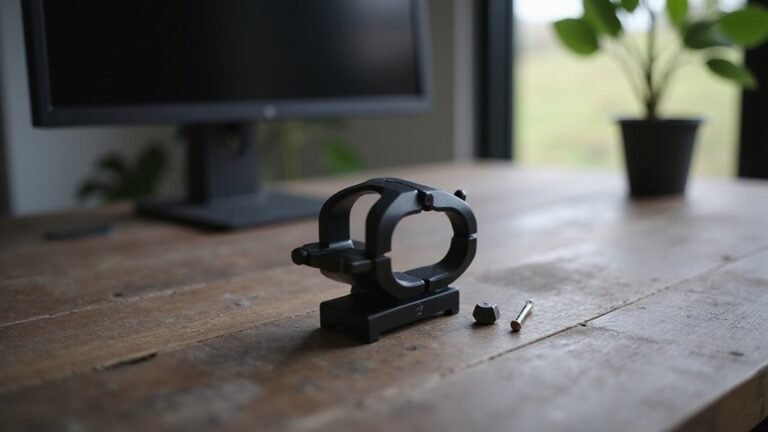
Mounting a scope onto a rifle transforms a legal optical accessory into a prohibited weapon aid because California’s law targets devices “adapted for use on a firearm.” When you attach a night vision scope, you move from passive observation to aiming assistance, which the law considers an enhancement for firearm use. Simply holding a night vision device without attaching it to a weapon remains legal for activities like wildlife watching or security because you are not physically linked to the firearm. The key difference lies in the physical coupling: a mounted scope creates a direct connection between the device and the firearm barrel, making it legally equivalent to an aiming device. A twist of a screw can turn an otherwise passive optical tool into a targeting system, elevating your legal risk. To stay within the law, keep your night vision device handheld and separate from any firearm attachment. This distinction aligns with the regulation’s requirement that a device must be designed or intended for mounting on a firearm to qualify as a restricted sniper scope.
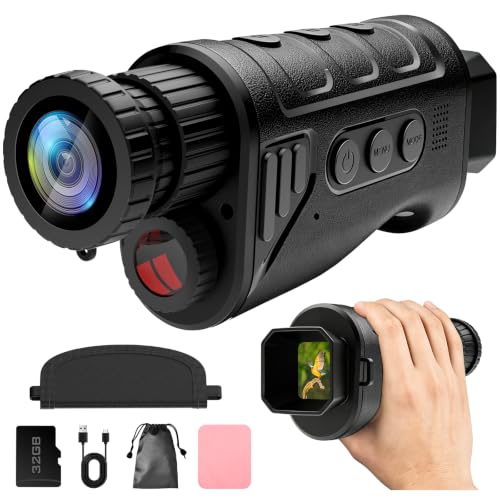
Upgraded 7 Levels IR Provides 12MP In The Dark: Night vision monocular for adults features the latest 12W 850nm infrared technology and 7 levels of adjustable infrared brightness, designed for low-light environments. Whether you're hiking at night, camping in a dark forest, or patrolling your yard at night, it provides clear and bright images, and the higher the IR level, the clearer the target in the dark

Day or Night Viewing - Capture video in both daytime and nighttime modes. Store files directly to a microSD card for easy viewing and sharing.
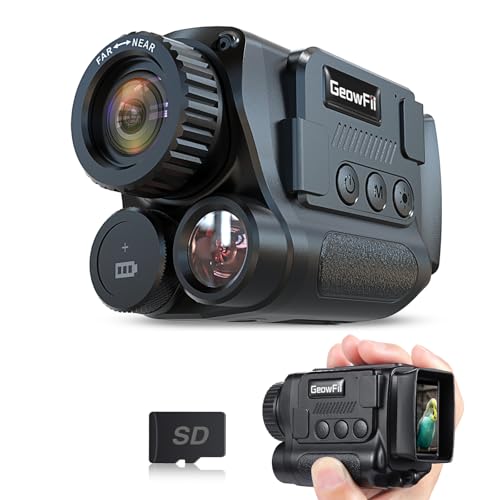
4K Upgraded & Practical—— GeowFiiTech Night Vision Monocular features a 4K version with a 25mm multi-coated lens, enhancing imaging for day and night use. With 4K video, 40MP photos, and essential functions, this monocular night vision meets outdoor needs effectively
Why Hunting With Night Vision Faces Stricter Rules
California categorically prohibits the use of night vision devices for hunting, regardless of whether you legally own them. While owning a night vision device is not illegal for general purposes, using one during hunting is strictly forbidden in the field. State law makes a clear distinction: possession of the device at home remains legal, but once you step into the field with the intent to hunt, that same device becomes a prohibited tool. This restriction stems from concerns over technological advancements that give hunters an unfair advantage by illuminating or detecting wildlife in darkness. Such advantages could undermine the principles of wildlife conservation by encouraging overharvest and disrupting natural behaviors. As a result, night vision optics are limited to observation in California—legal to own and carry for watching wildlife, but strictly off-limits during any hunting activity, especially for game animals. The law enforces this by limiting permitted hunting hours to daylight only, ensuring that night vision devices cannot be used to hunt in darkness. For those choosing between devices like the PVS-14 and PVS-31, the legal restrictions in California make such performance comparisons irrelevant for hunting purposes.
Active IR vs. Passive Night Vision: Which Triggers the Law?
Passive night vision devices do not trigger the law because they do not emit any infrared light or projected sources. These devices simply amplify ambient light and do not produce an infrared beam, so they fall outside the scope of the prohibition. However, if you add an infrared illuminator or mount a passive optic on a firearm, the device can be considered active IR equipment, which reintroduces legal ambiguity. Unlike thermal cameras, which detect heat but cannot see through clothes due to fabric blocking heat signatures, passive night vision relies on light amplification and does not project IR. The thermal imager instead detects temperature differences and creates a visual representation of heat patterns. The law specifically targets devices with active IR projection rather than passive systems that rely solely on ambient light amplification. For example, when concealing a game camera, you might be tempted to use a covert IR illuminator to avoid detection, but this active projection could shift your setup into a legally ambiguous category.

Enhanced Fixed Magnifier with Expanded Field of View: The Gen II features an upgraded fixed magnifier boasting a wider objective lens. This delivers a significantly enhanced field of view for superior situational awareness and target acquisition, surpassing the limitations of a removable 2x magnifier.

【Versatile & Universal Fit】 Transform any standard rifle scope with an eyepiece diameter of 38-44mm into a powerful night vision system. This DIY kit comes with everything you need to get started.

High-Resolution OLED Display: Equipped with a 1920x1080 OLED HD display, goyojo night vision scope delivers crystal-clear images, ensuring you can observe details with precision both during the day and at night. Whether you're an avid hunter, wildlife enthusiast, or security professional, this advanced monocular offers unparalleled clarity and versatility.
How Thermal and Digital Scopes Fit the Old Statute
Thermal and digital scopes are generally not covered by California’s old “sniperscope” law because of how they operate. The law’s narrow definition focuses on devices that project infrared light and use electronic telescopes. Thermal scopes detect heat signatures rather than projecting infrared light, so they fall outside this specific statute. Digital scopes can also avoid the ban unless they incorporate an active IR illuminator—meaning they emit infrared light actively to enhance visibility. If a device lacks a projected IR source and is simply a digital display of ambient or warm objects, it is less likely to be restricted under the law. However, regardless of the technology, hunting with any night-vision device mounted to a firearm remains illegal in California. The key takeaway is that the device’s design—specifically whether it emits or projects infrared light—determines if it’s covered by the old statutes.