What Are the Different Types of Night Vision Goggles?
Wondering how to pick the right night vision goggles?
Whether you want sharper images, longer battery life, or the ability to record footage, there are many options to consider.
Your choice depends on factors like technology, mounting style, and budget.
Keep reading to get a clear overview of the types best suited to your needs.
Night Vision Goggles Generations (Gen 1–4): Which Gen Delivers the Best Performance?
Gen 3 night vision goggles deliver the best performance overall. They use a gallium arsenide photocathode, which provides superior sensitivity to low light and can distinguish objects at distances of 200 to 300+ yards. This makes them ideal for professional applications like military operations or wildlife observation at night. Unlike thermal scopes, which detect heat signatures rather than ambient light, night vision goggles amplify existing light to create an image. Compared to Gen 1 and Gen 2 models, Gen 3 offers clearer images, better resolution, and enhanced durability. While they come at a higher cost, their advanced technology ensures reliable performance in the darkest conditions. The so-called Gen 4 is not officially recognized as a standard; it is essentially a marketing term for an enhanced version of Gen 3 components. Therefore, if you want top-tier night vision capabilities, Gen 3 is the clear choice. For those who need similar thermal imaging from the air, consider building a DIY thermal drone as a customized alternative. For a ground-based option that prioritizes heat detection over light amplification, many users compare these goggles directly with top thermal cameras for Android devices.

Image Intensifier Tube: Gen 3 Auto-Gated White Phosphor Level 1 technology provides superior image clarity and performance in low-light conditions

1:1 Realistic AN/PVS31 Night Visions Goggles. It looks real that your competitor/enemy/adversary can't tell the difference.
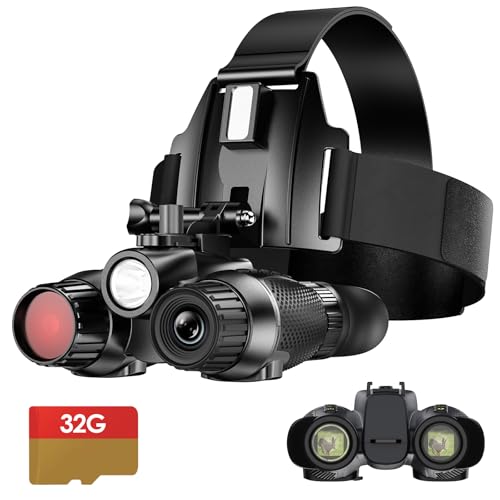
【3D Naked-Eye Effect】Enjoy clear and detailed 3D virtual reality night vision with dual-screen, dual-eyepiece naked-eye 3D viewing. Capture stunning 36MP photos and ultra-high-definition videos.
Thermal vs. Image Intensification Night Vision Goggles: Which Technology Fits Your Mission?
Thermal imaging is the better choice when you need to detect heat sources in complete darkness or obscured conditions, as it works independently of ambient light. Unlike image intensification, which amplifies available light for a clear, natural view, thermal detects infrared radiation emitted by warm objects, allowing you to see targets through smoke, fog, or total blackout. This makes thermal ideal for search and rescue, perimeter patrols, or surveillance over broad areas where visual detail is less important than heat detection. Understanding how thermal imagers detect infrared radiation is essential for buyers matching technology to their mission needs. For side-by-side comparison, night vision technology is often preferred for detailed visual recognition in low-light environments. For mounting such equipment, selecting a cantilever scope mount ensures proper eye relief and stability on a rifle or optical device.
Thermal images show temperature differences rather than fine details, so you might not recognize faces or read signs clearly. Conversely, image intensification provides sharper, more detailed visuals in low-light conditions, enabling you to read terrain features, recognize individuals, and navigate with precision. However, it relies on ambient light, so in complete darkness or shadowed environments, its effectiveness diminishes. Think of thermal as your go-to for discovering heat signatures when visibility is low, while image intensification excels in well-lit or moonlit scenarios demanding detailed visual information.

UNMATCHED CLARITY: With a high IR resolution of 256x192 and a smooth 50Hz refresh rate, the thermal monocular provides vivid thermal images, capturing every detail of your surroundings with precision.

940nm Invisible IR & Long-Range Viewing: Vtiisamao night vision goggles feature 940nm infrared illumination with no visible red glow for more discreet nighttime observation. View subjects in complete darkness at distances up to 1,968 ft, ideal for wildlife observation, hunting, camping, farm monitoring, and property monitoring.
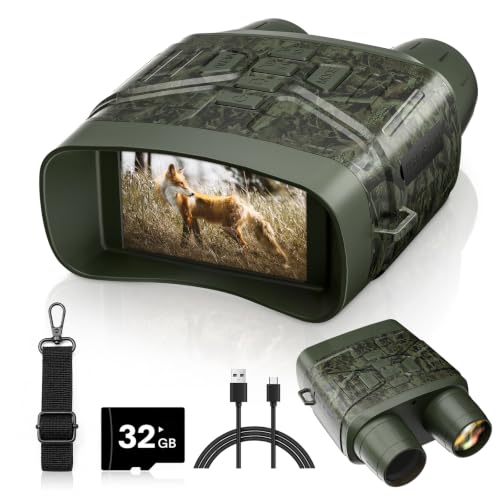
Day and night viewing: Use these night vision goggles in daylight, low light, or complete darkness. The 850nm infrared illuminator provides clear black-and-white viewing at night for hunting, wildlife observation, camping, and property monitoring.
Digital Night Vision Goggles vs. Analog: When Is Digital Actually Worth the Upgrade?
Digital night vision goggles are worth the upgrade when you need recording capabilities, daytime visibility, or adjustable display settings. While analog models offer smooth, natural images and longer battery life, digital units provide features like palette adjustments, zoom functions, and Wi-Fi connectivity, which can enhance your operational flexibility. Be aware that digital devices typically consume more power, leading to shorter runtimes, so carrying extra batteries or larger packs is often necessary. Choose digital only if those added features improve your experience; otherwise, analog remains the better option for continuous, lag-free imaging and extended use. However, digital devices like the MG30 can detect IR targeting devices, revealing positions and making them advantageous in active laser targeting scenarios. Understanding the differences between image intensification and digital methods can help buyers decide which technology best suits their needs. For hunting applications, a headlamp with red light can preserve natural night vision and avoid spooking game, making it a critical feature to consider alongside goggle type.

Advanced Night Vision Imaging Technology:Equipped with an 850nm infrared illuminator and Starlight CMOS sensor, these goggles deliver full-color visibility in low-light conditions and 7 adjustable IR levels for clear observation up to 2,000 feet (610 meters) in total darkness that ensures durability for nighttime adventures

WiFi App Live Viewing and Sharing — Connect these WiFi night vision goggles directly to your smartphone to view live footage, take photos, record videos, and download saved files through the app. Photos and videos can be stored locally on the device/microSD card and your phone, with no cloud upload or subscription required for file transfer, helping keep your files on your own devices. Ideal for nighttime animal viewing, family camping, hiking, backyard animal watching, and nature learning. A practical back-to-school gift for teens and a thoughtful outdoor gift for dads, husbands, campers, and nature lovers.

【4K Video & 40MP Photo Capture】Capture crisp 4K videos and detailed 40MP photos day or night. Whether you're camping, monitoring your property, observing wildlife, or exploring after dark, these night vision binoculars help you record every moment with impressive clarity
Monocular, Binocular, or Panoramic Night Vision Goggles: Which Format Reduces Eye Fatigue?
Binocular night vision goggles significantly reduce eye fatigue compared to monocular or panoramic options. They provide a coordinated image for both eyes, aligning with natural vision and minimizing strain during prolonged use. The dual intensifiers allow each eye to process its own image independently, preventing the accommodative-vergence mismatch that occurs with monocular devices. This mismatch forces your brain to reconcile intensified input from one eye with unaided vision in the other, leading to increased fatigue. Properly aligning the device’s settings can further optimize comfort during extended use, similar to how you would adjust a trail camera’s angle and sensitivity for optimal performance. According to the best picks for clear night sight, binocular night vision goggles are often the top recommendation for balancing performance and user comfort. For similar reasons, mounting your trail camera at the correct height and avoiding common placement mistakes prevents missed captures and wasted battery life.
While monocular systems are lighter and more portable, they often cause quicker eye strain because your brain compensates for the missing information from the other eye. Panoramic systems can improve scanning efficiency but tend to add weight to the helmet setup, shifting fatigue to your neck rather than your eyes. Therefore, for extended observation sessions, choosing binocular night vision goggles is recommended to maximize comfort and reduce eye fatigue.

NIGHT VISION GOGGLES FOR ADULTS 4K – Experience clear digital night vision with a 4K imaging system and large 4.5" HD screen. Designed for nighttime observation, outdoor exploration, camping, hunting, and wildlife viewing.

【See Clearly In Complete Darkness with Night Vision Goggles 】: This 4K night vision goggles features an infrared illuminator that allows you to easily view nocturnal animals in completely dark environments. It is equipped with high-definition photo and video shooting capabilities, allowing for clear night-time viewing and instant saving of captured media. The night vision binocular can record up to 4K UHD video and capture 36MP images
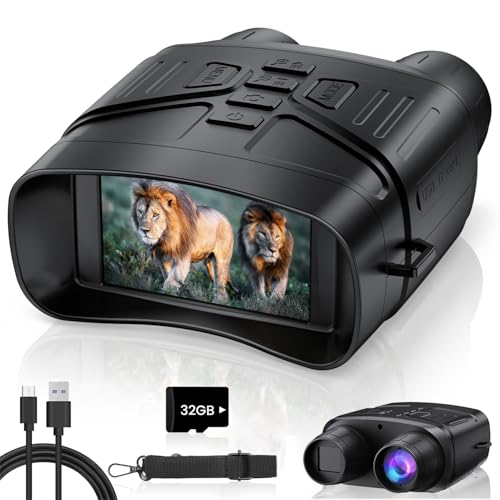
Day and night viewing: Use these night vision goggles in daylight, low light, or complete darkness. The 850nm infrared illuminator provides clear black-and-white viewing at night for hunting, wildlife observation, camping, and property monitoring.
Helmet, Handheld, or Weapon-Mounted Night Vision Goggles: Which Setup Maximizes Field of View?
A helmet-mounted setup maximizes your field of view by moving with your head, providing a panoramic perspective that can reach 97° or more. Unlike handheld units, which are limited to their optical specifications—typically around 40°—helmet-mounted goggles offer a much wider scope, allowing you to naturally scan your surroundings without adjusting the device. Weapon-mounted systems restrict your view to your aiming direction, which means you only see what’s directly ahead of your firearm. The ergonomic design of helmet setups enables quick, free head movements, keeping your situational awareness high and your hands free for navigation or tactical tasks. Additionally, the power source is secured on your helmet, reducing cable strain and ensuring continuous operation during movement. Top ballistic helmets are designed to integrate securely with these night vision systems, balancing weight and protection for extended use. Nightfox Swift 2 NVG Goggles offer an industry-leading 54° wide angle field of view with 1x magnification, providing broad situational awareness for security or tactical operations. For those seeking military-grade performance, reviewing the top-rated models can ensure you select the best equipment for demanding environments. In reality, even Santa would likely rely on multi-spectral imaging to see through fog and snow, not just standard night vision.
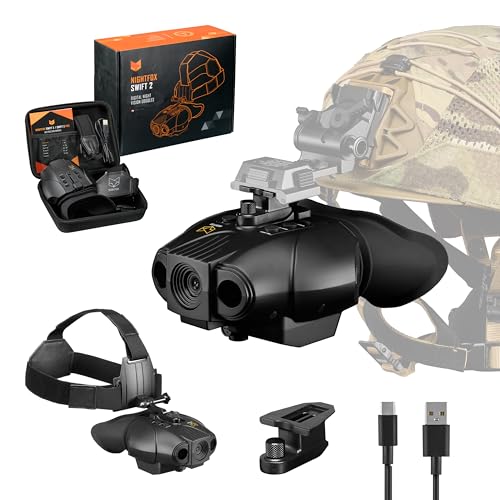
Stay Aware - Our NV infrared goggles have a 1x magnification and an industry-leading 54° wide angle field of view, great for a night vision helmet. Observe your immediate surroundings during security and tactical operations, and while camping or hiking. There's also a 3x digital zoom feature for using the Swift 2 as a binocular.

WIDE FIELD OF VIEW – 1× magnification and 40° wide-angle field of view for close-range night awareness up to 90yd, plus 2× digital zoom. Green filter option included for your preferred viewing experience. Ideal for airsoft, tactical use and camping.

【Display Model】: The Gayontech Four-Tube Binocular Night Vision is just a Dummy Model with no function, can be used for display or cosplay
Night Vision Goggles Trade-Offs: Should You Prioritize Cost, Clarity, or Battery Life?
Prioritizing battery life is often the smart choice if you need your night vision goggles to last long hours in the field. Devices like the single-tube PVS-14 can run for 40 to 50 hours on a single AA battery, making them ideal for extended missions or outdoor adventures where recharging options are limited. To maximize battery life, avoid features that drain power quickly, such as video recording, color processing, or high-brightness settings. Simpler, lower-power models typically sacrifice some advanced features but ensure your devices stay operational when it counts most. However, the most expensive component is the tube, which drives performance and cost, meaning budget-friendly choices may trade clarity for longer runtime.