What Is a Ballistic Helmet for Night Vision Kits?
Figuring out the best way to attach night vision gear to your helmet can be confusing. The right ballistic helmet not only secures your optics but also keeps you safe from projectiles and shrapnel.
Choosing one with a sturdy mount and lightweight design ensures comfort and stability during your missions. Keep reading to discover what features matter most when selecting your helmet.
Why Night Vision Demands More Than a Bump Helmet?
Night vision demands more than a bump helmet because it requires a secure mounting interface and stable operation. A bump helmet alone cannot provide the necessary attachment points, so a factory-installed WILCOX three-hole shroud along with a robust mount is essential. Without this setup, your night vision device can wobble or shift, disrupting alignment and reducing targeting accuracy, especially with heavier dual-tube systems. Additionally, a proper ballistic helmet offers better weight distribution, which is critical since night vision gear adds front-heavy weight to your head. Incorporating a counterweight system helps minimize neck strain and fatigue during extended operations. Helmet ventilation also plays a key role by preventing fogging and sweat buildup, which directly affects peripheral vision and situational awareness. A stable, well-ventilated fit reduces NVG shake, maintaining visual clarity and ensuring reliable target identification. For users who want to combine thermal and night vision capabilities, exploring thermal camera apps can provide a complementary tool for handheld detection in low-light settings. In contrast, a bump helmet’s lack of structural integrity and accessory compatibility makes it unsuitable for effective, hands-free night vision use. When choosing between these options, ballistic helmets provide the necessary ballistic protection that bump helmets lack. To further improve balance, you can attach counterweights like pouches or integrated covers to offset the front-heavy load. For those building their own rig, learning how to integrate a thermal core into the helmet mounting system can enhance target detection in low-light conditions.

No need to purchase a J-arm to be compatible with "Dovetail"

Superior Material:The helmet bracket is made of high-quality aluminum alloy with high oxidation resistance. The surface is color-locked,so it will not fade. The special process makes the surface smooth and work smoother.

The night vision goggles mount is made of high-quality lightweight ABS material, it is durable for long time use
Ballistic vs. Bump: Which Helmet Type for Night Vision Kits?
A ballistic helmet is the safer choice if your work involves facing gunfire or fragments. It is designed to provide protection against bullets, shrapnel, and blunt impacts, making it essential for military or law enforcement roles. These helmets are heavier and more expensive but offer significantly increased durability and safety. Unlike night vision devices that detect heat signatures through thermal imaging technology to identify threats in total darkness, a ballistic helmet protects you from those same threats. In contrast, bump helmets are lighter and more comfortable, ideal for low-threat environments like training exercises or recreational activities. They typically lack the same level of ballistic protection but still support night vision mounting and communication accessories. If you are unlikely to encounter hostile threats, a bump helmet reduces neck fatigue and enhances comfort during extended wear. When selecting based on threat levels, prioritize a ballistic helmet for combat situations or high-risk assignments. For non-combat use or general training, a bump helmet provides adequate support with added comfort. Both helmet types can accommodate night vision kits and communication gear, but your decision should weigh safety versus comfort and cost. However, for users who require superior optical clarity and low-light performance, choosing a helmet that can properly balance a top-tier PVS-31 unit is crucial for maximizing situational awareness. Additionally, understanding whether your mission demands target identification through image intensification or mere object detection can clarify which optical system your helmet setup must prioritize.

Sturdy and Durable: NVG Mount is made of high-quality aluminum alloy with high oxidation resistance, solid , wear-resistant and comfortable, and With this mount, you can say goodbye to loose and wobbly

3-Hole Type 2 Skeleton NVG Mount Shroud constructed of full metal aluminum material, extra strong shock absorption ability.

2021 Newest NVG Mount:Material: Aluminium Alloy, strong and durable, wear resistance and comfortable.Adjustable lever-to-NVG angle for easy installation and one-handed operation. It can also be used as a CS game tool or tactical toy.
4 Helmet Parts Every Night Vision Setup Needs
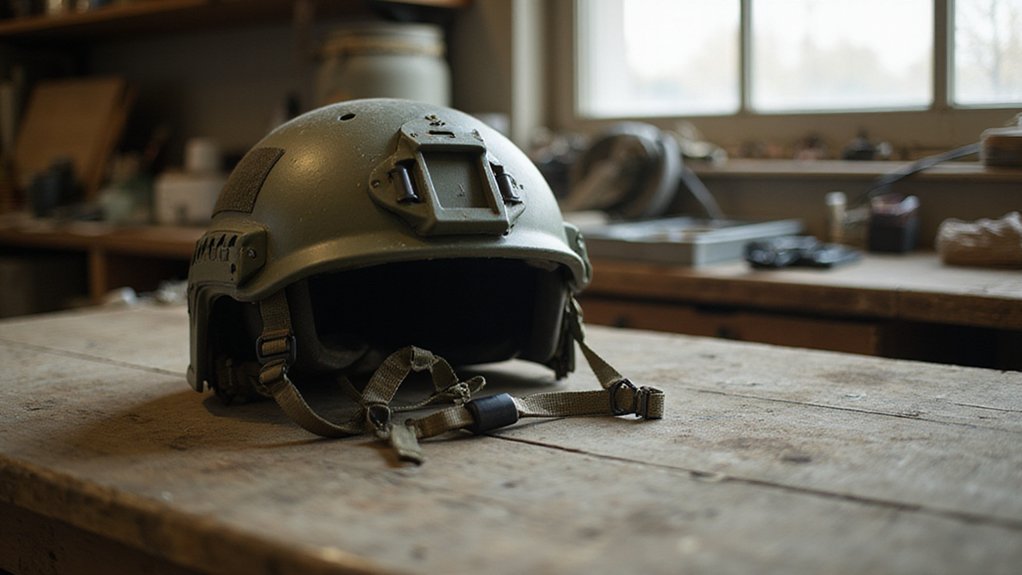
The four helmet parts essential for a night vision setup are the helmet itself, a shroud, a mount, and side accessories like rails and front interfaces. The helmet provides a stable base, so selecting one that fits securely and comfortably is crucial for prolonged use. The shroud acts as the standardized connection point, securely locking your night vision device in place. The mount links the shroud to your device, offering necessary adjustments for height and tilt to achieve proper eye alignment. If you’re using monocular night vision, a J-arm allows flexible positioning over either eye, with a retention cord to keep it secured during movement. Side rails and front mounting interfaces enable attaching additional accessories like lights, counterweights, or pads, making sure these additions do not interfere with your night vision device. Proper selection and installation of these four parts lay the groundwork for an effective, stable, and customizable night vision helmet setup. A helmet that is not ballistic rated but rather a bump helmet focuses solely on impact protection without defending against ballistic threats. Understanding the cost differences between ballistic and bump helmets can help you prioritize your budget for other essential night vision components. For those who primarily use their helmet for static observation rather than dynamic movement, a bump helmet’s lightweight design may be sufficient for comfortable all-night wear. However, even a basic bump helmet setup requires a compatible shroud and mount, which can add significant costs to your overall night vision kit.

1. Mil-Spec Compatibility: Designed for the USMC ECH (Enhanced Combat Helmet) and other tactical helmets with a standard NVG shroud interface. Securely mates with common Rhino-style night vision mount forks for a solid connection.

【MATERIAL】:3 hole nvg shroud is made of fiber reinforced polymer,Aluminum structure in the middle make it lighter and stronger than the legacy VAS Shroud, for the perfect balance of strength and weight savings.

[ Material & Weight ]: Made by high quality ABS, Lightweight but durable // Weight: about 840g
Matching Your Helmet Shroud to Your NVG Mount
To ensure your helmet shroud and NVG mount are compatible, start by confirming that your helmet’s shell material can support your chosen interface. For polycarbonate shells, check that the attachment method—whether screws or straps—won’t create stress points that could weaken the shell. Material choice matters: metal shrouds provide superior rigidity but require precise drilling, whereas composite options are lighter but might flex under load.
Match the interface type exactly: dovetail shrouds must pair with dovetail mounts, and bayonet systems with their respective mounts. A mismatch can cause wobbling or prevent proper engagement, compromising stability. Hard-mounting with T-nuts offers a secure connection, but you must verify that the hole pattern aligns properly. Ensuring a tight, play-free fit will keep your NVG kit stable during movement, avoiding unwanted shifts that could affect your situational awareness. Understanding how image intensifier tubes amplify ambient light into visible imagery is crucial, as the weight and length of these tubes directly impact the balance and counterweight needs of your helmet mount system.

Package Includes: NVG Mount Shroud*1, Screws *3, Nuts *3.

3-Hole Type 2 Skeleton NVG Mount Shroud constructed of full metal aluminum material, extra strong shock absorption ability.

Package includes: NVG mounting cover*1, 3*long screws 3*short screws 3*nuts.
Buying a Ballistic Helmet for Night Vision: 5 Checks
To ensure your ballistic helmet is a reliable fit for night vision, run it through five practical checks. First, verify independent ballistic certification, like NIJ IIIA, and request test documentation—avoid vague claims such as “military-grade.” Second, match protection levels to your threat; IIIA protects against handguns and fragmentation, while rifle-rated options provide higher protection but add weight and cost. Third, check that the helmet fits snugly without pressure points and test the chin strap for stability during movement. Fourth, aim for a weight around 3 to 4 pounds to maintain NVG balance, and verify that the rear Velcro can support a counterweight if needed. Finally, confirm accessory compatibility by ensuring your helmet material can support your shroud and mount without interference, and note that helmets with logos are often out of spec for NV mounts. Running these checks helps you choose a helmet that seamlessly integrates with your night vision kit.

✨ ULTRA-LIGHTWEIGHT UHMW-PE CONSTRUCTION: Crafted from advanced Ultra-High Molecular Weight Polyethylene material, this helmet offers exceptional protection while remaining remarkably lightweight (only ~1.5kg), reducing fatigue during extended wear

【Display Model】: The Gayontech Four-Tube Binocular Night Vision is just a Dummy Model with no function, can be used for display or cosplay

【Display Model】: The Gayontech PVS15 Binocular Night Vision is just a Dummy Model with no function, can be used for display or cosplay