How Much Does a Thermal Scope Cost?
Wondering how much a thermal scope will cost you? The price largely depends on the sensor resolution, with entry-level models under $1,000 and premium sights exceeding $5,000.
Mid-range options often strike a good balance for serious use, typically falling between €2,500 and €4,500.
The key factors influencing cost are detection range, extra features, and build quality.
Keep reading to find out how to choose the right scope for your budget and needs.
Sensor Resolution: The Biggest Factor in Thermal Scope Price
Sensor resolution is the single most important factor determining thermal scope prices. Resolutions like 256×192 or 640×512 directly influence the price tier you will enter. Higher resolution sensors account for roughly half of the overall manufacturing cost. For example, a 640×512 sensor can make a scope $1,000–$2,000 more expensive than a 384×288 model. This increased cost reflects sharper imagery and more detailed core capabilities, making resolution key for performance. For serious applications, a 640-resolution sensor is the recommended minimum for reliable identification beyond 200 yards.
While aspects like sensor longevity and battery life are important, they do not impact the initial purchase price nearly as much. The underlying technology relies on detecting infrared radiation to create a visible image, which is a key reason higher-resolution sensors command such a premium. This imaging process is fundamental to how a thermal imager works. Market prices have generally decreased over time, but resolution remains the dominant factor. Entry-level scopes under €2,500 usually feature 256×192 resolution, whereas mid-range and high-end scopes with 640×512 sensors often start above €4,500. Understanding this helps you make smarter decisions based on your budget and imaging needs, though you must also consider whether your primary goal is detection or positive identification. Choosing between night vision or thermal depends on these distinct operational requirements.
How Sensitivity and Detection Range Impact Cost and Performance
Sensitivity and detection range significantly influence both the cost and performance of your scope. Sensitivity, measured as NETD (Noise Equivalent Temperature Difference), determines your thermal clarity. A lower NETD value, such as below 25mK, adds to the price but enhances your ability to detect targets in low-contrast conditions and reduces thermal interference. Detection range depends largely on lens size; surpassing 1500 meters requires larger, more expensive optics. Scopes that combine high sensitivity with long-range capabilities tend to cost more but provide clearer identification at greater distances. High-quality components also improve color calibration, resulting in sharper images, which directly impacts your scope’s overall performance and price. DIY thermal drone builders often source similar core thermal imaging components for their aerial platforms. Beginners should consider that choosing a thermal scope involves balancing these performance factors with their intended use cases.
Entry-Level Thermal Scopes (€1,200-€2,500): Capabilities and Value
Entry-level thermal scopes typically fall within a price range of €1,200 to €2,500. This price point provides an affordable entry into thermal imaging technology, suitable for beginners or casual users. These scopes usually feature a basic 256×192 resolution core, allowing detection of large targets up to approximately 900 meters away. While the image quality is sufficient for general detection, it does not capture fine details or intricate patterns.
Expect simpler optics with narrower fields of view and shorter recognition ranges compared to higher-end models. These units prioritize lower power consumption and include fundamental features such as manual thermal calibration. Their construction tends to be less rugged, making them better suited for lighter use rather than extreme environmental conditions. Because they rely on standardized components, the value in this range often comes from cost efficiency rather than advanced capabilities. Modern options in this category often include practical features like Recoil Activated Video for automatically capturing shots.
For a beginner or someone on a budget, entry-level thermal scopes offer functional thermal detection in ideal environments; however, their application scope is more limited when compared to more advanced models.

[HIGH SENSITIVITY DETECTOR]- 256x192 Thermal sensor, 25mm detective lens, 3.5x basic magnification and a 7.0° horizontal field of view allow targets as far as 1422 yards away to be viewed clearly.

Extended Range. Wider Opportunity: With a 25mm Germanium lens and a powerful 3.5x base magnification, the RattlerV2 25-256 gives hunters a serious edge. Its thermal imaging scope lets you detect heat signatures out to 1,250 yards.

Fast Targeting. Wide Field of View: The RattlerV2 19-256 offers a 2.5x base magnification and a wider field of view — ideal for close- to mid-range scanning and fast-moving targets. Whether you’re hunting hogs in thick brush or predators on the move, this thermal scope keeps your target in sight and your response time sharp.
Mid-Range Thermal Scopes (€2,500-€4,500): The Hunter’s Sweet Spot
Moving into the €2,500 to €4,500 range is your entry point to serious thermal hunting gear. At this price point, you get a resolution of 384×288, which offers a clear view of targets at over proportion range. It is important to note that thermal imaging detects heat signatures, so it won’t produce the eye shine effect seen with night vision devices. You also benefit from improved sensitivity in low-light or dense conditions, making it easier to detect game or targets when darkness falls or fog rolls in. Many scopes in this segment come with onboard recording, allowing you to review footage or capture images of your hunts or observations. A great example in this category is the TU651 LRF model, which is designed specifically for this performance tier.
Durability and weather resistance are standard in this range, so your scope can handle rain, dew, and rougher terrain without issues. It’s common for these models to include useful accessories like scope mounts, protective covers, or extended batteries, giving you more value for your investment. If you encounter technical issues, knowing how to perform a factory reset is a valuable troubleshooting skill. Overall, this price segment provides a balanced combination of performance and cost, increasing your effective range substantially compared to entry-level options—often by around 200 percent—while avoiding the premium prices of top-tier gear. Features like Wi-Fi streaming are also typical here, enabling live sharing or remote viewing. This makes these scopes ideal for hunters who want professional-grade utility without the steep price tag.

HIGH SENSITIVITY DETECTOR: The detector with 384x288 resolution, 50Hz frame rate, and 12μm pixels can accurately identify target thermal features with a NETD <25mK, enabling more target details to be visualized.
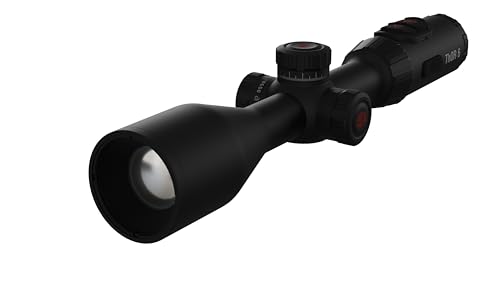
SEE HEAT OTHERS MISS WITH 6TH GEN ULTRA SENSITIVITY — 384×288 sensor with ultra-sensitive ≤15 mK NETD and 12 μm pixel pitch detects faint heat signatures through brush, fog, humidity, and low-contrast terrain where other thermals lose detail.

384×288 High-Resolution Thermal Imaging: GOYOJO thermal scope combines a 384×288 high-resolution sensor with a 25mm objective lens to capture sharper heat signatures and improved detail at longer distances, delivering clearer target identification and enhanced precision in low-light and total darkness.
Premium Thermal Scopes (€4,500+): Features and Justifications
Premium thermal scopes over €4,500 offer top-tier performance with advanced features that justify their high cost. These scopes utilize sensors with 640×512 resolution and sub-15mK NETD sensitivity, enabling detection of even the smallest heat signatures with exceptional clarity. Their optical systems incorporate sophisticated distortion correction technology, allowing you to identify targets beyond 1,200 meters. The underlying technology relies on detecting infrared radiation, which is emitted by all objects based on their temperature. This is achieved using a specialized microbolometer sensor array that converts thermal energy into a detailed electronic image. For the ultimate in precision, models like the SIG SAUER Echo SV35 integrate a laser rangefinder with automatic ballistic calculation, eliminating manual adjustments for the shooter. Additional functionalities such as Wi-Fi connectivity, voice recording, and extended battery life enhance usability in demanding conditions. Choosing between brands often comes down to evaluating quality and performance in critical scenarios. Such scopes are ideal for professionals who require detection ranges exceeding 1,800 meters or operate in extreme environments, including military, search and rescue, and scientific research. Investing in these devices ensures reliable performance and precise detection where compromise is not an option.

Ultra-Sensitive Thermal Detection: Equipped with a high-performance 640x512 sensor and ultra-sensitive NETD <20mK detection, the Mars MT1000LRF delivers crystal-clear thermal images, capturing minute temperature differences for superior target identification in complete darkness or adverse weather conditions.

Quick View: Explore the Oneleaf.ai Mars MT1000LRF, a cutting-edge thermal imaging scope with interchangeable lenses, ultra-sensitive NETD <20mK detection, 640x512 Sensor, 2x base magnification, 1x-8x digital zoom, 30/50/60Hz adjustable Refresh Rate and advanced features like a built-in Rangefinder and Ballistic Calculator. Perfect for hunting, security, and outdoor adventures.

【GRS225 Thermal Imaging Scope】Equipped with a powerful 25mm objective lens & 256×192 thermal sensor with <35mK sensitivity & a high-resolution 1440×1080 OLED. Its thermal imaging scope delivers long-range heat detection up to 1,224 yards. Please note: For lens cap opening instructions, please refer to Image 6.
Calculating “Price Per Meter” for Scope Value Comparison
Calculating the “price per meter” detection range is a straightforward way to compare the value of thermal scopes. To find it, divide the scope’s price by its manufacturer-stated detection range for a typical target, such as a human figure. For example, a €2,500 scope with a 1,000-meter range results in a €2.50 per meter metric. Mid-range scopes usually provide the best value here, often falling between €1.80 and €2.20 per meter. This value-focused approach mirrors how buyers evaluate other optics, like Sony night vision camcorders, and parallels the cost-versus-performance analysis used when selecting protective gear like ballistic helmets. The same principle of assessing core value versus price is central when evaluating thermal systems for drones, such as weighing thermal drone sensor quality against the total system cost. While this calculation gives a useful baseline, it shouldn’t be your sole reference. It doesn’t consider important factors like sensor resolution or NETD, which influence actual performance, nor does it account for usability factors such as ergonomic design or camouflage effectiveness against targets’ thermal signatures.
Real-World Thermal Scope Pricing: ATN, Pulsar, AGM, and Holosun
Prices for real-world thermal scopes range from around $900 to over $3,200, depending on features and quality. Entry-level models like the Pulsar Forward M35 or Holosun HS300 typically cost about $900, making them accessible for those new to thermal imaging. Core mid-tier options from brands like ATN and AGM fall in the $1,300 to $1,900 range, offering a solid balance of features and affordability. Premium scopes with 640-resolution sensors generally start around $2,900 and can go up to $3,200, providing sharper images and more advanced capabilities. Considering the necessary operational battery life can also help manage total long-term costs.
Some features significantly increase the price, such as integrated rangefinders or laser rangefinders (LRF). Scopes equipped with these high-end features can push the cost toward $5,800. When choosing a thermal scope, your budget isn’t the only consideration. Operational factors like battery life and waterproof durability are critical. Evaluating overall night vision performance is also essential, as it dictates how effectively you can identify targets in low-light conditions. It’s crucial to understand the best sources for reputable models to ensure quality and support. A scope with longer battery longevity keeps you in the field longer, while waterproofing ensures reliability in harsh conditions—factors that add value beyond their initial sticker price.

384×288 20mK Thermal Sensor: High-sensitivity 12μm VOx detector delivers exceptional thermal image quality and enhanced target detection.

Combining Standalone Scope, Clip-On, Handheld Monocular, Laser Rangefinder, and Ballistic Calculator in one versatile device, HS335R is built for hunters who demand more than entry-level gear while keeping value at the forefront. Striking the perfect balance between performance and price, HS335R is the natural upgrade for those ready to elevate their hunt.
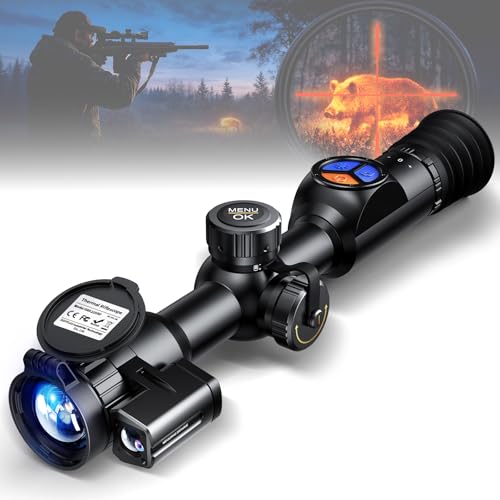
【GRS225-RF Thermal Imaging Scope】Equipped with a powerful 25mm objective lens & 256×192 thermal sensor with <35mK sensitivity & a high-resolution 1440×1080 OLED. Its thermal imaging scope delivers long-range heat detection up to 1,224 yards. Please note: For lens cap opening instructions, please refer to Image 6.
Will Thermal Scopes Get Cheaper? Understanding Market Trends
Thermal scopes are likely to become more affordable over time due to several market trends. Growing demand from both consumers and military sectors increases production volumes, which helps lower the cost per unit. Technological advancements, such as uncooled sensor development, component miniaturization, and more automated manufacturing processes, are crucial in reducing complexity and material use. These innovations not only drive down prices but also enhance durability and extend battery life through more efficient designs. While high-end defense technologies may remain expensive, increased competition and economies of scale within the expanding commercial market put downward pressure on prices, making advanced features more accessible to a wider audience.
Choosing Between Entry-Level and Mid-Range: A Practical Guide
Entry-level thermal scopes typically cost between $700 and $2,500. They provide basic thermal imaging for targets within 150 to 300 yards, making them suitable for tasks like backyard pest control or small game hunting. These models generally feature lower resolution sensors, which can affect image clarity at longer distances, but they are often easier to operate and more affordable upfront. For a more hands-on understanding, you can explore a DIY thermal camera guide to learn about the core components.
Mid-range scopes, priced from $2,500 to $5,000, offer significantly improved performance. They work effectively out to 900 yards, providing clearer images with higher resolution sensors—often 384×288 pixels or better. These units tend to include extra features such as video recording, multiple color display options, and longer battery life, making them more reliable for serious hunting or tactical use. Building your own requires sourcing specialized thermal imaging sensors and a detailed assembly process.
While entry-level scopes might have a higher cost per meter of effective range, mid-range models deliver better overall value for those aiming at longer distances and more demanding applications. A good starting point is setting aside a budget of around $1,500 to $2,500 and seeking a scope that supports a minimum resolution of 384×288 pixels for improved image quality. Understanding the key factors affecting price can help you make a smarter purchase decision.

HIGH SENSITIVITY 6TH GEN THERMAL PERFORMANCE — 384×288 sensor with ≤18 mK NETD and 12 μm pixel pitch delivers sharper detail, better contrast, and detection up to 2710 m through challenging terrain.

SEE HEAT OTHERS MISS WITH 6TH GEN ULTRA SENSITIVITY — 384×288 sensor with ultra-sensitive ≤15 mK NETD and 12 μm pixel pitch detects faint heat signatures through brush, fog, humidity, and low-contrast terrain where other thermals lose detail.

3-in-1 Multi-Function Thermal Scope: The Hydra combines standalone thermal riflescope, handheld monocular, and clip-on thermal module into a single versatile device. It offers exceptional adaptability for various hunting and shooting scenarios, making it one of the most innovative thermal optics available
When Is a Premium Thermal Scope Worth the Investment?
Premium thermal scopes are worth the investment if you operate in challenging environments or need precise identification beyond several hundred yards. These scopes feature high-resolution sensors that deliver clear images at 800 yards or more, which is crucial for open-country hunting. Their advanced thermal imaging technology reveals fine details that cheaper models typically miss, enabling better target recognition.
Professional users, such as those involved in predator control, benefit greatly from the durability and performance of premium scopes. These models are built to withstand rough handling and harsh conditions. Many include integrated rangefinders and added features that support operational needs, making them versatile tools in the field.
Although premium scopes come with a higher upfront cost, their extended lifespan—often 8 to 10 years—and consistent performance provide long-term value. Before investing, consider your typical engagement distances and terrain. It’s also important to ensure your equipment can support the weight of a premium scope and that you have suitable mounting options to optimize usability.