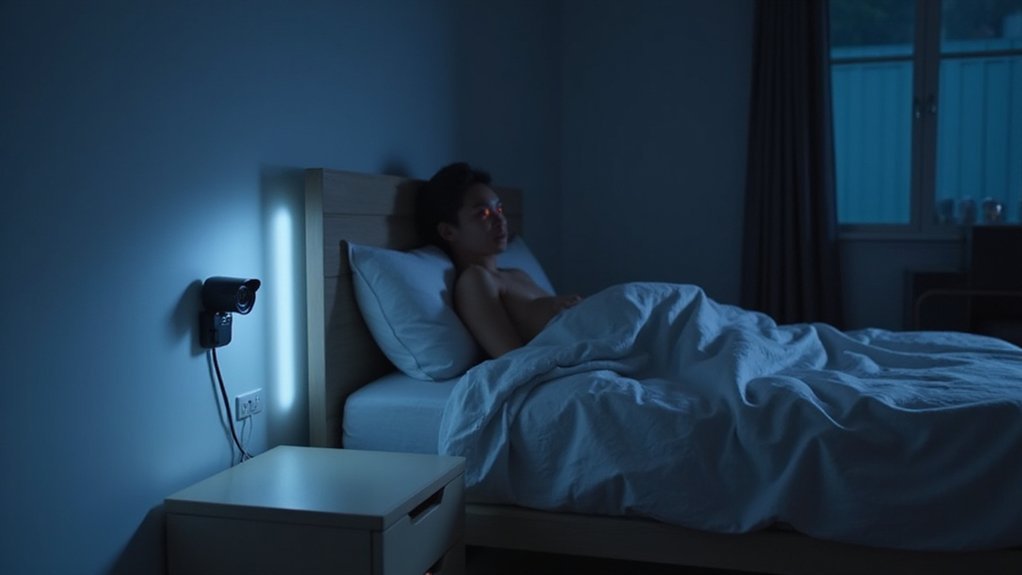
Do Human Eyes Glow in Night Vision Cameras?
You might wonder if your eyes glow in the dark the way animals’ do. In most cases, they don’t—unless you’re looking at night-vision camera footage.
These devices capture infrared light that reflects off your retina, making your eyes appear to shine. Understanding how this works can shed light on the eerie glow seen in nighttime footage.
Human Eyes Glow in Night-Vision Cameras, but Only From Reflected Light
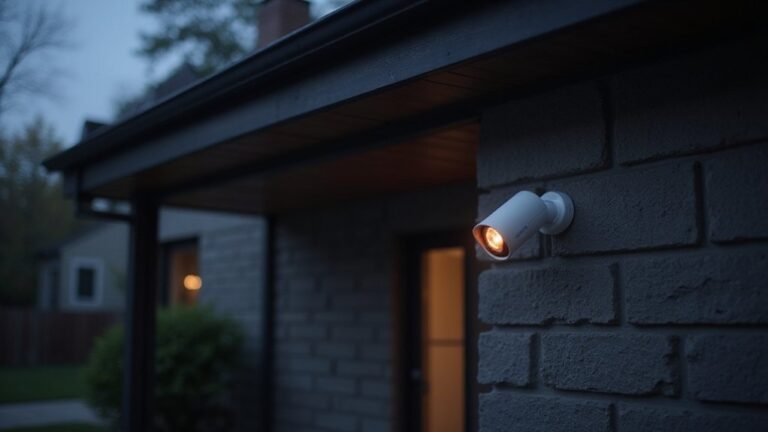
Your eyes do not actually glow in night-vision footage. The bright appearance you see is entirely due to reflected light, not emitted light from your eyes. This reflection comes from your retina, which bounces incoming illumination straight back toward the camera lens. Night-vision systems enhance this faint reflection by increasing camera sensitivity and often use infrared LEDs as invisible light sources. When your pupils dilate in low light conditions, they allow more infrared light in, making the reflection more prominent. Unlike thermal imaging, which captures heat signatures, night vision relies on ambient light or active infrared illumination. Night vision goggles amplify this reflected infrared light using a specialized image intensifier tube to create a visible image.
Unlike animals with a tapetum lucidum—a biological layer that produces visible eye shine—humans lack this feature. The glow seen in night-vision footage isn’t a biological trait but a result of camera and lighting effects. The sensors interpret infrared light reflected from your eyes as white or green images, creating the illusion that your eyes are glowing. In reality, your eyes are passive reflectors, relying solely on external illumination and the camera’s heightened sensitivity to produce this luminous effect. However, night vision devices themselves can emit a detectable glow from their front lenses, which is visible from 20 meters when walking past a camera. For those deciding between technologies, night vision excels in detailed image clarity under low light, while thermal imaging detects heat signatures regardless of ambient light.
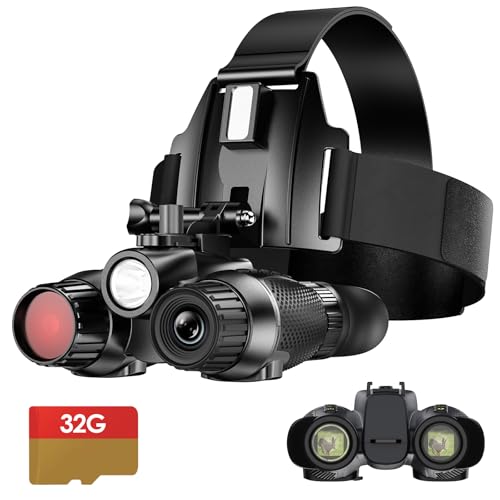
【3D Naked-Eye Effect】Enjoy clear and detailed 3D virtual reality night vision with dual-screen, dual-eyepiece naked-eye 3D viewing. Capture stunning 36MP photos and ultra-high-definition videos.
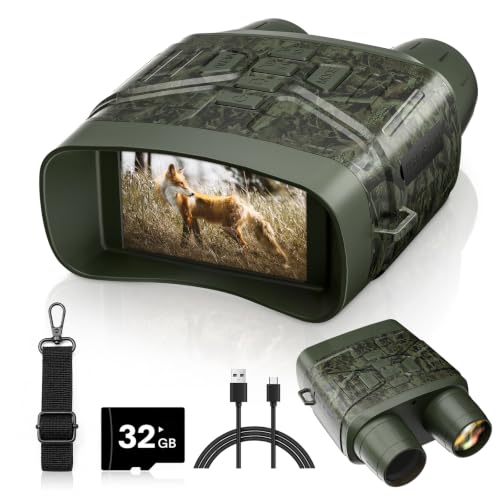
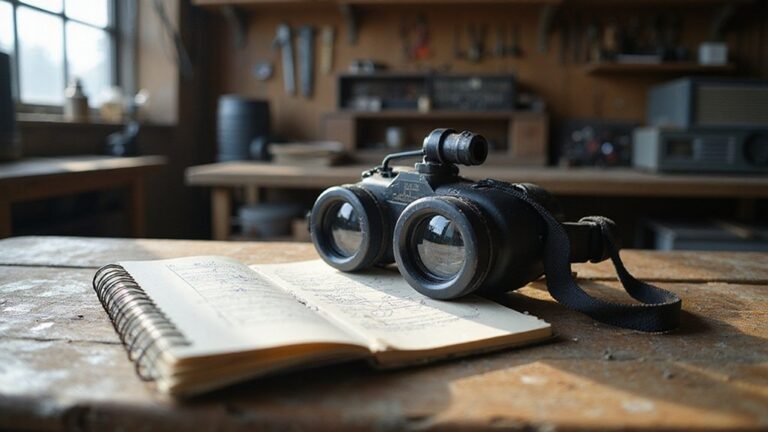
Day and night viewing: Use these night vision goggles in daylight, low light, or complete darkness. The 850nm infrared illuminator provides clear black-and-white viewing at night for hunting, wildlife observation, camping, and property monitoring.
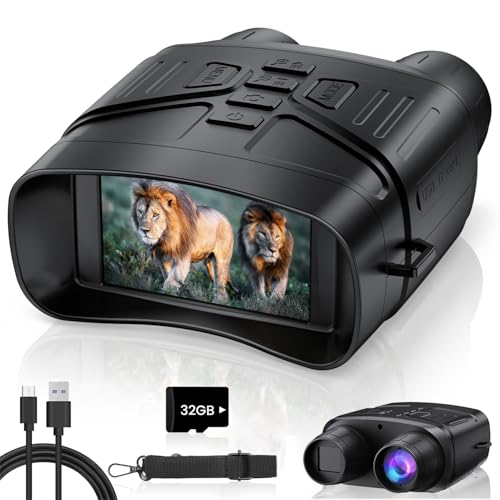
Day and night viewing: Use these night vision goggles in daylight, low light, or complete darkness. The 850nm infrared illuminator provides clear black-and-white viewing at night for hunting, wildlife observation, camping, and property monitoring.
Why Your Eyes Look Bright in Night Vision vs. Ordinary Darkness
In night vision conditions, your eyes appear bright because the pupils are dilated and a reflective layer called the tapetum lucidum is active inside your eyes. This layer reflects infrared light back out, making your eyes seem to glow. When you are in ordinary darkness without an active light source, no infrared illumination is present. Your pupils can still dilate, but without any light to reflect, your eyes look dark and dull. The glow you see in night vision is caused by the infrared flashlight of a camera or night vision device, which provides the active light needed for reflection. This reflection turns your dilated pupils into bright, glowing spots, making your eyes stand out sharply even in complete darkness. However, unlike the red or green lights used by hunters to preserve their own night vision, infrared illuminators are invisible to the human eye, so the reflection occurs without you ever seeing the light source. This is why the glowing effect appears as a stark white or silvery highlight, rather than the familiar green phosphor tint of the display screen itself, which is chosen for its optimal contrast and reduced eye strain. To reduce these glowing reflections, some operators use a specialized thermal drone equipped with heat-sensing cameras instead of active infrared illumination.

【850nm IR Flashlight Module】850nm IR LED Light Invisible Module Utilizes the Most Advanced IR BLACK LED with Latest Chip Technology, High Efficiency, Low Thermal Resistance,5 Watt of Optical Power. Emits Night Vision IR Light with 850nm Wavelength, Suitable to Use with a Night Vision Scope, NVS, NVG DIY, Camera Phones, Monocular, Goggles and Camera Which Doesn't Block Infrared Light.(Note: IR Night Vision Flashlight is Not an Ordinary Lumen Flashlight, Don't buy it Wrong)

850NM infrared flashlight: Note that when 850NM infrared light is turned on, there is a weak red dot, specifically designed for nighttime activities. It can be used in conjunction with night vision goggles, cameras, mobile phone goggles, etc.

【NIGHT VISION SUPPLEMENT, NOT LIGHTING】-- Used advanced infrared LED in Germany, emits 5W powerful infrared 850nm light which is INVISIBLE to the naked eye. Different from common flashlights – You will see nothing lighting up except a faint red LED if there is not any night vision device working with. [CAUTION!]: You need professional Infrared Equipment (night vision scope / monocular / infrared cameras / goggles) Cooperation to turn night into day on, otherwise you'll think it doesn't work!
What Makes Human Eyes Different From Animals That Glow in Night Vision
Your eyes do not glow in night vision footage because they emit light; any apparent glow is simply a reflection of infrared light. The primary difference between human eyes and those of animals that glow in darkness is the presence of a tapetum lucidum, a reflective layer behind the retina. Many animals, such as cats and deer, have this layer, which acts like a mirror, bouncing light back through the photoreceptors and greatly enhancing their ability to see in low light conditions. For example, DIY night vision goggles use infrared illuminators to replicate this effect artificially. Unlike ballistic helmets that must stop projectiles, the tapetum lucidum is a biological adaptation for light amplification, not protection. When choosing equipment, users often seek top rated models that balance performance and value.
Humans lack this tapetum lucidum, so their eyes do not have a built-in reflector. Instead, in dim lighting, your eyes rely on the dilation of pupils and the activity of rod cells in the retina. When exposed to infrared light—like in night vision cameras—your eyes reflect very little, resulting in only a faint, camera-produced glow. Conversely, animals with the tapetum lucidum produce much brighter reflections, which appear as intense eye shine in night vision footage. This difference in eye structure is the key reason why human eyes don’t glow like those of many nocturnal animals.
How Red-Eye in Photos Explains the Same Reflection Effect in Night Vision
Red-eye in photos and reflections seen in night vision both occur through the same basic process. When a flash flashes into your eye, light penetrates the dilated pupil and bounces off the blood-rich choroid behind the retina. This retinal reflection then travels back through the eye and into the camera lens, making your eyes appear red in photographs. In low-light conditions, your pupils naturally expand, creating a larger window for light to enter and reflect back. Night vision devices operate on a similar principle but use infrared illumination instead of visible light. They don’t emit their own light; instead, they retroreflect the infrared source aimed at your eye. When the infrared light aligns with the night vision sensor, the internal reflection from your eye hits the detector directly, producing that characteristic eerie glow. Essentially, that glow isn’t magic but your own eye’s internal mirror reflecting the infrared light—just like the red glow caused by the blood vessels in your eye during photography. Properly aligning the optical system is critical, as demonstrated in the sighting in process for night vision scopes. However, the intensity of this reflected glow can vary significantly depending on whether the device uses analog image intensifiers or digital sensors, as each technology handles infrared retroreflection differently. Mastering the correct focus and scanning techniques helps reduce the effect in active use.

Enhanced Fixed Magnifier with Expanded Field of View: The Gen II features an upgraded fixed magnifier boasting a wider objective lens. This delivers a significantly enhanced field of view for superior situational awareness and target acquisition, surpassing the limitations of a removable 2x magnifier.

【Versatile & Universal Fit】 Transform any standard rifle scope with an eyepiece diameter of 38-44mm into a powerful night vision system. This DIY kit comes with everything you need to get started.

UNMATCHED CLARITY: With a high IR resolution of 256x192 and a smooth 50Hz refresh rate, the thermal monocular provides vivid thermal images, capturing every detail of your surroundings with precision.
When Does the Glowing Eye Effect Appear Strongest in Night-Vision Footage?
The glowing eye effect in night-vision footage appears strongest when your pupils are most dilated, which occurs in complete darkness or very low light. Wide pupils allow maximum infrared light to enter your eyes, resulting in more light reflecting back toward the camera. The effect is especially prominent when you are facing directly toward the camera lens, because the reflected infrared beam aligns perfectly with the sensor. Understanding the basic DIY thermal camera principles can help you create a homemade device that captures this effect with customized infrared components. For example, a device like the PVS-14 uses a single-tube design that can produce a particularly intense glowing eye reflection due to its focused infrared illuminator.
Certain medical conditions, such as dilation disorders or eye health issues, can alter your eyes’ reflectivity, making the glow more or less noticeable. Your eyes’ natural light sensitivity also influences the effect—if your pupils adapt quickly to darkness, your eyes are likely to reflect more infrared light on camera. Additionally, the camera’s infrared illuminator, often positioned close to its lens, enhances the glow further. In summary, the darker the environment and the more dilated your pupils, the stronger and brighter your eyes will appear on night-vision footage. For users comparing dual-tube night vision devices, the intensity of this glow can also depend on the optical design and infrared wavelength output of the specific unit, which varies between models like the BNVD and RNVG.