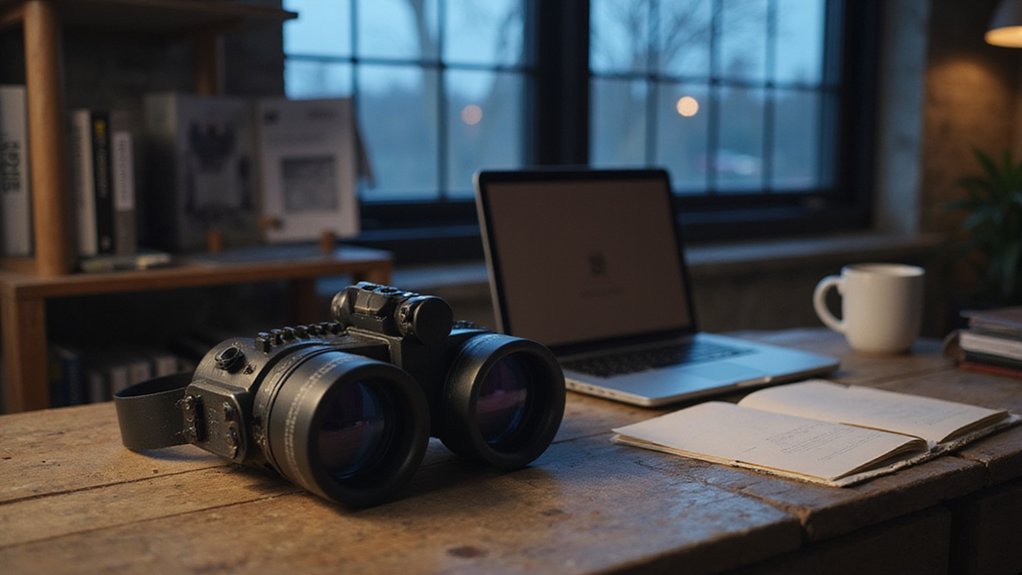
BNVD Vs RNVG: Which Dual-Tube Night Vision Goggle Is Best?
Figuring out which dual-tube night vision goggle works best for you can be tricky. The BNVD is known for its quick, versatile use and lighter weight.
While the RNVG boasts a nearly indestructible, fixed aluminum body. Your choice largely hinges on whether you prioritize flexibility or durability.
Below, you’ll find a clear breakdown to help you decide.
What Does BNVD Stand For in Night Vision?
BNVD stands for Binocular Night Vision Device. It refers to a dual-tube system that provides each eye with its own image intensifier tube, which enhances depth perception and situational awareness. Rather than serving as a single, standardized model, BNVD is an umbrella term for a family of housings that accommodate various configurations. You might encounter suffixes like SG for single gain, which indicates that a single control adjusts both tubes, or UL for ultra-light variants. These devices are typically helmet-mounted, hands-free systems designed for activities like driving or map reading in low-light conditions. The dual-tube design simplifies calibration, as you align two separate channels, but it also increases power consumption compared to monocular units. Consequently, battery management is an important consideration. In essence, BNVD describes any dual-tube night vision goggle system—not just one specific model—offering versatile options for optimal nighttime visibility. For example, building a DIY thermal drone requires a similar system integration approach for combining separate camera and display components. Housing choices range from robust injection-molded designs to ultra-light alternatives, depending on whether you prioritize durability or reduced weight. The image intensifier tube is the core component that amplifies ambient light to produce a visible image. Proper mounting of a BNVD system, much like a weapon’s optic, often relies on a cantilever scope mount to provide stable forward positioning.

Dual Tube Gen 2+ Level 1 System Delivers exceptional clarity and depth perception using Gen 2+ Level 1 IIT, perfect for tactical, surveillance, and night patrol operations.

Package include:1 x Night Vision Goggle, 1 x battery box,1 x dump truck,1 x shockproof box,1 x Instruction manual, 1 x Lens cleaning cloth, 1 x User Manual,battery is not included.

Ultra-Clear 2K Resolution – See What Others Can’t: GOYOJO GNG2K Night Vision Monocular delivers sharp 2688x1520 HD night vision with a smooth 60Hz refresh rate. Whether you’re securing your property, spotting coyotes at night, or navigating a pitch-dark trail, you’ll enjoy crystal-clear visuals without lag or blur — even in total darkness.
Why Is the RNVG the Toughest Dual-Tube Housing?
The RNVG is the toughest dual-tube housing because it features a billet-machined 7075 aluminum chassis instead of molded polymer. This rigid, fixed-bridge design removes hinge failure points that are common in articulating goggles, significantly increasing impact resistance. It can withstand drops onto bare concrete beyond standard expectations and even exceeds MIL-STD-810H drop testing standards. Additionally, the RNVG offers waterproofing down to 66 feet, sealing out water and mud in harsh environments. The lack of articulation means lower flexibility but results in a virtually bomb-proof housing that industry professionals consider the most durable available. For users looking for superior low-light performance, these housings are often paired with high-performance image intensifier tubes to maximize clarity. For users looking to reduce overall costs, reviewing data plan options can help avoid unnecessary fees when purchasing night vision gear. For those considering alternatives, understanding the PVS-14 vs. PVS-7 comparison can help clarify how single-tube devices differ in performance and cost.
What Makes BNVD’s Articulation a Key Advantage?
The articulation of BNVDs is a key advantage because it allows independent movement of each tube. This feature enables you to rotate one tube up while keeping the other deployed, providing partial-vision use without losing binocular capability. You can monitor your surroundings with one eye while adjusting a map, phone, or indoor lighting with the other—without needing to flip the entire system up. The ergonomic design reduces neck strain by shifting weight closer to your head when stowed and minimizes snagging risk in tight spaces. Additionally, the modular capability is beneficial when integrating thermal overlay devices; simply pivot one pod aside for scanning. This flexibility makes shifting between binocular, monocular, and stowed modes faster, which is especially useful during stop-and-go movements such as vehicle entry or building clearing. Unlike the articulation found in BNVDs, the RVM-14 vs. PVS-14 comparison shows that single-tube devices require manual removal or flipping to achieve similar partial-vision benefits. Thermal scopes rely on detecting heat signatures rather than ambient light, making them a distinct tool for target acquisition in total darkness.

Auto-Gated Green Phosphor Power This unit features Gen 2+ "AP" image intensifier tubes with FOM 1800+ and 64–72 lp/mm resolution, offering pristine clarity with minimal noise. Auto-gating ensures optimal performance even in fluctuating light, reducing halo effects and protecting your eyes.
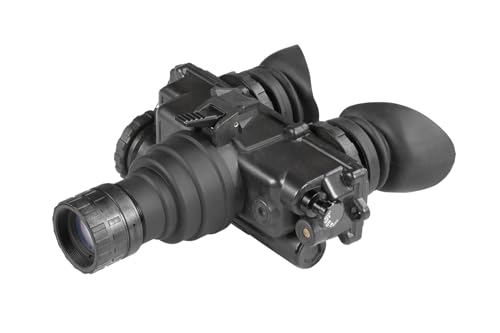
U.S. Military-Grade Night Vision Reliability: Crafted to meet the rigorous demands of the U.S. Military, the AGM PVS-7 night vision goggles deliver unmatched performance and dependability in the field. This rugged, battle-proven device is your trusted companion for secure and precise night operations

The 2.8-inch HD display delivers an eye-friendly viewing experience.
How Much Heavier Is a BNVD vs RNVG?
The BNVD-1531 weighs just 0.99 pounds, making it about 0.27 pounds lighter than the RNVG, which weighs 1.26 pounds. That difference translates to roughly 4.3 ounces, and while it may not feel like a massive change, it adds up when worn on a helmet. The lighter weight helps reduce fatigue and improves balance during extended use. Both models offer solid battery life, but their maintenance needs differ: the BNVD’s articulating arms require occasional care, whereas the RNVG’s fixed bridge is simpler to maintain. Keeping the weight down on your helmet allows for better control and comfort, especially when you add counterweights or other accessories. For context, cellular trail cameras are often compared for their performance and cost, but that flexibility does not apply to night vision goggles, which rely purely on their optical and power systems. Unlike those cameras, no thermal camera app can replicate the direct light amplification of these goggles.

Dual-Tube Design with Stereoscopic Vision: Redundant dual-tube design provides true stereoscopic vision with a wide 51 field of view for enhanced depth perception and situational awareness

Complete Dual‑Tube Night Vision System — fully assembled and ready for use
Ultralight Powerhouse for Tactical Efficiency Weighing just 17.6 oz (500g), the AGM Global Vision UNVG NL1 reduces neck fatigue during extended operations. The lightweight composite housing allows for faster movements and longer wear in high-stakes environments.
Does the Housing or the Tube Determine Image Quality?
The tube is what truly determines image quality, not the housing. Key metrics such as resolution, signal-to-noise ratio (SNR), and gain directly influence the clarity, detail, and overall sharpness of the image you see. The housing mainly affects ergonomics, protection, and ease of use but does not impact the core optical performance. While better lenses can sharpen the image, they can’t compensate for a poor tube’s deficiencies. Matching tube specifications between devices like a BNVD and an RNVG results in similar raw image performance. The housing’s role is to allow you to adjust gain and protect the optics but does not enhance the tube’s intrinsic capabilities. Therefore, focusing on tube data sheets and quality is more critical for optimal image performance than selecting a housing. To save on overall cost, understanding what drives the price of the tubes and housing separately helps you avoid paying for unnecessary features. Just as you might assess a camera’s mounting location for optimal concealment, evaluating the environment where you’ll use the goggles ensures you prioritize tube specs over housing extras. For example, choosing between night vision or thermal depends on your specific operational needs and environmental conditions.
RNVG or BNVD? Durability vs Configurability
The BNVD offers greater configurability, but the RNVG provides superior durability. The RNVG’s solid billet 7075 aluminum housing and fixed-bridge design make it highly impact resistant, ideal for rugged environments where drops are common. Its fewer moving parts mean less wear, extending the device’s lifespan under tough conditions. However, this rigidity also reduces articulation, limiting the ability to adjust positioning or fine-tune for specific tasks. The RNVG is made from 7075 aircraft-grade aluminum for enhanced durability during heavy use. Military users often prefer the RNVG for its proven ruggedness in combat scenarios. For a similar reason, thermal drone technology prioritizes rugged housings to withstand field recovery work. To save money on such devices, buyers should consider buying during sales events when prices drop significantly.
The BNVD, in contrast, features adjustable pods, onboard illuminator, and a remote battery pack. These options enhance operational flexibility by allowing you to customize tube alignment, extend battery life, and adapt to different environments or missions. This configurability can improve camouflage when stowing pods and makes it suitable for varied operational scenarios. But, these adjustable components introduce more moving parts, which may be more susceptible to wear and impact damage over time.
If your priority is raw toughness and reliability in rough use, the RNVG is the better choice. For optimizing performance and adaptability in diverse conditions, the BNVD offers more options—at the cost of some durability.