Red vs. Green Light for Coyote Hunting: Which Is Best?
Figuring out which color of light is best for coyote hunting can be confusing. You want something that keeps you hidden but also helps you spot and identify coyotes at different distances.
Using the right sequence of lights—red, green, then white—can make a big difference in your success.
Keep reading to see how to use each color effectively and stay hidden while tracking more targets.
The 3 Light Colors Every Coyote Hunter Needs
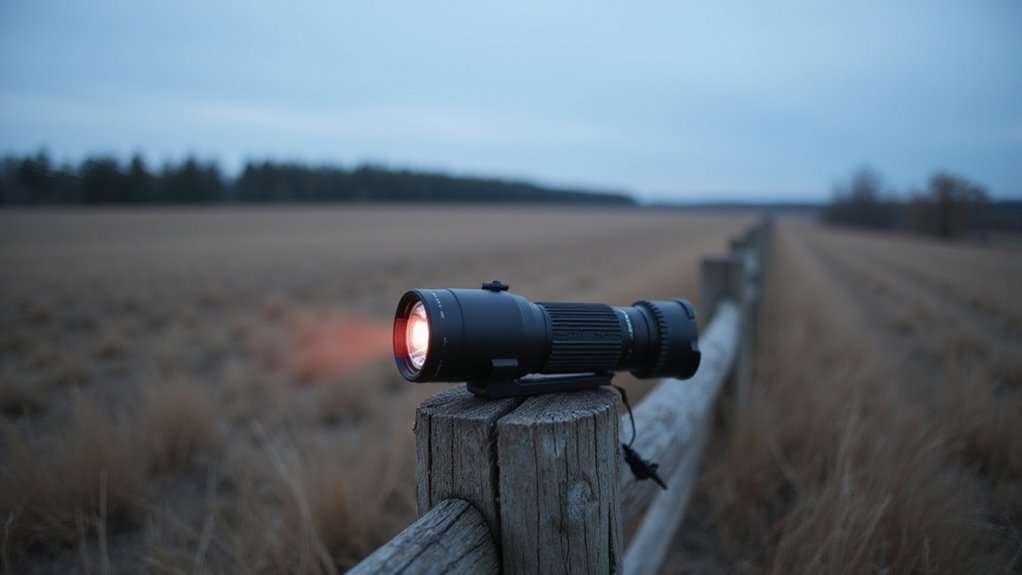
Red is your stealthiest tool for moving into position. It doesn’t trigger the same alarm response in coyotes and helps preserve your night vision better than any other color. Using red minimizes light pollution, keeping your presence subtle and allowing you to slip into your spot without spooking your target. Remember, red is only for movement and setup; it’s not meant for scanning. Unlike thermal imaging, which detects heat signatures regardless of light, red light depends on ambient light conditions to be effective. Once set, green takes over for scanning. It’s brighter, making terrain and coyote shapes easier to spot, but it’s also more visible than red. This trade-off is acceptable since your goal is to cover ground silently. Coyotes do not see the color red, as their eye structure prevents this perception, making it less visible to predators and enhancing stealth. When you’re ready for the final check, switch to white. Use it briefly for confirmation because it’s the brightest and most visible light but can give away your position quickly. Discipline in switching between these three colors—red for moving, green for scanning, white for confirming—is key to staying effective without alerting wary coyotes. Some modern trail cameras include a quick connect feature to streamline the setup process in low-light conditions. However, for scanning large fields, a green light’s intensity also aids in spotting eye shine at greater distances, which is a critical advantage over red.

7 Lighting Modes with Red, Green & White Light: Featuring an intuitive dual-button design, this headlamp lets you quickly switch between 7 lighting modes. One button controls 5 White Light Modes: Full Light (300 LM/328 ft), Floodlight (180 LM/65 ft), High Spotlight (150 LM/328 ft), Low Spotlight (50 LM/98 ft), and Strobe. Another button for Red & Green Light, support night vision, stargazing, hunting, and low-visibility tasks without disturbing others

PRACTICAL BRIGHTNESS FOR CLOSE- AND MEDIUM-RANGE TASKS - Designed for walking, running, camping, hiking, fishing, repairs, and household use. Provides clear, even light for nearby visibility.

660NM RED LIGHT FOR NIGHT VISION & STEALTH — Switch to red light mode anytime to protect your night vision and stay discreet during night fishing, astronomy, or camping. 4 brightness levels let you dial in the perfect red glow for any situation, without disrupting others around you.
How Coyotes See Red, Green, and White Light
Red light appears dull, muted, and grayish to coyotes because their dichromatic vision is centered on blue and yellow wavelengths. This means red wavelengths do not stand out and lack the visual contrast that could trigger a warning response. As a result, red is your best color choice when needing to stay stealthy, since coyotes do not see it vividly or as an immediate threat. Green light, however, appears brighter to a coyote’s eyes and offers better visibility for scanning at longer distances. Be cautious, though: if you get too close or wave the green beam, the increased visibility can alert or spook the animal. For example, purchasing a thermal scope can involve significant cost, but it provides a different detection method that avoids using any visible light.
White light is the brightest and most attention-grabbing option, producing high contrast that easily prompts a cautious or alarmed reaction. Keep in mind that more than just color matters; sudden movements or a bright, direct beam can startle coyotes regardless of hue. For close-in work where stealth is critical, red light is your safest bet. If you need to check a wider area from farther away and want to avoid detection, green light can be better, but with awareness of its higher visibility.
Recognizing that coyote vision is dichromatic supports why red light is less visible than green or white to these animals.
Red Light for Stealthy Coyote Hunting
Red light is your best bet for stealthy coyote hunting because it minimizes disturbance and keeps your movements concealed. Coyotes are generally less reactive to low-intensity red light, allowing you to get close without spooking them. This relates to their eye-shine response, which is often less stimulated by red wavelengths. Field reports show that under red light, coyotes respond with significantly lower alarm signals, giving you the advantage of approaching and setting up without alerting them prematurely. Notably, night vision scopes are legal for hunting in California with specific restrictions, making them a viable alternative to red light for coyote control. Thermal imaging sensors, which detect heat rather than visible light, can be mounted on a drone to provide a covert aerial view of coyote positions without any light exposure at all. For comprehensive low-light operations, understanding the differences between generation 1, 2, and 3 intensifier tubes can help you choose the right gear for varying terrain and budget. Using red light helps preserve your night vision, making it easier to navigate, confirm eye-shine, and make precise shots without straining your eyes or losing situational awareness. Keep the beam low and steady, avoiding sweeping motions that might catch the animal’s attention. Since red light doesn’t carry the same long-range visibility as white or green lights, it’s best suited for making your final approach at close to medium ranges. This tradeoff prioritizes stealth over long-distance visibility, giving you a better chance at connecting when within shooting distance.

High Performance Predator Light Kit: Features 3 different color beams including green, red, and white LED with tool-free interchangeable LED modules and a spot beam equipped with deep SMO reflector

【RED HUNTING HEADLAMP】 The WINDFIRE red light headlamp is equipped with high lumen red LED beads, which can output unfiltered bright and stable red light. The red single light source light does not startle the prey and can effectively protect the hunter's night vision

Best Brightest Red Night Hunting Flashlight Red Light with Single 1 mode 350 Yards long distance unfiltered Red light, tactical portable LED flashlight high lumen Red LED light that perfect Red hunting flashlight for predator hunt, coyote hunting, varmint hunting, hog coon deer pig Hunting. Hunt Gift for men, husband, boyfriend, farther, grandfather, brother, hobby or friend .
Green Light for Scanning Coyotes at Distance
Green light is your best choice for scanning coyotes at long distances. Unlike red light, which is better for close-range stealth, green offers superior contrast that makes eyes and silhouettes stand out sharply against brush and open fields. Its wavelength penetrates vegetation more effectively, giving you clearer identification of distant targets. For effective long-range scanning, opt for a beam focus that throws a tight circle, roughly between 150 and 700 yards, to accurately pick out eye shine or movement in open terrain or along wooded edges. When selecting your light, it helps to compare it against top motion detector cameras with night vision in terms of battery reliability for prolonged field use. The reason green light enhances visual detail is that the human eye is most sensitive to the green wavelength, which is also why night vision goggles display images in that color.
In this context, candela—how strong and focused the beam is—is more important than lumens, which measure overall brightness. A high candela value means the green beam can reach farther before scattering, helping you see targets without losing detail. Instead of holding the beam still, sweep it smoothly in short, controlled passes to scan larger areas without startling coyotes. They generally see green as brighter than red, but they’re less likely to be spooked if your beam remains moving rather than fixed directly on them. Pre-setting the light’s intensity to match the terrain allows you to detect subtle movement while minimizing the risk of alarming your target. For optimal performance, ensure your light has sufficient battery capacity to sustain long scanning sessions.

Receiving wrong or defective light? No need to return, keep it and email us directly will get a new right workable item for free , free lifetime for the pressure switch.Adjustable focus: zooming out a spot light 150 yard, zooming in a flood light 100 yard for searching preys

Product List: you will receive 4 green spotlights; These 12W LED spotlights add a delightful, devilish green glow to your house; They are especially suitable for Halloween decorations, as well as for decorating courtyards or lawn tree houses; The set is equipped with high-lumen LED beads, making them brighter than ordinary outdoor spotlights on the market

Integrated Hunting Light System: The A10 long-range zoomable hunting light provides green, red, white and 850nm infrared lighting options for nighttime wildlife observation and hunting.
White Light: When to Use It for Coyote Identification
White light should be used briefly, only at the critical moment just before you fire. While it is the most effective tool for final identification, you should avoid using it during your stealth approach, as prolonged exposure risks spooking the coyote. Use a controlled, short burst to confirm species, check body position, and verify shot placement with clarity and confidence. Its brightness and crispness help avoid costly mistakes in situations where legal or safety concerns are at stake. For those seeking alternative viewing methods, multiple reviews compare 4-lens night vision goggles for improved performance in low-light scenarios. A TU651 LRF thermal scope can help you detect coyotes from a distance without using any visible light. For comparing different trail camera options, a Stealth Cam vs. Tactacam review can help you choose the best gear for monitoring hunting areas.
Keep the white light exposure minimal—just enough for final confirmation. Use it for navigating rough terrain or locating a downed coyote after the shot. Remember, it’s an identification tool, not meant for scanning or long-term illumination. Excessive or prolonged use can alert wary animals and ruin your chances for subsequent shots or recovery. Think of white light as your last-minute check rather than your primary search beam.

Long Press Function and Motion Sensor: Unlike the old version, LHKNL headlamp has added a long press function. Just hold the key mode button for 3 seconds to turn off from any lighting mode—no need to cycle through all modes. It also added motion sensor mode, you can easily turn the lights ON or OFF by waving your hand, which is more convenient and avoids soiling the headlamp when your hands are dirty

★ BORUIT Camping Head Lamp➤ Equipped with LED main white light and 2 red LED side lights, up to 120 lumens.The headlamp contains 3 AAA batteries. If it is not used for a long time, the battery is also being discharged. It is recommended that you replace the battery in time when the light is dimmed, or prepare a few batteries for backup.

These 2 Pack of single mode red light flashlights are specially designed for night activities. Human's eyes are most sensitive to the Red range of light, but animals are not spooked by a Red LED flashlight, so these red lights are very helpful to find the animals in the dark, like hogs, coyotes, fox...are less sensitive to the Red light, so you can find them without disturbing them.
Red vs. Green vs. White for Coyote Hunting
Using multiple colors on your hunting light gives you the flexibility needed during different phases of coyote hunting. Red is ideal for stealthy movement and setup because it produces the least shadow and spooks the coyotes less. Green provides better contrast for spotting eyes and silhouettes at longer distances, helping you scan effectively without alerting animals early. White offers maximum visibility, making it useful for final identification, but it also increases disturbance and should be used sparingly. For example, just as a trail camera app requires adding a camera in a systematic step-by-step guide, switching your light color must follow a logical sequence to avoid alerting prey. Unlike Ring camera night vision, which uses infrared LEDs for close-range clarity, hunting lights rely on visible spectrum colors to illuminate distant targets. For those running prolonged setups, choosing a model with long battery life ensures your light doesn’t fail mid-scan, similar to how a trail camera must sustain power for weeks in the field.
A versatile, multi-color light allows you to switch modes seamlessly—red for moving in, green for scanning, and white for identification. This adaptability ensures you’re not restricted to a single color, enabling you to respond to changing conditions quickly. Remember, no one color suits every phase of the hunt; choosing your light color based on what you’re doing at each moment increases your chances of success.
Why Brightness Matters More Than Color for Coyotes
Brightness matters more than color for coyotes because it directly influences how detectable you are. Coyotes perceive a light source primarily through changes in intensity and movement, not just its hue. Their ability to see colors, especially in the red spectrum, is limited, so a dull red beam appears less threatening than a bright green one. The key factor isn’t the color itself but how strongly that light hits their eyes. Excessively bright light, regardless of its color, will alarm coyotes much faster than any hue difference. Understanding how thermal imaging technology detects heat signatures can further reduce your reliance on visible light altogether. For instance, thermal cameras create images by sensing temperature differences rather than ambient light, making them invisible to wildlife.
To minimize detection, control your light output carefully. A focused, dimmable beam between 500 and 800 lumens offers the best balance—bright enough to see without illuminating too much. Too much brightness creates glare, hampers your night vision, and signals your presence from a distance. Your goal is to see coyotes without attracting their attention to your light. Managing the intensity allows you to maintain this balance and stay undetected. For example, a focused beam helps reduce scattered light spill that can alert prey from a wide angle.
Your Night-Hunting Strategy: Red to Move, Green to Scan, White to Confirm
Using a color-based sequence ensures you see clearly without spooking coyotes. Start with red light to approach quietly; it is less visible, helps maintain your night vision, and won’t give away your position. Once you’re in position and ready to scan open country, switch to green. Green light offers superior contrast, making animal eyes and silhouettes stand out sharply against the terrain. Keep your beam tight and controlled—avoid sweeping across animals, which can alert them. When you spot a potential target, switch to white light briefly. This allows for positive identification and accurate shot placement without confusion. This method lets you cycle through lights quickly and smoothly, eliminating the need to carry multiple devices or swap equipment mid-hunt.

🎁 Complete Kit: Includes flashlight, 2 rechargeable batteries, USB charger, dual control remote pressure switch (momentary/constant-on), Picatinny and scope mounts / quick-release scope mount (fits 1inch to 30mm scopes), 20mm Picatinny/Weaver rail and a carrying case. 1-year for hunting flashlight kit, lifetime for coiled wire tailcap tactical switch(velcro backing include)

Adjustable Focus: The head of flashlight can be screwed in or out to produce a very wide flooding beam for close-in shooting or a narrow beam for longer range shooting

TARGETED GREEN ILLUMINATION — The concentrated green beam helps you scan trails, fields and wooded areas with less harsh glare than a bright white light. Ideal for night hunting, wildlife observation and low-light walking.