How Much Do Night Vision Goggles Cost?
Night vision goggles can range from under $200 for basic digital models to over $15,000 for advanced thermal systems.
The price depends on factors like technology level, features, and intended use.
Knowing these details will help you find the best value for what you need.
Keep reading to understand what influences the cost and what to consider before buying.
What Are Night Vision Goggle Generations (Gen 1, 2, 3)?
Night vision goggles are categorized into different generations based on their technology, which directly influences their performance and cost. Gen 1 models use basic analog technology, amplifying ambient light about 1,000 times to produce a visible image. They require some light, either natural or infrared illumination, and often show distortion or ghosts due to simpler optics. Their primary advantage is lower cost, but users must often choose between night vision or thermal for more demanding scenarios.
Gen 2 introduces more advanced technology such as a micro-channel plate, which significantly boosts gain to around 20,000 times. This results in clearer, more detailed images even in lower light conditions. They are more reliable and easier to use than Gen 1 models, making them suitable for serious outdoor activities or law enforcement. Choosing the right gear for these activities often involves weighing the performance and cost of equipment, similar to the bump helmet vs ballistic helmet comparison.
Gen 3 is considered the top-tier standard for tactical and military applications. It employs a gallium arsenide photocathode, which provides exceptional sensitivity and allows the device to operate effectively in near-total darkness. Amplification ranges between 30,000 and吸附 50,000 times, offering the brightest and clearest images with the longest operational range. Gen 3 goggles are best for professionals who need high performance in extreme conditions and can justify their higher price point. Integrating thermal imaging requires a thermal camera, which operates on a different technology that detects heat signatures rather than amplifying light.
What Exactly Drives the Cost of Night Vision Goggles?
The high cost of night vision goggles mainly comes from the combination of advanced technology, complex manufacturing processes, and niche market dynamics. Key components such as image intensifier tubes and thermal sensors are expensive to produce due to their precision and quality requirements. Manufacturing these devices demands highly skilled technicians, strict military-grade testing, and small-scale production runs, all of which increase costs compared to mass-produced consumer electronics. Market size also plays a role; with a limited customer base primarily made up of military and law enforcement agencies, prices are maintained at a premium. Additional features like wireless connectivity and artificial intelligence integration further raise costs. You should also consider expenses associated with compatible accessories and ongoing maintenance to maintain calibration and optimal performance of these sophisticated optical systems. For instance, properly managing your subscription services for related software updates can add to the long-term cost of ownership. Thermal imagers are a distinct technology that also contributes to the high price, as they rely on detecting infrared radiation rather than amplifying light. A deeper understanding of thermal imaging technology explains the specific engineering challenges behind these sensors.
How Much Do Gen 1 Night Vision Goggles Cost?
Gen 1 night vision goggles generally cost between $150 and $700, depending on the model and features. Basic Russian monoscope models may be found for under $100, making them suitable for casual outdoor use or hobbyist activities. On the other hand, standard binocular units tend to reach prices around $700, offering better image quality and durability. Budget-friendly options like ATN’s single-tube designs are popular but often face stock shortages, so availability can vary. For detecting heat signatures without specialized hardware, some users turn to thermal camera apps available for smartphones. When choosing a pair, make sure your device matches your intended use and mounting compatibility. Like a trail camera’s detection system, night vision goggles are most effective when their PIR sensor or equivalent technology is properly calibrated for the environment. It’s helpful to compare multiple brands and retailers, as different price drivers can significantly affect the final cost. To maintain your goggles, protect the objective lens from bright lights and store them in a dry, padded case to prolong their lifespan.

[HD Clarity for Outdoor Exploration]: Enhance your adventures with the GOYOJO head-mounted night vision monocular, perfect for activities like wildlife observation, camping, or nighttime exploration. Capture every moment in HD video and photos, ensuring sharp, high-quality visuals even in the dark. Whether you're tracking animals in the wild or navigating a campsite, this monocular delivers the detail you need.

1:1 Realistic AN/PVS31 Night Visions Goggles. It looks real that your competitor/enemy/adversary can't tell the difference.
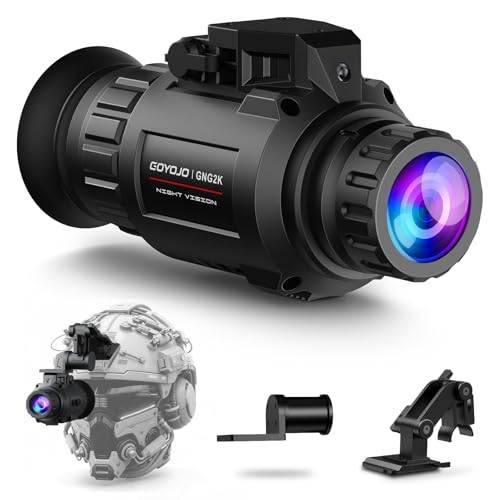
Ultra-Clear 2K Resolution – See What Others Can’t: GOYOJO GNG2K Night Vision Monocular delivers sharp 2688x1520 HD night vision with a smooth 60Hz refresh rate. Whether you’re securing your property, spotting coyotes at night, or navigating a pitch-dark trail, you’ll enjoy crystal-clear visuals without lag or blur — even in total darkness.
How Much Do Gen 2 and Gen 3 Night Vision Goggles Cost?
Gen 2 and Gen 3 night vision goggles vary significantly in cost, with Gen 2 units generally starting around $1,800 and reaching up to $7,000 or more for higher-end models. Gen 3 goggles are more expensive, typically ranging from approximately $2,500 for monoculars like the PVS-14 to over $13,000 for dual-tube binoculars. The most advanced systems, including high-spec tactical models, can exceed $15,000.
The price difference primarily depends on tube generation and added features such as white phosphor or enhanced resolution. Gen 2 goggles are more affordable and suitable for hobbyists and hunters, offering solid performance at a lower cost. In contrast, Gen 3 goggles are designed for professional use, such as law enforcement or military applications, where superior image quality and sensitivity justify the higher investment. Some users may also consider thermal clip-ons for added versatility in complete darkness or through light obscurants. Accessories like mounts and IR illuminators can also add to the total cost. Prices can often be reduced by looking for quality refurbished units from reputable dealers. When evaluating different models, consulting detailed night vision goggles reviews can provide valuable insights into specific performance and value comparisons.
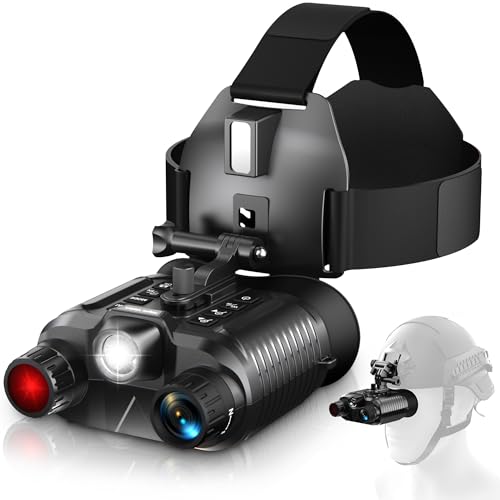
【Advanced Night Vision Technology & Fill Light】Equipped with an 850nm infrared illuminator and Starlight CMOS sensor, they deliver clear visibility in low-light conditions and 7 adjustable IR levels and 7-steps fill light for clear observation up to 1312 feet (400 meters) in total darkness

940nm Invisible IR & Long-Range Viewing: Vtiisamao night vision goggles feature 940nm infrared illumination with no visible red glow for more discreet nighttime observation. View subjects in complete darkness at distances up to 1,968 ft, ideal for wildlife observation, hunting, camping, farm monitoring, and property monitoring.

【4K Recording & 36MP Resolution & 8x Zoom】The 4k night vision supports 4K recording (captures subtle movements) and 36MP photos (shows fine details). Its 8x zoom boosts low-light visibility, making distant objects clearer
What Is the Price Range for Thermal Night Vision Goggles?
Thermal night vision goggles typically range in price from about $1,000 for basic models to over $20,000 for advanced military-grade systems. Lower-end units with simple sensors, around 240p or 320p resolution, usually start near $1,200 and are suitable for recreational use or casual observation. Mid-range options featuring 640p resolution and added functionalities generally fall between $4,000 and $10,000. The most sophisticated systems with high-resolution sensors, fusion technology, and military standards can exceed $20,000. Unlike traditional image intensification tubes that amplify available light, thermal goggles detect the infrared radiation emitted as heat by objects. Price variations are driven by several factors: sensor resolution and detection range, added features like video recording or image capture, and the integration of night vision fusion technology. Understanding these key price drivers can help you identify which features are worth the investment and where you might save money, as some costs stem from uncooled microbolometer sensors common in civilian devices. Advances in sensor clarity and miniaturization over time have made more capable units available across all price tiers. Currently, you can find surprisingly advanced features in mid-priced models, making high-quality thermal goggles more accessible than ever.
How Do You Find the Best Goggles for Casual Use Under $1,000?
Digital night vision goggles under $1,000 offer a practical balance of cost and performance for casual outdoor use. Focus on models that feature a sensitive digital night vision camera combined with robust infrared illumination. These elements ensure clear visibility in low-light conditions without breaking the bank. Look for lightweight designs and long-lasting batteries to enhance comfort and usability during extended sessions. For a budget-friendly option with recording capability, the Gipsot model includes a built-in 64GB TF card. Notable options in this price range include the NVG50, which costs under $500 and provides high-resolution imagery with minimal latency. For even more affordability, the Akaso Seemoor 200 is a top pick under $200, delivering decent performance for basic night viewing. With a budget up to $1,000, consider full kits like the G&G SVG 5 or NVG30 binocular sets, which include dual lenses and enhanced features suitable for casual discovery. Prioritize models with digital sensors and infrared capabilities to ensure you get a reliable, clear experience during outdoor activities at night.

NIGHT VISION GOGGLES FOR ADULTS 4K – Experience clear digital night vision with a 4K imaging system and large 4.5" HD screen. Designed for nighttime observation, outdoor exploration, camping, hunting, and wildlife viewing.

Advanced Night Vision Imaging Technology:Equipped with an 850nm infrared illuminator and Starlight CMOS sensor, these goggles deliver full-color visibility in low-light conditions and 7 adjustable IR levels for clear observation up to 2,000 feet (610 meters) in total darkness that ensures durability for nighttime adventures

Built-in Compass for Easy Navigation – Our 4K digital night vision binoculars feature a built-in compass, ensuring you stay on track in the wild. Whether for tactical use, infrared (IR) night hunting, or outdoor adventures, these nocturna nightvision goggles provide reliable navigation in complete darkness.
When Do You Need Professional or Military-Grade Night Vision?
Professional or military-grade night vision becomes necessary when your activities require seeing clearly in total darkness or extreme conditions where safety and effectiveness are critical. You’ll typically need Gen 3+ image intensifiers for long-range detection in zero light or during high-stakes missions such as search and rescue, border patrol, or counter-terrorism. For example, the Tactical Night Vision Company DT NVS features a third-generation MX 10160 tube and is constructed to exceed MIL-STD-810G standards. These units offer rugged durability, thermal fusion, and superior white phosphor contrast, which consumer-grade devices lack.
Forget myths about cheap gear performing in these scenarios. Access to military and law enforcement-grade equipment is usually restricted by law. The investment can be significant, often starting at around $3,500 for a high-end monocular. Additionally, maintaining optimal performance involves ongoing maintenance and regular upgrades, making these systems a serious commitment for those who need reliable, clear vision in the darkest conditions.

AGM PVS-14 is a rugged, multi-purpose night vision monocular used globally in challenging environments.

Enhanced Visual Clarity: 1.54" HD high definition large screen with wider viewing range, equipped with 7x high magnification telescope and 20mm adjustable focus high transmittance photosensitive lens, making it easier to search and find farther targets

new upgraded night vision monocular feature an INFRARED ILLUMINATOR and All-Optical System allows you to see animals or plants clearly in 100% Darkness or dim ambient light. With 3 modes: taking photos, recording a video(does not record sound), and playback, you can capture high definition photos & videos with its outstanding optical clarity in the daytime, low light, or night time.
What 5 Factors Should You Weigh Beyond the Price Tag?
Beyond the price tag, five factors significantly influence the true value of night vision goggles. First, examine the tube’s specifications, such as resolution and signal-to-noise ratio. Higher resolution ensures clearer images, while a good signal-to-noise ratio reduces graininess and improves visibility in low light. tube quality is a primary driver of performance and cost, with reputable builders ensuring proper setup and construction. Second, prioritize comfort and ergonomics; goggles that are front-heavy or bulky, especially over 650 grams, can cause neck strain during extended use. It’s also wise to practice adjusting the interpupillary distance and diopter settings beforehand for a quick and proper fit in the dark. Third, assess the environment where you’ll operate them. Waterproofing and automatic brightness control are essential for variable conditions, preventing damage and ensuring optimal visibility. For remote or rugged locations, equipment reliability is paramount, much like choosing a dependable trail camera without wifi for monitoring. Fourth, review warranty coverage. A solid policy protects your investment against tube defects and major failures, saving money in the long run. Just as you would compare performance and cost for gear like trail cameras, scrutinize the warranty details for any critical purchase. Fifth, consider practical features like battery life. Longer-lasting batteries extend your operational time without frequent replacements, crucial during prolonged activities. Low-cost units often cut corners on these elements, so balancing initial expense against durability and performance is key.
Goggles, Monocular, or Scope: Which Night Vision Style Is Best?
Goggles are the best night vision style for hands-free use and active movement, such as night driving or outdoor operations. They cover both eyes, providing critical depth perception and situational awareness during rapid movement or complex tasks, with dual tube designs offering superior depth perception for detailed navigation. The green phosphor screen in these devices leverages the human eye’s peak sensitivity to that color for enhanced detail recognition. Monoculars are lighter and more affordable, making them ideal for stationary observation, such as security patrols or casual scouting. They allow quicker target acquisition with one eye, though they do not provide binocular depth perception. For a budget-friendly alternative, a DIY thermal camera can offer a different type of night vision capability using heat signatures rather than ambient light.
Scopes are designed for precise long-range targeting, often used in hunting or tactical scenarios. They integrate magnification and reticles for accuracy over distance, making them suitable when spotting or engaging targets at extended ranges. Your choice depends on your priorities: goggles for mobility, monoculars for versatility and affordability, or scopes for accuracy at long distances. Budget options—digital scopes and Gen 1 monoculars—offer practical performance without breaking the bank for most users.

ADVANCED 850NM STEALTH INFRARED & 8X DIGITAL ZOOM: Our night‑vision goggles adopt upgraded 850nm invisible IR illuminator, which will not spook wildlife; with powerful 8X digital zoom and high‑sensitive image sensor, it delivers sharp‑detailed images up to 1312FT even in total darkness. You can zoom in to identify far‑away targets effortlessly for outdoor camping, farm & estate nighttime security, wilderness wildlife observation and night patrol.

2.7'' WIDE SCREEN: This night vision binoculars is with the 2.7'' LCD super clear screen.It featured with excellent optical clarity, fully-coated 25mm objective lens,10X lens magnification,8X digital zoom to offer you more full field.The 7 gears adjustment allows you to watch animals/plants clearly within 1312ft in totaly darkness.Be sure to adjust the lens after zoom in/out for a clear display.

[Long /Short Range]: Dsoon UHD Night vision goggles 8x digital zoom and a Wide Field of View (FOV) of 10° are critical for far/close-quarters use. 850nm IR LEDs are designed to illuminate everything nearby. The display design of the binoculars allows you to experience the 3D real-time observation effect in an immersive, recording of audio and video.
What Are the Hidden Costs of Owning Night Vision Goggles?
The hidden costs of owning night vision goggles can easily double your initial investment. Beyond the sticker price, you’ll need to budget for essential accessories such as a helmet, mount, and illuminator, which can add between $1,750 and $4,000. These components are necessary to make your system operational and safe to use.
Ongoing expenses don’t stop there. You will need specialized batteries, cleaning kits, and regular maintenance to ensure optimal performance. Repairs can also be costly—damaged tubes can cost over $2,000 to replace, adding a significant unexpected expense. Additionally, consider insurance policies to protect your gear against damage or loss, and potential licensing fees if applicable.
Depreciation happens quickly; your gear’s value can drop substantially just within a year. All these factors combined mean your total cost of ownership is often much higher than the initial purchase price, making it important to plan for these hidden expenses in advance.