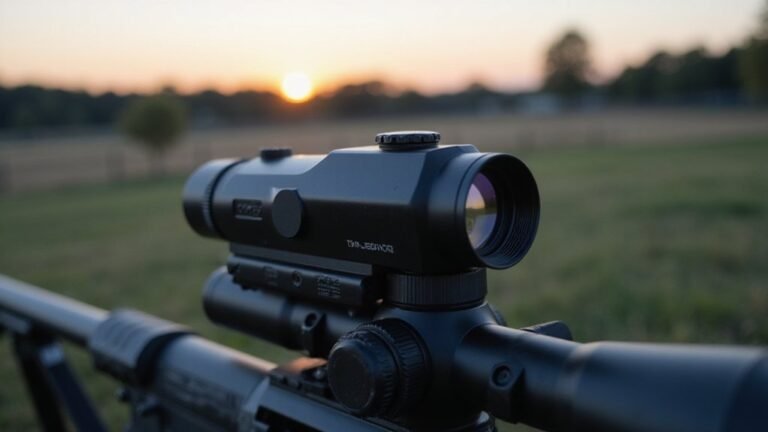
7 Helmet-Mounted Thermal Monoculars Worth Looking Into
You don’t always have to choose between keeping your hands free and seeing clearly in the dark. Helmet mounted thermal monoculars solve that exact problem. We’re looking at seven models with detection ranges up to 150 meters, IP67 waterproofing, and ergonomic mounts. Whether you’re on a night patrol or a backcountry hike, these units enhance your situational awareness without tying up your hands. Let’s break down what each one offers.
| Fusion Thermal Vision Night Vision Goggle |  | Best Value | Thermal Sensor Resolution: Not specified (fusion thermal/night vision) | Refresh Rate: 60Hz | Weight: Not specified | VIEW LATEST PRICE | Read Our Analysis |
| Flir Breach PTQ136 Thermal Monocular 320×256 Boson 60Hz IP67 |  | Professional Grade | Thermal Sensor Resolution: 320×240 (Boson 12μm core) | Refresh Rate: 60Hz | Weight: 7.4 oz | VIEW LATEST PRICE | Read Our Analysis |
| GOYOJO GNG2K Night Vision Monocular 2K 60Hz | 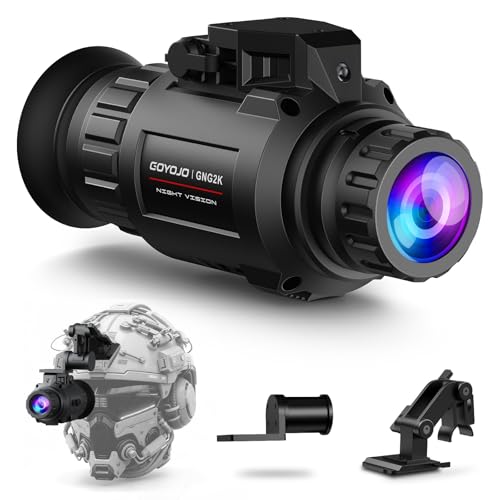 | Budget-Friendly Pick | Thermal Sensor Resolution: Not specified (digital night vision, 2K) | Refresh Rate: 60Hz | Weight: Not specified (lightweight) | VIEW LATEST PRICE | Read Our Analysis |
| GOYOJO Night Vision Goggles Helmet-Mounted Monocular |  | Entry Level | Thermal Sensor Resolution: Not specified (digital night vision, 1080P) | Refresh Rate: Not specified | Weight: Not specified | VIEW LATEST PRICE | Read Our Analysis |
| Armasight Sidekick 640 Mini Thermal Monocular |  | Most Compact | Thermal Sensor Resolution: 640×480 (Armacore 640) | Refresh Rate: 60Hz | Weight: Under 250g (8.8 oz) | VIEW LATEST PRICE | Read Our Analysis |
| RIX Stride ST3 Lite Thermal Monocular |  | Lightweight Workhorse | Thermal Sensor Resolution: 384×288 | Refresh Rate: 50Hz | Weight: 0.42 lb (6.7 oz) | VIEW LATEST PRICE | Read Our Analysis |
| RIX Stride ST6 Lite 640 Thermal Monocular |  | Best Overall | Thermal Sensor Resolution: 640×512 | Refresh Rate: 50Hz | Weight: 0.45 lb (7.2 oz) | VIEW LATEST PRICE | Read Our Analysis |
More Details on Our Top Picks
Fusion Thermal Vision Night Vision Goggle
The Fusion Thermal Vision Night Vision Goggle delivers impressive value for anyone who needs reliable low-light performance without breaking the bank. You’ll get a near delay-free 60FPS display, where night vision mode reaches 100 meters and thermal mode pushes to 150. In complete darkness, you’re looking at 100 yards of visibility, and you can extend that range with an external IR source. The 850nm infrared keeps you totally invisible, while the adjustable IR focus lets you dial in your sight picture.
Comfort holds up too. The grippy rubberized headstrap adjusts for everyone, from kids to adults, and the rugged build handles real firearms training. You can mount it via J-Arm or 3D printed designs, then pair it with helmets or red dot sights. For CQB, airsoft, or tactical training, it’s a zero-latency, wide field-of-view winner that won’t empty your wallet.
- Thermal Sensor Resolution:Not specified (fusion thermal/night vision)
- Refresh Rate:60Hz
- Weight:Not specified
- Mounting Type:J-Arm mount compatible, 3D printed designs
- Environmental Rating:Not specified (rugged design)
- Built-in Compass:Not specified
- Additional Feature:60FPS near delay-free display
- Additional Feature:Vision up to 100-150 meters
- Additional Feature:Adjustable IR focus/850nm
Flir Breach PTQ136 Thermal Monocular 320×256 Boson 60Hz IP67
Flir Breach PTQ136 is professional grade, plain and simple. It packs a Boson 12μm thermal core, giving you sharp detail through darkness, smoke, or fog. You’ll spot suspects or wildlife faster by switching palettes like Ironbow or Rainbow HC.
Weighing just 7.4 ounces, it’s built for high-speed ops. Mount it on your helmet via the mini-rail, or stash it in a pocket for quick access. Record up to 1,000 snapshots, review them through USB-C. And with an IP67 waterproof rating, it handles harsh weather without flinching. A digital compass keeps you oriented. This monocular doesn’t mess around.
- Thermal Sensor Resolution:320×240 (Boson 12μm core)
- Refresh Rate:60Hz
- Weight:7.4 oz
- Mounting Type:Built-in mini-rail for helmet mounting
- Environmental Rating:IP67
- Built-in Compass:Yes (digital compass)
- Additional Feature:Up to 1,000 snapshots storage
- Additional Feature:USB-C interface for footage
- Additional Feature:Digital compass navigation
GOYOJO GNG2K Night Vision Monocular 2K 60Hz
For night-hikers, hunters, or property owners who need reliable vision without draining your wallet, the GOYOJO GNG2K is your budget-friendly pick. It delivers ultra-clear 2K resolution (2688×1520) at a smooth 60Hz refresh rate, so you won’t deal with lag. Its 0.0001 Lux sensor captures bright, detailed images even under starlight. You get four color modes—Night Green, Black & White, White Phosphor, or Color (with a reddish-purple tint)—to adapt to any scene. The 940nm stealth IR illuminator lets you view up to 300 meters without detection, and you can adjust brightness across three levels.
- Thermal Sensor Resolution:Not specified (digital night vision, 2K)
- Refresh Rate:60Hz
- Weight:Not specified (lightweight)
- Mounting Type:Quick-release helmet mount
- Environmental Rating:Not specified (rugged, rain/dust resistant)
- Built-in Compass:Yes (electronic compass)
- Additional Feature:2K resolution (2688×1520)
- Additional Feature:Four color modes available
- Additional Feature:940nm stealth IR illuminator
GOYOJO Night Vision Goggles Helmet-Mounted Monocular
You want a hands-free night vision setup without breaking the bank? The GOYOJO helmet-mounted monocular delivers. Its 1080P CMOS sensor and ultra-wide infrared coating capture crisp HD video and photos in total darkness. You’ll get three zoom levels up to 3X, plus color, black & white, or fluorescent green modes to match your scene. The 850nm IR with three intensity levels lets you dial in visibility. IP66 waterproofing means rain won’t stop you. For night hikes, wildlife checks, or security rounds, it mounts securely to your helmet. Just adjust the IR, pick your mode, and go.
- Thermal Sensor Resolution:Not specified (digital night vision, 1080P)
- Refresh Rate:Not specified
- Weight:Not specified
- Mounting Type:Helmet-compatible design
- Environmental Rating:IP66
- Built-in Compass:Not specified
- Additional Feature:1080P HD video capture
- Additional Feature:Three image color modes
- Additional Feature:3-level IR adjustment (850nm)
Armasight Sidekick 640 Mini Thermal Monocular
If you’re a hunter or tactical operator who needs a lightweight, hands-free thermal solution, the Armasight Sidekick 640 is your best bet. Weighing under 250 grams, it’s the smallest fully functional 12-micron 640 thermal monocular out there. Its built-in mini-rail lets you mount it directly to a helmet or headset, freeing your hands for the task at hand.
You get Armasight’s Iron Wolf technology with a fast 60Hz frame rate, so everything stays smooth. The high-definition 1024×768 OLED display delivers crisp images, and simplified three-button controls let you adjust settings without fumbling. Plus, one-touch video recording captures your experiences, while the built-in compass keeps you oriented. It’s compact, capable, and ready to go.
- Thermal Sensor Resolution:640×480 (Armacore 640)
- Refresh Rate:60Hz
- Weight:Under 250g (8.8 oz)
- Mounting Type:Built-in mini-rail for headset/helmet mounting
- Environmental Rating:Not specified
- Built-in Compass:Yes (built-in compass)
- Additional Feature:1024×768 OLED HD display
- Additional Feature:One-touch in-unit video recording
- Additional Feature:3-button simplified controls
RIX Stride ST3 Lite Thermal Monocular
The RIX Stride ST3 Lite Thermal Monocular is the best choice for anyone who demands hands free thermal vision without neck strain. You’ll appreciate its 0.42 lb build, making prolonged helmet wear effortless. Its true 1x magnification preserves your natural view, while the 1x to 6x digital zoom lets you dial in for closer looks. The 384×288 sensor with NETD <20mK delivers sharp, smooth imagery at 50Hz. With a 17.5° by 13.1° field of view, scanning feels quick and easy. IP67 rated and with rechargeable, swappable batteries, it handles rain, dust, and long nights. Mount it on your helmet, tripod, or vehicle using the 1/4 inch or M5 points. Perfect for patrols, search ops, or night hikes.
- Thermal Sensor Resolution:384×288
- Refresh Rate:50Hz
- Weight:0.42 lb (6.7 oz)
- Mounting Type:1/4-inch and M5 mounting points for helmet
- Environmental Rating:IP67
- Built-in Compass:Not specified
- Additional Feature:True 1x base magnification
- Additional Feature:Digital zoom 1x–6x
- Additional Feature:NETD <20mK thermal sensitivity
RIX Stride ST6 Lite 640 Thermal Monocular
For hunters, security personnel, or night drivers who need both hands free, the RIX Stride ST6 Lite 640 stands out. Its 640×512 thermal sensor, with a NETD less than 20mK and a 50Hz refresh rate, delivers crisp, high contrast imagery that reveals detail even in tough conditions. You get a true 1× magnification for natural perception, then digitally zoom up to 6× when needed.
The wide 17.5° × 13.1° field of view speeds up scanning, perfect for patrols or night drives. Weighing just 0.45 lb, you’ll hardly notice it on your helmet. And with IP67 water resistance plus integrated 1/4-inch and M5 mounts, it’s ready for any setup. Plus, the rechargeable battery swaps out easily for extended missions.
- Thermal Sensor Resolution:640×512
- Refresh Rate:50Hz
- Weight:0.45 lb (7.2 oz)
- Mounting Type:1/4-inch and M5 mounting points for helmet
- Environmental Rating:IP67
- Built-in Compass:Not specified
- Additional Feature:640×512 thermal sensor
- Additional Feature:True 1x base magnification
- Additional Feature:Digital zoom 1x–6x
Factors to Consider When Choosing a Thermal Monocular for Helmet
You need to weigh three critical factors before you strap a thermal monocular to your helmet: weight and balance, then mounting compatibility, followed by image quality specs. Don’t forget battery endurance either, as a dead unit mid-mission is useless, and environmental sealing protects your investment from rain or dust. And finally, check that your chosen device doesn’t throw your helmet off-center, which causes neck strain over long use.
Weight & Balance
When you’re strapping a thermal monocular to your helmet, the first thing that’ll bite you is weight, and it’s not just about how heavy it feels in your hand. Anything over 0.5 lbs can drag your head forward, straining your neck and ruining your endurance during long missions. You want a lighter unit to keep fatigue at bay, but balance matters just as much. A built-in battery often adds bulk, so look for designs that place it rearward, evening out the load.
Here’s what to focus on:
- Keep it under 0.5 lbs for all-day comfort.
- Check the battery position; a rear-heavy design counters forward tilt.
- Pick compact, ergonomic shapes that minimize bulk without sacrificing capability.
Balance isn’t a luxury, it’s a necessity for staying sharp and stable.
Mounting Compatibility
How do you even get a thermal monocular to stay put on your helmet without it wobbling or falling off mid stride? You need the right mounts. First, look for a device with a standard 1/4-inch or M5 mounting thread. This ensures you can attach it to any helmet rail system. And check if it comes with a built-in mini rail or an adapter plate specifically for helmets that’s a huge time saver.
Don’t forget weight and balance. A heavy monocular will pull your helmet forward, causing neck strain. Quick attachment and detachment features are key for operational efficiency you don’t want to fumble with screws in the field.
Finally, prioritize durability. Look for an IP67 waterproof rating so your mounting setup holds up in rain or mud. That way, you’re locked in and ready to move without a second thought.
Image Quality Specs
Why does image quality matter so much for a helmet-mounted thermal monocular? Because when you’re moving fast in low light, every detail counts. Higher resolution sensors, like 640×512, give you sharper images for better target identification, so you don’t mistake a stump for a threat. Look for a low NETD value, ideally under 20mK, which means higher contrast and clearer detection even in fog or smoke. A refresh rate of 50Hz or 60Hz keeps motion smooth, reducing lag when tracking quick movements. And don’t overlook palettes like Ironbow or Rainbow HC; they help you differentiate thermal details based on conditions. These specs directly affect your safety and effectiveness, so choose wisely.
Battery Endurance
What keeps you out in the field longer? Battery endurance is your lifeline, especially during night missions or extended outdoor trips. A thermal monocular with high-capacity batteries or support for multiple cells can deliver continuous use from several hours up to a full day, depending on the model. That’s vital for safety and reliability; running out of power means losing situational awareness when you need it most. Look for devices with quick recharge times and low power consumption. They optimize endurance without sacrificing performance. And here’s a practical tip: choose a model that lets you easily swap batteries in the field. This flexibility ensures interruptions don’t cut your mission short. Prioritize endurance, and you’ll stay operational longer.
Environmental Sealing
When you’re out in rain, dust, or mud, environmental sealing is what keeps your thermal monocular alive and kicking. Look for an IP67 rating. This means it’s dust-tight and can handle submersion in up to a meter of water for half an hour. Without solid sealing, moisture or debris creeps inside, causing corrosion or component failure before you know it. Proper seals also guard against water jets, humidity, and grime during rugged use. That’s vital when you’re stuck in a downpour or kicking up dirt on patrol. So, a high quality seal directly extends your device’s lifespan and keeps your thermal performance crisp, no matter the weather. Don’t skimp here. It’s cheap insurance for expensive gear.
Field of View
Since your eyes need to stay in the game, not glued to a tiny screen, field of view is your biggest ally for situational awareness. You’re scanning a treeline, a street, or a field; a wider view, say 40° to 45°, lets you catch movement faster than a narrow 17.5° slice. That’s the difference between spotting a threat and missing it entirely.
But don’t chase width blindly. A narrower field gives you sharper detail at long range, which is great for identification, but it’ll crush your peripheral vision. You want a balance: enough width to scan efficiently, enough resolution to pick out targets.
Here’s the practical takeaway:
- Wide (40°+): Best for dynamic environments, quick target detection.
- Narrow (17.5°–30°): Better for distance, but you’ll need to pan more.
Match your field of view to your mission, and you’ll keep your head on a swivel, not stuck in a tunnel.