The Ultimate Guide to Choosing a Thermal Monocular
Figuring out which thermal monocular suits you can feel overwhelming with so many options. Your choice depends on how you plan to use it, whether for hunting, security, or simply exploring the outdoors.
The key is understanding essential features like resolution, detection range, and durability.
Keep reading to learn how these specs come together to find your best match.
What Is a Thermal Monocular and How Does It Work?
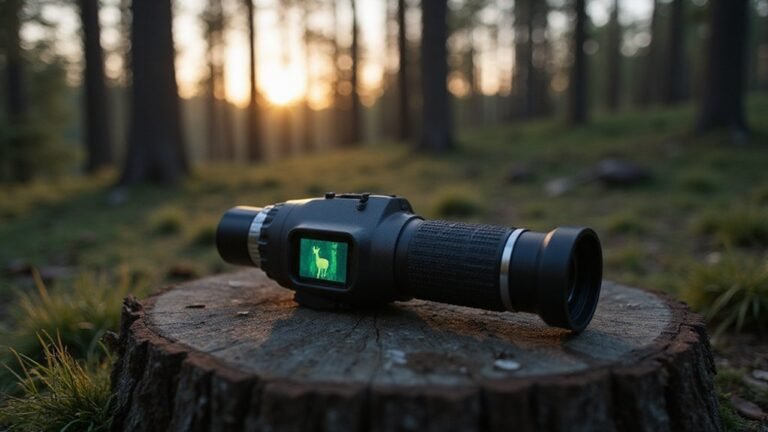
A thermal monocular detects heat rather than visible light. It uses a microbolometer sensor to sense infrared radiation emitted by all warm objects, making it a passive device that does not emit any signals. Understanding how thermal imagers work is fundamental for appreciating their critical applications in security, search and rescue, and building inspections. When comparing infrared vs. thermal cameras, it’s important to note thermal devices specifically image heat signatures. Internal electronics translate this raw heat data into a visual image displayed on a screen. Your monocular’s thermal sensitivity determines its ability to distinguish small temperature differences, which is crucial for spotting targets that blend into their surroundings. Warmer areas such as animals appear brighter, while cooler backgrounds are darker, allowing you to identify heat signatures effectively. To enhance clarity, you can switch between different color palettes like white-hot or rainbow, which assign specific colors to temperature ranges. This feature helps you better interpret scenes by emphasizing contrast and detail tailored to your observation needs. The performance and features that drive the cost of night vision apply to thermal optics as well, with advanced sensors commanding higher prices.
What Will You Use Your Thermal Monocular For?
Your thermal monocular can be tailored to a wide range of activities by focusing on key features suited for each purpose. If you’re hunting, prioritize models with high thermal sensitivity for detecting game in complete darkness or through dense brush. These units help you locate wounded animals and spot predators at dawn, often through thick vegetation. For home security, look for thermal monoculars that offer long-range detection, perimeter monitoring modes, and automatic alerts for intruders. They help you identify threats early and even find water leaks or insulation issues.
Wildlife observation benefits from monoculars with quick focus and versatile color palettes, allowing you to observe nocturnal animals without disturbing them. If you’re involved in search and rescue or firefighting, opt for models that provide thermal imaging through smoke, fog, or flames and include features like hotspot detection and fast refresh rates to track moving targets effectively. Industrial inspections require thermal monoculars capable of detecting overheating equipment, electrical faults, or inefficiencies. Always consider the specific features needed for your activity, such as color palette options for clarity and high sensitivity for detailed thermal detection.
Additionally, evaluating warranty policies is wise, especially for demanding field use. Reliable coverage ensures your investment remains protected, considering that heavy duty applications may subject your device to tough conditions. Ultimately, matching your thermal monocular’s features with your intended activity maximizes performance, safety, and value. For a clearer decision, it’s helpful to see night vision and thermal compared side by side for their distinct advantages.
Sensor Resolution and NETD: The Core of Image Clarity
Sensor resolution and NETD are the two key specs that determine your thermal monocular’s image clarity. Sensor resolution, measured in pixel dimensions, affects how detailed your images are. A resolution like 640×512 provides sharper, more detailed visuals, making it easier to identify targets at longer distances. In contrast, a lower resolution such as 256×192 is typically suitable for close-range, basic observation tasks.
NETD sensitivity indicates how well the device can detect tiny temperature differences. Measured in millikelvin (mK), a lower NETD value—under 25 mK—is better for seeing subtle thermal variations. A monocular with a NETD under 20 mK will deliver higher contrast images, especially in challenging conditions like fog, low light, or environments with minimal temperature differences. While dedicated thermal imaging hardware provides the best performance, some users explore software-based thermal camera apps for basic detection on smartphones. The underlying microbolometer technology within the sensor is what makes this detailed thermal measurement possible. For optimal clarity in total darkness, however, a dedicated thermal imaging device is superior to traditional night vision goggles. Balancing high resolution with low NETD results in clearer, more reliable images, but premium models tend to combine both—high resolution and excellent thermal sensitivity—while budget options may focus on one over the other.
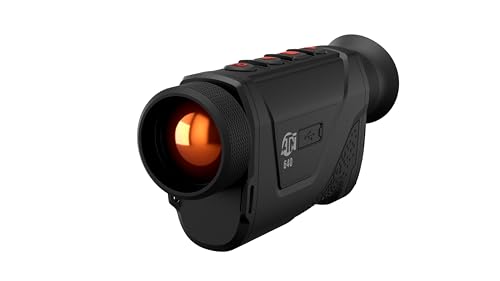
PRO-GRADE IMAGE SENSOR Equipped with a vanadium oxide uncooled focal plane detector with NETD <18mK for exceptional thermal imaging and detection of even the smallest temperature differences for enhanced clarity and precision in all conditions.

PRO-GRADE IMAGE SENSOR Equipped with a vanadium oxide uncooled focal plane detector with NETD <18mK for exceptional thermal imaging and detection of even the smallest temperature differences for enhanced clarity and precision in all conditions.
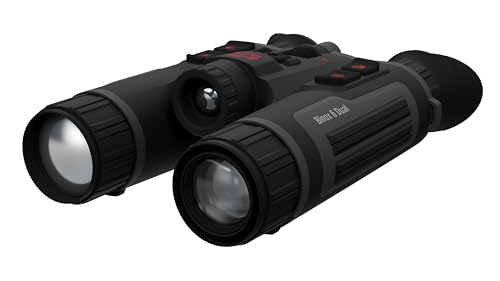
MAXIMUM DETAIL IN EVERY SPECTRUM — 4K Day, IR Night, Twilight, and elite 640×512 thermal imaging give you unmatched clarity for long range detection and identification.
Lens Magnification: Seeing Far vs. Seeing Wide
Magnification primarily dictates whether your monocular is suited for wide-area scanning or detailed spotting at long distances. Higher magnification, around 8x to 12x, allows you to identify objects beyond 500 yards, making it ideal for spotting distant game. However, this increased magnification narrows your field of view, making it more difficult to track moving targets. Conversely, lower magnification, such as 2x to 4x, provides a broader field of view, which is better for quickly scanning dense woodland or navigating rough terrain. This wide view is especially beneficial when operating in total darkness, as it helps compensate for the limited infrared spectrum sensitivity of some devices. When choosing your lens, consider the field of view (FOV); a shorter lens with 19-35mm and 2-3x magnification offers a good balance for general use, combining enough reach with the ability to quickly survey broad areas. Larger 50mm lenses support higher magnification levels, making them suitable for open terrain or distant observations. For dedicated long-range observation, a binocular system like the PVS-15 offers superior depth perception and reduced eye strain. Properly adjusting your field of view and focal length will help ensure you capture a clear image of your subject. Be aware that digital zoom often leads to significant pixelation and blurring, rapidly degrading image quality as you zoom in. Digital zoom is best used as a secondary tool for confirmation after spotting an object with your primary, more effective magnification.
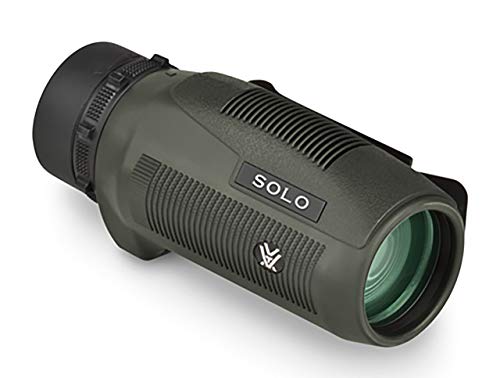
10x magnification and 36mm objectives lens, the Solo Monocular is a small, lightweight optic with fully multi-coated lenses, increasing the light transmission and resolution giving you the clear, crisp images you want.
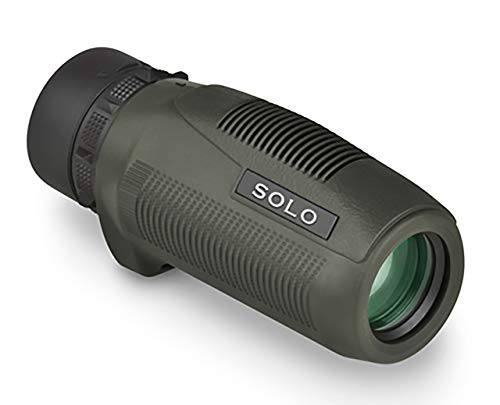
10x magnification and 25mm objectives lens, the Solo Monocular is a small, lightweight optic with fully multi-coated lenses, increasing the light transmission and resolution giving you the clear, crisp images you want.
8x magnification and 25mm objectives lens, the Solo Monocular is a small, lightweight optic with fully multi-coated lenses, increasing the light transmission and resolution giving you the clear, crisp images you want.
What’s the Real Detection Range You Can Expect?
The effective identification distance is generally about 30 to 40 percent of the maximum detection range advertised by thermal camera manufacturers. While some sensors might detect a heat signature at 1,000 meters, you might only clearly identify what the object is around 300 to 400 meters away. Sensor resolution greatly influences this; for instance, a 256×192 sensor may detect a person under 400 meters but struggle to provide enough detail for identification. Increasing resolution to 640×512 improves clarity and allows for identification closer to 1,000 meters. Target size plays a pivotal role—you’re more likely to identify a large animal like a deer well before recognizing a smaller one, such as a rabbit. Environmental factors also matter: humidity, fog, low temperature contrast between the object and background, and weather conditions can significantly cut effective range by half or more. These conditions reduce the sensor’s ability to differentiate heat signatures, emphasizing the importance of planning based on practical identification distance rather than maximum detection range, much like the operational principles of a trail camera. When choosing a device, consider that a thermal monocular often provides better value for most users due to its lower cost and sufficient performance for typical observation tasks. Remember, a thermal camera cannot see through walls, so your detection range applies to outdoor, unobstructed views.

【Newly Upgraded Imager Sensor】Offering unparalleled 640*512 detail to anyone Track and identify predators with superior clarity, plus a 800*600 OLED display, spot before they find you.

6th Gen High-Resolution Thermal Imaging Featuring a 640×512 thermal sensor with 12µm pixel pitch and ≤18mK NETD sensitivity, BlazeTrek 6 delivers exceptional image detail, strong contrast, and confident long-range detection in darkness, fog, and low-contrast environments.
PRO-GRADE IMAGE SENSOR Equipped with a vanadium oxide uncooled focal plane detector with NETD <18mK for exceptional thermal imaging and detection of even the smallest temperature differences for enhanced clarity and precision in all conditions.
Display Quality and Refresh Rate for Clear Viewing
Display Quality and Refresh Rate for Clear Viewing
The clarity of your thermal image depends heavily on display and sensor resolution. A higher sensor resolution, such as 640×512 pixels, provides sharper detail and makes it easier to identify distant targets. Your screen’s resolution also impacts sharpness; for example, a 1024×768 OLED screen enhances image clarity and delivers excellent color contrast. To ensure smooth motion and diminish lag when scanning or tracking, a refresh rate of 50Hz or: 60Hz is recommended. Lower refresh rates can cause a jarring and blurry view, reducing image stability. Additionally, an ergonomic grip can improve stability during use, which is crucial for maintaining a clear image during extended sessions. A low NETD sensitivity rating, under 25mK, minimizes thermal noise and graininess, resulting in a cleaner, more detailed image even in challenging conditions. Understanding the assigned color palettes can further help in interpreting the heat signatures effectively. These systems detect infrared radiation to produce images based on heat signatures. Unlike red night vision goggles, thermal devices do not require any ambient light to function.
Battery Life, Portability, and Rugged Design
Reliable battery life, portability, and ruggedness are essential for effective field use. Expect a runtime of around 4 to over village 7 hours, but note that using Wi-Fi or setting high brightness levels will drain the battery faster. The resolution and sensitivity of the thermal sensor are major factors influencing its cost, just as they are for a thermal drone. To maximize battery lifespan, avoid deep discharges and recharge when the battery is relatively partial, similar to the best practices for maintaining trail camera batteries. An ergonomic design makes a significant difference—opt for a lightweight, compact model with a rubberized grip to prevent slipping and reduce fatigue during extended handheld operation. Its small size allows easy storage and transport. A rugged IP67-rated housing made from durable materials can withstand dust, water immersion, and impacts, ensuring your device endures the harsh conditions of the field. For nighttime observation, your thermal monocular’s effectiveness can be complemented by using the appropriate hunting light color for the game you are pursuing.
Matching Additional Features to Your Needs
Adding features like wireless connectivity, rangefinders, and specialized color palettes can significantly enhance your thermal monocular’s functionality. Wireless connectivity, such as Wi-Fi, allows you to live-stream the view to a mobile device, which can be crucial for team coordination or remote observation. A built-in laser rangefinder provides precise distance measurements, aiding in accurate shot placement and target assessment. Color palettes like White Hot, Rainbow, or others improve visibility based on the environment—White Hot excels in low-light conditions, while Rainbow highlights temperature variations vividly. When selecting a model, also consider that a higher sensor resolution is paramount for obtaining sharper, more detailed images.
Operability is also essential; look for glove-friendly controls and intuitive menus that enable quick adjustments in the field. Features like image stabilization help reduce shakiness, maintaining clarity during movement. The core technology detects infrared radiation emitted by all objects, converting it into a visible image based on temperature differences. Software updates are important because they can enhance performance, fix bugs, and add new modes over time. Finally, ensure your monocular has proper thermal calibration to maintain sensor accuracy and reliable readings across various conditions.

UNMATCHED CLARITY: With a high IR resolution of 256x192 and a smooth 50Hz refresh rate, the thermal monocular provides vivid thermal images, capturing every detail of your surroundings with precision.

Laser Precision Meets Ballistic Intelligence: With a powerful built-in laser rangefinder measuring distances from 5 to 1200 yards, the HOUND provides fast, reliable readings for confident long-range shots. Its ballistic calculator instantly generates pinpoint aiming solutions by combining real-time laser data with your custom ballistic profile, turning every shot into a more precise hit.

UNMATCHED CLARITY: With a high IR resolution of 384x288 and a smooth 50Hz refresh rate, the thermal monocular provides vivid thermal images, capturing every detail of your surroundings with precision.
How to Compare Thermal Monocular Models and Decide
To compare thermal monocular models effectively, focus on key specifications that match your intended use. Sensor resolution is crucial: 384×288 pixels offers decent clarity for close-range observation and is usually more budget-friendly, while 640×512 pixels provides sharper images suitable for longer distances and detailed viewing. Next, consider the refresh rate—50Hz is sufficient for general scanning, but 60Hz delivers smoother motion tracking of fast-moving targets, which can be essential in dynamic scenarios.
Detection range is another vital factor; ensure the model’s maximum range aligns with your typical scanning distances, whether for wildlife, search and rescue, or security. Also evaluate a device’s thermal sensitivity or NETD, as a lower value like 20 mK provides finer background detail and target distinction compared to higher values. Don’t overlook color palettes and display modes, as different options can improve contrast in various environments, making objects easier to identify. Lastly, assess ergonomic features: comfortable handling, lightweight design, and intuitive controls make extended use less fatiguing.
Balancing these specifications with your specific needs and budget will help you choose a thermal monocular that truly fits your requirements.

Quick View: Explore the Oneleaf.ai Mars MT1000LRF, a cutting-edge thermal imaging scope with interchangeable lenses, ultra-sensitive NETD <20mK detection, 640x512 Sensor, 2x base magnification, 1x-8x digital zoom, 30/50/60Hz adjustable Refresh Rate and advanced features like a built-in Rangefinder and Ballistic Calculator. Perfect for hunting, security, and outdoor adventures.
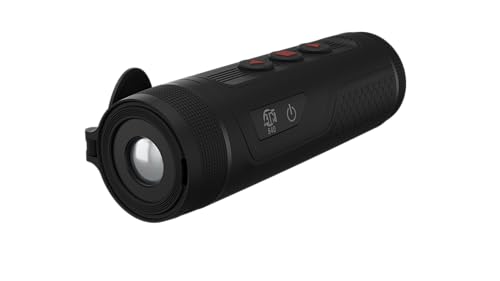
SEE FARTHER WITH 6TH GEN THERMAL CLARITY — 384×288 sensor with 12 μm pixel pitch and ≤18 mK NETD reveals fine heat detail at extended distances through fog, brush, darkness, and low contrast terrain.

640X512 Thermal Monocular -- VOTJPYS upgraded night vision monocular with a ultra high IR resolution of 640X512(12um), a smooth 50HZ refresh rate, NETD≤35MK@300K and 1024 x 768 OLED display screen. It delivers sharp, detailed thermal images with exceptional clarity, ensuring you never miss a moment.