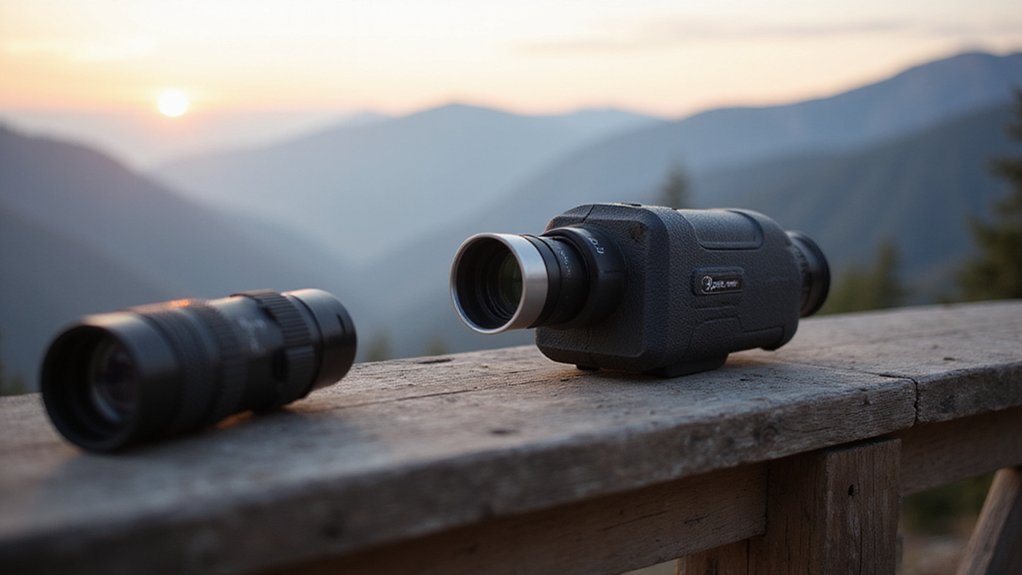
Thermal Monocular vs. Binocular: Which Is Right for You?
Wondering whether a thermal monocular or binocular is best for your needs? The quick answer: if you value portability and quick one-handed scans, a monocular is your go-to.
But for long, detailed observations, binoculars offer greater comfort and depth perception. The choice often boils down to how you prioritize convenience versus extended use.
Keep reading to find out which option fits your mission and why.
Thermal Monocular or Binocular: Which Should You Choose?
Choosing between a thermal monocular and binocular depends on how you plan to use it and what you value most. If quick scanning and mobile stalking are your main tasks, a monocular is the better choice because it’s lightweight, easy to deploy, and allows rapid movement from spot to spot. Monoculars are also typically more affordable, making them a good entry point into thermal imaging. However, for extended viewing sessions, a binocular’s two-eyepiece design offers significant advantages by reducing eye fatigue and providing a more comfortable, natural viewing experience. For those interested in building a custom setup, knowledge of thermal drone assembly can inform choices about mounting and sensor integration. When comparing these options, it helps to understand the underlying technology, as night vision vs. thermal each offers distinct advantages for different environments and conditions. Additionally, understanding banned red night vision can explain why thermal devices remain a preferred legal alternative in many regions.
Binoculars excel in providing a stereoscopic effect, which improves depth perception and spatial awareness. This makes them ideal for navigation, target judging, or scanning larger areas over longer periods. The dual lenses deliver richer color accuracy and terrain context, enhancing your situational understanding. Conversely, monoculars prioritize portability and quick access, often sacrificing the comfort and immersive qualities of binoculars. Your choice should reflect your primary task—opt for a monocular for fast, routine checks, but opt for binoculars when you need prolonged, detailed observation. Yet, consider that integrated features like laser rangefinders are more common in binoculars, which can boost detection range up to 700 meters for precise target identification in scenarios like deer stalking.

【256x192 RESOLUTION】- Features with a 12μm sensor with an impressive NETD<25mK and a high refresh of 50Hz, enabling you to detect subtle temperature differences in various weather.

The Axion XQ19 Compact features a 384x288 <20 NETD uncooled thermal sensor for sharp mid-range heat detection. Perfect for tracking in brush, scanning terrain, or stalking hogs, it delivers crisp thermal imaging in real-world hunting conditions.

[High-Resolution Thermal Imaging]:The i4SEE EM10-256 Thermal Imaging Monocular features a 256×192 uncooled VOx infrared detector and a 10mm F1.0 lens, delivering a detection range of up to 500 meters (550 yards). With a NETD of 30mK and a 50Hz frame rate, it provides crisp, real-time thermal imaging for night vision, hunting, and outdoor adventures. Whether you're tracking game or navigating in complete darkness, this thermal monocular ensures superior performance and reliability.
Size, Weight, and Portability Compared
A compact monocular typically measures around 5.5 inches in length and weighs about 7.4 ounces. This small size makes it easy to slip into your jacket pocket, enhancing your *ergonomics comfort* during all-day carry. Its lightweight and portable design allow for instant deployment with one hand, perfect for quick scanning of a ridgeline or distant object. In contrast, binoculars, with their dual eyepieces and generally larger housing, usually require a dedicated case or strap. Their heavier weight can disrupt a balanced pack load and reduce overall portability. While some larger monoculars can reach up to 1.8 pounds, choosing a tiny optic ensures you always have a ready, lightweight device at hand without the bulk and complexity of larger systems.

【Superior Monocular Optics】The mini monocular telescope have fully multi-coated extra-low dispersion lenses, and BAK-4 prisms with phase and dielectric coatings, delivers an exceptionally clear and bright images with high color reproduction and low distortion. There is no doubt its monoscope optical system is totally comparable to any other high-end compact monoculars for adults from top brands, yet the price is much favorable.
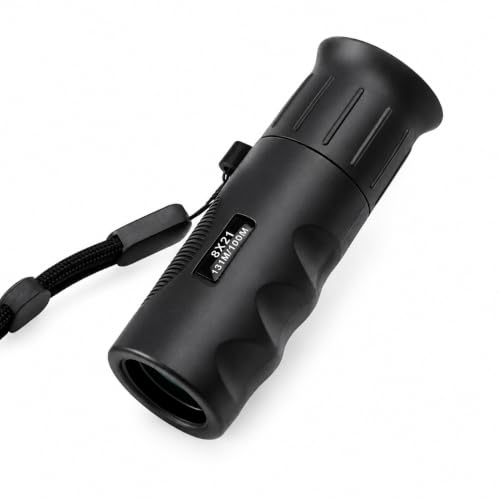
TRUE OPTICAL VIEWING FOR BEGINNERS: Experience clear and natural views with a real optical glass lens system, FMC green coated lens, and 8× magnification. Designed as an easy-to-use first monocular telescope for adults and beginners who want simple, reliable outdoor viewing.

Easy Single-Hand Operation:The structure is simple, and even focusing and seeing the target can be achieved by rotating with one hand, which is very friendly to people who are using the telescope for the first time. Simple design for all ages, no complicated skills needed.
Does the Viewing Experience Justify the Extra Weight?
A binocular’s ergonomic design and dual-eye viewing make it worth the extra weight for extended use. While a monocular is lighter and easier to carry, prolonged sessions highlight its drawbacks. Using both eyes and spreading the weight across both shoulders reduces user fatigue and makes long watching periods more comfortable. Monoculars force you to squint with one eye, which can strain your vision after about 20 minutes or more. Binoculars also provide stereoscopic depth perception, helping you judge distances accurately on uneven terrain. For quick scans or short bursts of observation, a monocular is fine, but for longer sessions, the added comfort of a binocular is well worth the extra ounces. Prioritizing long-term comfort will save your eyes and keep you spotting longer without fatigue. This choice mirrors the balance between low glow and no glow trail cameras, where performance trade-offs determine the best tool for the task. Night vision features in digital camera binoculars can enhance viewing even further during low-light conditions. Just as you would set up a trail camera in a strategic location to maximize its effectiveness, choosing the right optic for your intended session length ensures you get the most out of your gear.
What’s the Real Battery Life Difference?
Monoculars generally offer 1.5 to 3 extra hours of runtime compared to thermal binoculars within the same product tier. This is because monoculars use only one micro-display, which consumes less power. Binoculars run two displays simultaneously, doubling the power demand and often requiring larger battery packs to match the endurance of a monocular. Even then, many binoculars still fall short in runtime; for example, a typical hunting monocular can last 6 to 8 hours on a single 18650 battery, while an equivalent binocular struggles to exceed 5 hours. Sensor resolution also impacts battery life—lower resolutions like 384×288 draw approximately 40–45% less power than higher resolutions such as 640×480. If you plan to scan all night, choosing a monocular will give you more extended use without frequent battery changes. For those looking to offset costs, learning saving tips from subscription services can help you budget for additional batteries or higher-capacity power sources. Understanding how orbs form in night vision cameras can help clarify why artificial light sources, such as infrared illuminators, create bright circular artifacts that drain additional power when brightness compensation kicks in. This phenomenon is related to how your phone flashes to compensate for invisible infrared light, creating similar power-draining artifacts.

UNMATCHED CLARITY: With a high IR resolution of 256x192 and a smooth 50Hz refresh rate, the thermal monocular provides vivid thermal images, capturing every detail of your surroundings with precision.

UNMATCHED CLARITY: With a high IR resolution of 384x288 and a smooth 50Hz refresh rate, the thermal monocular provides vivid thermal images, capturing every detail of your surroundings with precision.

SEE MORE THERMAL DETAIL WITH SUPER RESOLUTION: Super Resolution enhances 256×192 thermal images up to 512×384 resolution, revealing clearer outlines and finer heat signatures for easier target recognition. This helps you observe wildlife, track targets, and explore your surroundings more clearly, especially in situations where details are difficult to discern with the naked eye
Which Premium Features Are Worth the Extra Cost?
The premium features most worth the extra cost in a thermal binocular are those that enhance performance and versatility. Stereo vision provides true 3D depth perception, significantly improving your ability to judge distances and interpret terrain during long observation sessions. With two-eye viewing, your eyes experience less strain, making extended periods of glassing more comfortable and natural. For hunters, integrating a thermal drone can provide aerial surveillance that complements ground-based observation, offering a search and tracking advantage from above. Higher sensor sensitivity, such as a lower noise figure like less than 15 mK, results in cleaner, clearer images even in low-contrast conditions. Advanced display technology, like high-resolution AMOLED panels at 1920×1080 or better, makes finer details stand out, which is critical for identifying distant objects. Integrated multi-mission tools such as laser rangefinders, GPS units, or daylight cameras can replace separate devices, turning the binocular into a multi-functional system that boosts your efficiency in the field. These premium features justify their cost when you need top-tier performance and all-in-one functionality.

Live Streaming & HD Video Recording: a revolutionary combination. Unsurpassed lag-free thermal image in color palette of your choice with smooth zoom imitating your natural eyesight

Dual-Spectrum Imaging Equipped with both thermal and digital day/night vision, this device provides clear imaging in any lighting, enhancing detection accuracy and versatility in diverse environments.

Dual-Spectrum Day & Night Vision Combining a 384×288 thermal sensor with a 3840×2160 digital day/night optical channel, these binoculars give you unmatched visibility in both thermal and low-light environments. Ideal for tactical operations, wildlife observation, and search & rescue.
Use Case Cheat Sheet: Pick Your Optic in 30 Seconds
If you’re staying put for extended periods, opt for binoculars. Two-eye viewing reduces eye strain and enhances depth perception, making target identification easier during long sessions. While binoculars are bulkier and less portable, they provide better comfort and natural viewing for durations exceeding 30 minutes. In contrast, if you’re moving around or covering large distances quickly, a monocular offers lighter weight and faster handling, but at the expense of some comfort and ease of target recognition. For quick decisions, you also need to weigh performance and cost between models, just as you would when choosing between similar camera options where comparing monthly data costs can lead to significant savings. Use binoculars for stationary spotting and monoculars for quick scans while on the move—that’s your quick guide. Understanding how infrared illuminators function during low-light observation can further clarify why a monocular’s active IR capability matters for nighttime movement.

【Crystal-Clear View in Day& Night】No more struggling with blurry night vision! Waaniynan night vision monocular delivers vibrant full-color shots in daylight and crisp, detailed views in total darkness. With dual IR emitters, you can spot wildlife clearly up to 656ft (200m) away, making it perfect for camping, wildlife watching, and night patrols, no matter the lighting.

CLEARLY IN 100% DARKNESS WITH 7 INFRARED ILLUMINATION LEVELS: Upgraded YUANZIMOO night vision monocular features 850nm IR illuminator, 1.3MP FHD CMOS sensor and 7 gears IR levels adjustment. Brings you a wonderful experience both daytime and 100% darkness in your wild explorations

【Dual IR System for All Day& Night Vision】 Equipped with high-performance 850nm dual IR illuminators , this upgraded night vision monocular delivers immersive full-color viewing in bright daylight and ultra-clear imaging in complete darkness. 9 levels IR adjustments ensure all-scene outdoor exploration, night monitoring and field observation regardless of light conditions.