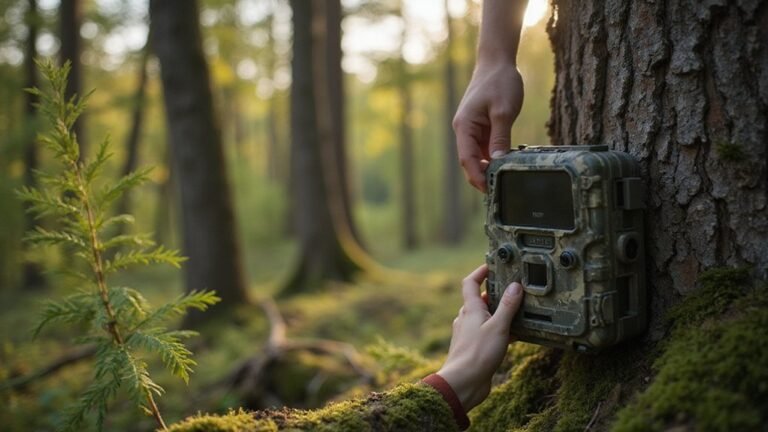
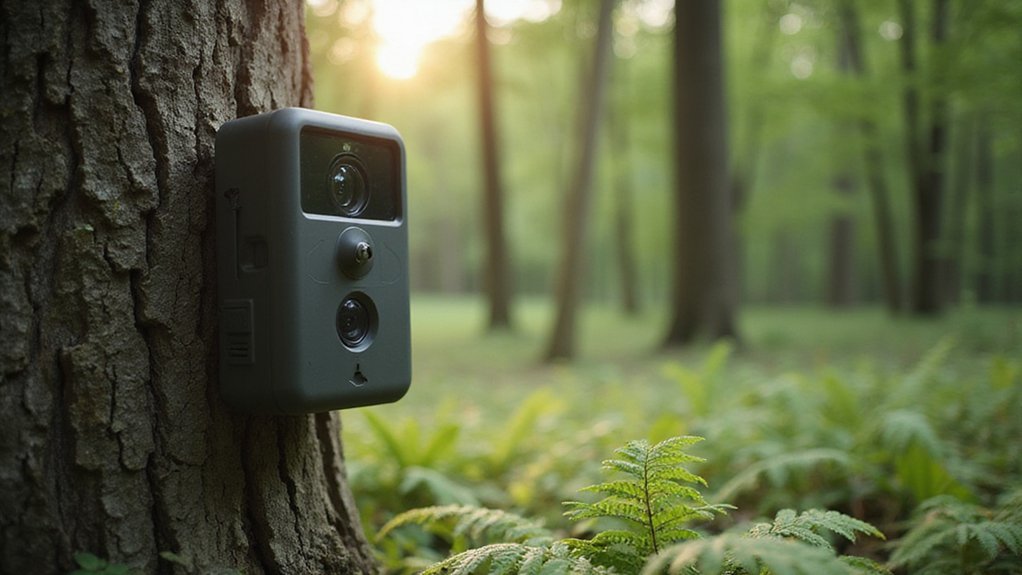
Low Glow vs. No Glow Trail Cameras: Which Is Best?
Wondering whether a low glow or no glow trail camera is better for your needs?
If clear, bright night images and longer detection range matter most, a low glow model might be your best fit.
But if stealth is key and grainier photos are okay, no glow cameras could work better.
Keep reading to see how they compare for capturing deer, hogs, and more.
Low Glow vs. No Glow: What’s the Core Trade-Off?
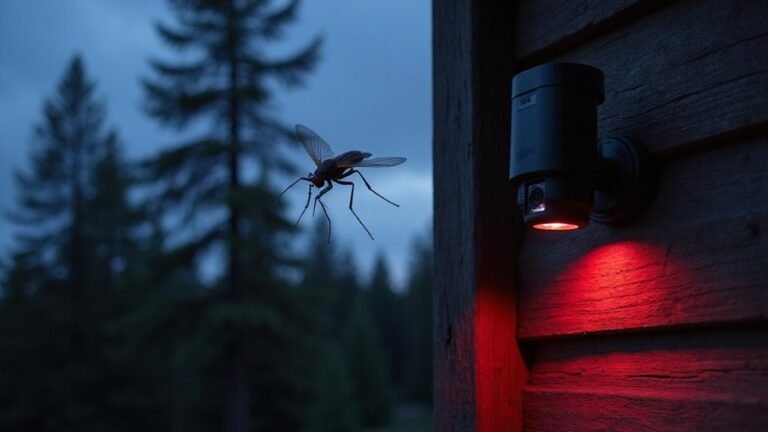
Low glow cameras use 850nm infrared LEDs, which produce a faint red glow that is visible to animals and humans at close range. This glow results in brighter, clearer images at night with a longer detection range, especially in open fields or dense woods. The infrared light offers roughly 30% more illumination compared to no glow models, allowing you to capture finer details and reach farther distances in low-light conditions. The trade-off is that the red glow can give away your camera’s position, reducing concealment. No glow, or black flash cameras, emit no visible light—only near-infrared at 940nm—which makes them completely invisible in operation. However, this invisibility comes at the cost of reduced illumination, often producing grainier and darker images, particularly in very low light environments. For a similar comparison, Blink cameras use infrared night vision that is effective but has its own real-world limits. Your choice boils down to performance versus stealth. Low glow models excel in providing superior night vision and longer detection ranges, making them suitable when clear images and identification are priorities. No glow cameras, on the other hand, prioritize concealment, ideal for situations where staying hidden is crucial despite a slight reduction in image clarity and range. Understanding the detection range and image clarity differences is similar to how thermal imaging works, where longer wavelengths trade off detail for stealth. For context, regulators have banned red night vision goggles in certain applications due to the visible glow revealing user positions.
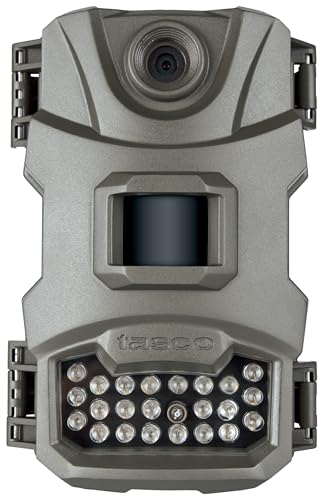
High-Resolution Images: Crystal clear 12MP images for detailed captures

New version trail cam: Clear Day & Night Imaging Capture sharp 64MP photos (adjustable: 5/16/36/48/56/64MP) and smooth 4K HD videos (3840x2160P /2560x1440P). The high-quality optical lens ensures crisp daytime images and night vision performance, making it ideal for wildlife observation, deer scouting, and property surveillance.

Trail cameras with night vision motion activated weather-resistant: Rohs Certified Wildlife Trail Camera Designed for Reliable, Durable Outdoor Use. IP66 Dustproof And Weather-Resistant Case Helps Protect The Trail Camera In Outdoor Environments
Does the Red Glow Spook Deer, Hogs, or Bears?
The red glow from LED trail cameras generally does not spook deer, hogs, or bears. Wildlife perceive red light differently from humans, often interpreting it as a subtle shift rather than a bright flash. Whitetails, in particular, do not see red the same way humans do, so the glow is less likely to trigger alarm unless the animal is staring directly into the beam. Vibrations from human scent or noise during card checks pose a greater risk of spooking these animals than the red glow itself. Understanding how these animals see helps when choosing between night vision or thermal technologies for monitoring wildlife.
For hogs and bears, curiosity often outweighs caution; a bear might investigate the red light instead of fleeing. Nonetheless, no-glow infrared options at 940nm are generally safer for wary animals because they are less detectable. This 940 nanometer wavelength is invisible to mammals, making it a more discreet choice for monitoring skittish subjects. Prolonged glow in video mode or multiple cameras working simultaneously increases detection risk. Your setup location and the frequency of animal visits influence how likely they are to notice the light, regardless of whether it emits red or black infrared. Unlike human vision, which is optimized for daytime color, rods in the retina are highly sensitive to low light but not to red wavelengths. This is why human eyes do not glow under night vision cameras in the same way that animal eyes do.
Night Photo Sharpness: Low Glow’s Big Advantage
Low-glow cameras offer a significant advantage in night photography because they emit 850nm infrared light that is stronger than no-glow models. This increased infrared output provides your sensor with more illumination, enabling faster shutter speeds that effectively freeze moving animals and reduce motion blur. Unlike no-glow cameras, which often produce grainy, grayish images due to their need for higher gain to compensate for weaker light, low-glow units deliver clearer images with better texture and edge detail. Their higher sensor sensitivity combined with 30% more IR light means you capture high-contrast, sharp photos even when animals are deep in cover. For example, Moultrie Mobile models with low-glow LEDs are specifically designed to leverage this stronger illumination for superior clarity in real-world field use. Building your own thermal camera, as highlighted in DIY guides, can help you understand how infrared light and sensor sensitivity interact to improve image quality. Understanding the trade-offs between these illumination types requires recognizing that no-glow models prioritize stealth for security applications over raw image clarity. The result is consistently clear, bright night images free from the dark, blurry frames common with no-glow designs—more light truly means sharper detail.

Fast trigger speed: The WOSODA trail cameras will be triggered instantly in 0.3s without delay, once detecting the movement, you will never miss any exciting moments even at night, and the trigger distance is up to 60ft.

Excellent Detecting Sensitivity & Good Sound Recording: The combination of 0.2s fast trigger speed, 3 continuous shots, and the sensitive motion-activated sensor avails to capture more exciting moments. The wildlife camera is created for the fast-paced action and highlight of scenes. It records clear sounds thanks to the high quality microphone on the left side of the camera body. It keeps recording by overwriting the old photos and videos when the SD card is full, perfect for security purposes.
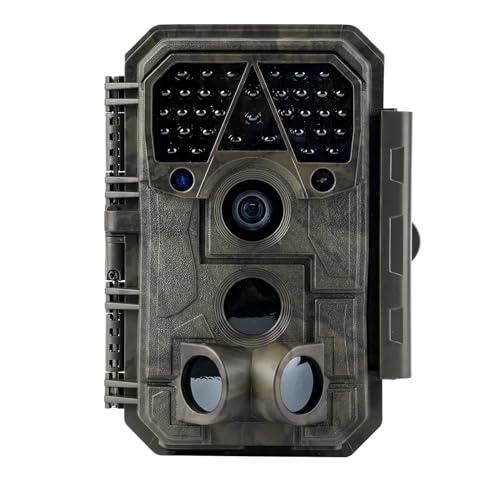
Crystal-Clear 64MP Photos & 1296p HD Video – Stunning detail day or night, thanks to advanced image tech and a high-performance f/1.6 aperture lens.
Flash Range: Why Low Glow Covers 30% More Area
Low-glow covers about 80 feet or more, significantly extending your camera’s detection range compared to no-glow lights that struggle past 50 feet. This is because low-glow uses an 850nm infrared wavelength, which is closely aligned with your camera sensor’s optimal sensitivity. This wavelength allows the infrared light to travel farther without losing intensity, resulting in roughly 30% more coverage area. The broader reach means you can monitor larger open fields or clearings more effectively. While LED count and exposure time influence performance, the wavelength difference remains the key factor that gives low-glow a clear advantage in overall detection distance. For perspective, this extended reach is comparable to the importance of understanding legal spotlighting limits in Pennsylvania, where distance and timing restrictions affect how far you can effectively observe game. For those interested in advanced monitoring techniques, similar principles apply when you build your own thermal drone to maximize detection range. Investing in thermal goggles that utilize similar near-infrared technology can provide comparable long-range detection advantages in low-light conditions.
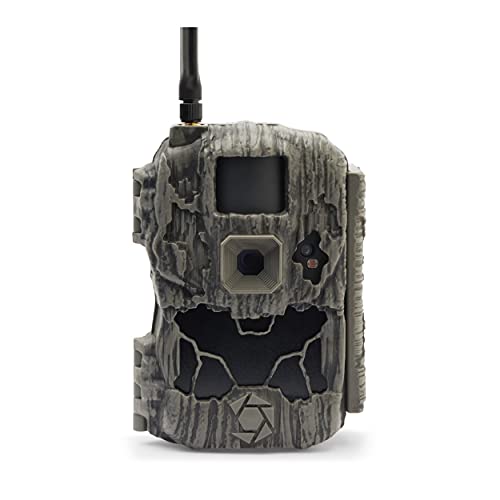
Camera: Stealthcam DS4K Transmit features a 32-megapixel sensor for the ultimate quality in image size and clarity

Advanced Sensor for Superior Low-Light Performance: Equipped with a Sony Starvis Sensor, this trail camera captures high-resolution images and videos even in low-light conditions, with night vision up to 100 feet.
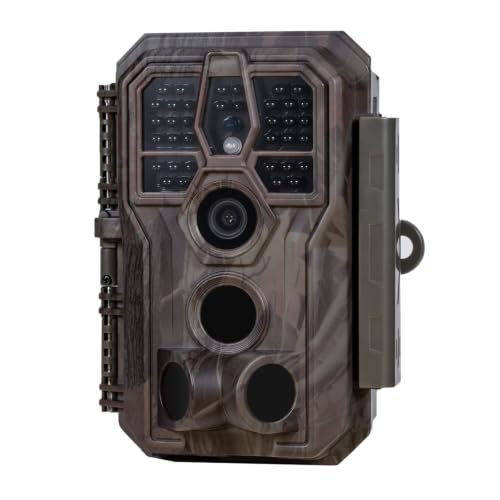
64MP Photos & 1296P HD Videos: Equipped with a high-quality optical lens and advanced image sensor, the E5S captures ultra-sharp 64MP photos and smooth 1296P HD videos.
Security and Covert Use: When No Glow Wins
No-glow trail cameras are the best choice when stealth is your main concern. Their 940 nm infrared flash operates invisibly to humans and animals, preventing detection during close inspections. This covert feature significantly reduces the risk of your camera being tampered with or stolen. Additionally, no-glow cameras blend seamlessly into their surroundings, without any visible red glow that might tip off curious onlookers. They are easy to set up—just place them and forget about them—so you can focus on monitoring without worry. Unlike low-glow cameras, which emit a faint red signature, no-glow models prioritize undetectability over bright night images. For security-focused surveillance, especially in sensitive areas, no-glow trail cameras provide unmatched covert operation. This trade-off is similar to choosing thermal monoculars over binoculars, where one prioritizes stealth while the other delivers superior image clarity. For hunters who also need to navigate or set up gear in the dark, a headlamp for hunting with a red-light mode provides a similar advantage by preserving night vision without alerting game. When budgeting for covert gear, be aware that the cost of a thermal camera can vary widely based on sensor quality and detection range.
Battery Life and Price: Does Stealth Cost More?
No-glow cameras tend to cost more upfront and require more power than low-glow models. No-glow models typically use 940nm infrared LEDs, which draw up to 1,000 milliamps in some designs, leading to higher energy consumption. In contrast, low-glow cameras utilize 850nm LEDs that draw less current, extending battery life significantly. This difference is most noticeable in video mode, where IR stays on throughout the recording, draining batteries faster. While lithium batteries can help increase runtime, they also add to the purchase cost. Alkaline batteries, on the other hand, work reasonably well with low-glow models and are more budget-friendly. Overall, no-glow cameras cost more both at purchase and in ongoing energy consumption, making low-glow the more economical choice for most trail-camera applications. Interestingly, the 940nm wavelength is invisible to the human eye, so it often emits no visible flash even when the camera is capturing images, unlike the faint red glow from 850nm LEDs. For those prioritizing concealment, a TU651 LRF thermal scope offers a different stealth advantage through heat detection rather than visible light. However, unlike night vision gear, these 940nm LEDs can be used safely in daylight without risk of damage to the device, as they do not rely on intensifier tubes like night vision binoculars do.
The Bottom Line: Choose Low Glow for Images, No Glow for Concealment
Choosing between low glow and no glow depends on your priorities. If your goal is to capture clear, recognizable nighttime photos and you’re okay with a slight glow, low glow lights are ideal. They provide enough illumination to see details while still maintaining some concealment. However, if you need to avoid detection entirely—such as near trails, property, or when alerting game—you should opt for no glow lights. No glow options emit no visible light, making them virtually invisible and suitable for stealth situations. Your decision should align with whether you need visible illumination or complete concealment. Camera trigger failures, such as missed photos from motion sensor or battery issues, can be resolved by checking placement and power settings. For those comparing overall performance, understanding the cost and performance differences between models can help finalize your choice.