Trail Camera vs. Security Camera: A Hunter’s Night Vision Guide
Worried about catching threats around your cabin at night? Relying solely on a trail camera keeps tabs on wildlife but leaves you blind to live danger.
While it triggers images based on motion or heat, it doesn’t offer real-time alerts or responses.
Keep reading to discover how to best balance nighttime security with your outdoor setup.
Why Scouting and Security Need Different Night Vision
Different night vision tools suit distinct goals—scouting and security have different needs. For scouting, your primary aim is to observe wildlife without disturbing their routine. Fixed trail cameras mounted on trees are ideal because they can run for days, quietly recording animal movements around feeders or funnels. These cameras only need to detect presence and roughly identify movement direction; detailed images are less important. You want silhouettes or general shapes, like a buck’s profile passing through, rather than facial recognition or fine detail. For example, thermal imaging can detect heat signatures at range, making it excellent for spotting animals in complete darkness or thick brush. Hunters often pair this with a dedicated predator light to scan fields without spooking wary coyotes. A cantilever scope mount is useful for securely attaching a night vision scope to a rifle for precise aiming during these scouting sessions.
In contrast, security requires tools that quickly identify threats at property boundaries or entry points. Here, camera placement focuses on rapid detection of people or vehicles and capturing high-quality images that can serve as evidence. These systems need clear visuals of faces, clothing, or actions, which requires a different balance of features. While thermal imaging can detect heat signatures at range, visual night vision provides the detail necessary for positive identification. Your choice depends on whether wildlife observation or property protection is your priority.
How a Trail Camera’s Heat Sensor Triggers Night Shots
Once triggered, your trail camera checks if it’s nighttime. If so, it activates infrared illumination with invisible LED lights. This lighting system illuminates the scene without alerting wildlife, allowing you to capture clear, detailed images in low light conditions. After capturing the shot, the camera switches back to sleep mode to conserve battery life. The speed at which the camera responds depends on how quickly the subject moves through its detection zone. Faster movement causes a more rapid temperature change, which the heat sensor detects more quickly, resulting in a faster trigger response. To save money on remote image transmission, consider adjusting your Moultrie mobile plan to a lower data tier. Understanding the cost of night vision components can help you prioritize features versus budget when choosing a trail camera. For a different model, the setup steps include inserting a SIM card and configuring the app for network pairing.

New version trail cam: Clear Day & Night Imaging Capture sharp 64MP photos (adjustable: 5/16/36/48/56/64MP) and smooth 4K HD videos (3840x2160P /2560x1440P). The high-quality optical lens ensures crisp daytime images and night vision performance, making it ideal for wildlife observation, deer scouting, and property surveillance.

Fast trigger speed: The WOSODA trail cameras will be triggered instantly in 0.3s without delay, once detecting the movement, you will never miss any exciting moments even at night, and the trigger distance is up to 60ft.

Fast trigger speed: The WOSODA trail cameras will be triggered instantly in 0.3s without delay, once detecting the movement, you will never miss any exciting moments even at night, and the trigger distance is up to 60ft.((Not included SD card,supports up to 256GB)
What 80 Feet of Range Looks Like in the Field
Ninety feet in the field roughly equals 30 yards, a distance where a deer or hog appears as a mid-to-small subject in the frame. If you’re using wide-angle lenses with a 96° or 120° field of view, this range means the animal won’t fill much of your image. It’s more about capturing the presence and direction of travel than focusing on fine facial features. When choosing a camera for such conditions, hunters often evaluate performance and cost to balance detection range against budget. For these situations, understanding the cellular transmission method helps hunters select a camera that reliably sends images from remote locations. When positioning cameras at this range, hunters may also consider whether a drone-based thermal search could cover broader terrain more efficiently, though ground units remain the standard for fixed-site monitoring.
At 90 feet, a wide lens will spread the scene out, making the animal look smaller. Night illumination can soften details at this distance, so you’ll see shape and movement clearly but may lose clarity around ears or antlers. Motion-activated triggers often pick up animals crossing trails or near feeders, but if your goal is crisp identification shots, you’ll likely need stronger optics or different camera settings. To improve clarity at this range, the camera’s 32 infrared LEDs provide effective no-glow night vision that enhances shape and movement detection in darkness.

30MP Photos & 1080P HD Videos for Clear Wildlife Monitoring:Capture detailed outdoor moments with 30MP high-resolution photos and Full HD 1080P videos. The advanced image sensor delivers clear and vivid images during daytime and reliable performance in low-light environments. This mini trail camera helps capture wildlife activity, deer movement, and outdoor scenes with improved detail, making it ideal for deer scouting, wildlife observation,Garden Monitoring and property monitoring.

Trail cameras with night vision motion activated weather-resistant: Rohs Certified Wildlife Trail Camera Designed for Reliable, Durable Outdoor Use. IP66 Dustproof And Weather-Resistant Case Helps Protect The Trail Camera In Outdoor Environments
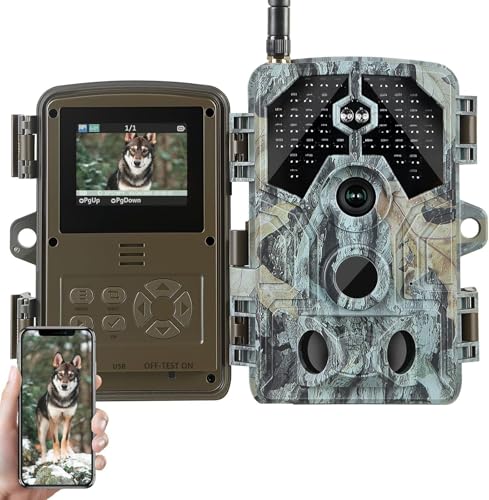
【WiFi Connectivity & App Control】No home WiFi or monthly fees required! This trail camera pairs instantly with your phone via Bluetooth and creates its own built-in WiFi hotspot (range up to 10–15m / 30–50ft in open areas). Use the free "TrailCam GO" app to adjust settings, preview photos, and download videos directly to your phone—no need to remove the SD card. Even when not connected, the camera continues recording automatically.
Why Security Camera Night Vision Favors Live Feeds Over Stills
Live feeds are favored over still images in security camera night vision because they provide real-time monitoring, which is crucial for active response. With live video, you can see suspicious activity unfold immediately and decide whether to issue warnings or call for help before damage occurs. Many budget-friendly cameras like the Tapo and Wyze include AI detection alongside their night vision, which can differentiate between people, pets, and vehicles in real time. Continuous footage makes threat verification much easier—you can distinguish moving shadows from actual intruders by observing movement and behavior over time, something a single still image cannot provide. While still images capture isolated moments, live video gives you the context needed to act quickly and effectively. That active approach is essential for preventing incidents rather than just documenting them afterward. Hunters choosing between light colors may find red hunting lights less disruptive to game.

【Motion Detection & Instant Notification】Get instant push notifications when motion, person or baby crying is detected, there is no additional fee to use it as a baby camera monitor. Discern from notifications that matter, so you'll know if its your pet playing around or if someone is actually there. Connects via 2.4GHz Wi-Fi Band

ENDLESS POWER FROM SOLAR ENERGY: Just 45 minutes of direct sunlight powers the camera for a full day of use, while the built-in battery lasts up to 180 days on a single charge during cloudy days. Solar charging requires temperatures above 32°F.△

【 4G LTE Connectivity – No WiFi Needed】This SEHMUA 4G cellular trail camera comes with a pre-installed SIM that works with Verizon, AT&T, and T-Mobile – strong, reliable signal in remote areas like mountains, woodlands, and open fields. No hubs, no routers, no WiFi – just power on and it connects. Wherever you have cell signal, you can view live footage and receive instant alerts. Includes a 7-day unlimited data trial; after that, each game camera requires its own plan ($19.90/mo or $169.90/yr)
Why Trail Camera Night Vision Saves Battery in Remote Spots
Infrared night vision saves battery by using brief, targeted flashes instead of continuous illumination. The IR LEDs only turn on momentarily to capture a still image or a short video clip, then shut off, reducing power consumption significantly. This approach is more efficient compared to security cameras that run their lights nonstop and drain batteries quickly. For a remote setup, you can also consider building a DIY thermal drone to separately scout heat signatures without draining your trail camera’s battery. You can further extend your camera’s runtime by selecting photo mode, increasing detection delays, and lowering sensitivity settings. In contrast, Stealth Cam’s DVR mode enables continuous recording like a security camera, which may increase battery usage if left on. Using lithium AAs is also recommended—they perform better in cold weather and resist voltage drops that typically kill alkaline batteries. In low-activity areas, your camera can often operate for six to twelve months without maintenance, making it ideal for remote locations. Following the Tactacam Reveal X Pro guide ensures you configure these settings correctly for maximum battery life.
Can a Trail Camera Replace a Security Camera for Cabin Protection?
A trail camera cannot fully replace a security camera for continuous, real-time protection. While it can act as a low-cost motion sensor by capturing motion-activated photos or short clips, it does not provide 24/7 footage or live alerts. This means you’ll miss events happening in real time and won’t be able to track people’s movement through your cabin. For identifying faces or license plates, trail cameras usually lack the detailed, high-quality video needed for solid evidence. For less-accessible or off-grid bugout locations, an SD card-based camera is ideal for post-incident analysis without ongoing fees. Even models with cellular capability, like the Spypoint Flex-M, often lack instant transmission mode, meaning you must wait for scheduled uploads rather than receiving real-time alerts. For example, if you need to change time on Tactacam Reveal settings, it is done on the device itself without affecting real-time monitoring capabilities. Some modern trail cameras now incorporate thermal imaging features to detect heat signatures, similar to those found in high-end smartphones.
However, trail cameras excel in remote locations where power and wiring are concerns. They often have battery lives that last for months and can be placed anywhere without the need for wiring or external power sources. This makes them ideal for off-grid cabins or hidden spots. Still, you trade off the ability to receive instant alerts, access footage remotely, or record continuously. For basic evidence after a break-in, they can help, but for active deterrence and ongoing security, you’ll want a dedicated security camera. Trail cameras are best used as a supplement rather than a replacement.
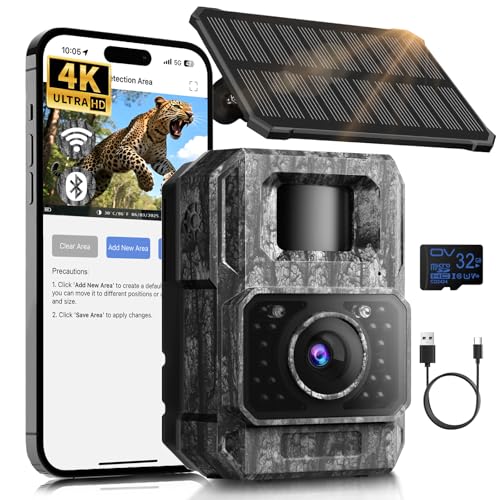
𝐍𝐎𝐓𝐄: 𝐢𝐭 𝐢𝐬 𝐍𝐎𝐓 𝐜𝐨𝐦𝐩𝐚𝐭𝐢𝐛𝐥𝐞 𝐰𝐢𝐭𝐡 𝐡𝐨𝐦𝐞 𝐖𝐢𝐅𝐢, 𝐝𝐨𝐞𝐬 𝐍𝐎𝐓 𝐬𝐮𝐩𝐩𝐨𝐫𝐭 𝐜𝐞𝐥𝐥𝐮𝐥𝐚𝐫/𝟒𝐆/𝟓𝐆 𝐧𝐞𝐭𝐰𝐨𝐫𝐤𝐬, and 𝐝𝐨𝐞𝐬 𝐍𝐎𝐓 capable of real-time motion alerts or push notifications. The camera creates its own short-range Wi-Fi hotspot (𝐍𝐨𝐧-𝐂𝐞𝐥𝐥𝐮𝐥𝐚𝐫) for setup, and downloading files only. Wi-Fi range is up to 33–50 ft in open areas. The camera records automatically even when your phone is not connected. No subscription or monthly fees

64MP Photos & 1296P HD Videos: Equipped with a high-quality optical lens and advanced image sensor, the E5S captures ultra-sharp 64MP photos and smooth 1296P HD videos.

Solar Powered & 6000mAh Rechargeable Battery: This solar trail camera with built-in 6000mAh rechargeable lithium battery, combined with high-efficiency solar charging, providing uninterrupted power for outdoor use. No need to frequently replace disposable batteries, saving time and cost. It offers long-lasting, maintenance-free performance for year-round wildlife monitoring, hunting and nature observation.
Hybrid Setup: Trail Cameras for Stealth, Security for Live Alerts
A hybrid setup effectively combines trail cameras and security cameras to cover stealth and real-time alert needs. Place stealthy trail cameras deep in bedding zones or along travel routes to monitor long-term animal patterns without disturbing the environment. Their no-glow infrared LEDs eliminate visible flashes, helping you avoid spooking game during night time. At the same time, mount cellular security cameras at access points, driveways, or around the cabin perimeter to receive instant live alerts. This separation extends the lifespan of your trail cameras because you’ll check them less often, reducing wear and human scent. Use security cameras for immediate intrusion alerts and quick responses, while trail cameras gather season-long data for scouting. Combining both types ensures thorough coverage without compromise. Understanding the thermal imaging sensors in security cameras helps you select models capable of detecting heat signatures in total darkness, enhancing perimeter monitoring beyond standard night vision. Note that while some devices use red illumination, red night vision has been restricted to prevent detection by wildlife and trespassers. For example, comparing Spypoint vs. Stealth Cam models can help you choose the best trail camera for stealth and reliability in the field.
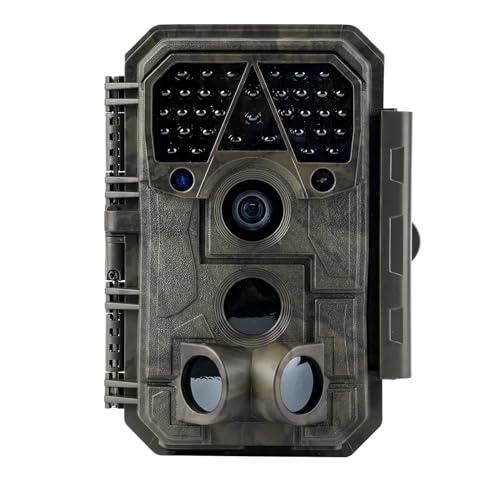
Crystal-Clear 64MP Photos & 1296p HD Video – Stunning detail day or night, thanks to advanced image tech and a high-performance f/1.6 aperture lens.
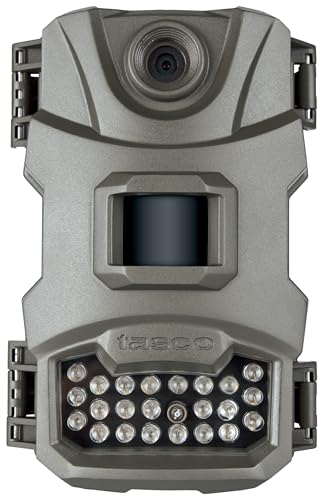
High-Resolution Images: Crystal clear 12MP images for detailed captures

【Solar Powered Trail Camera – Set & Forget Power】Built-in rechargeable battery and solar panel keep this trail camera running nonstop in yards, farms, and around your home — no cables, no battery swaps, no maintenance worries.