Tactacam Reveal 3.0 vs. Pro: Which Trail Camera Wins?
Choosing the right trail camera often comes down to what matters most—stealth or battery life.
The Tactacam Reveal 3.0 X and Pro each have their strengths, but which one fits your needs better?
The Pro offers no-glow IR flash and a handy LCD screen for quick adjustments, making it great for high-pressure spots.
The X 3.0 lasts longer on batteries and costs less but depends entirely on an app for setup.
Keep reading to see how these differences could help you make the best choice.
Why the X 3.0 and Pro 3.0 Are Easy to Confuse
The X 3.0 and Pro 3.0 are easy to confuse because they share nearly identical naming, core hardware, and outward design. Both models are part of the Reveal 3.0 family and are often displayed side by side in marketing materials. Their names differ by just one short label, making it hard to tell them apart at a glance. They both include built-in GPS, internal SD storage, a pre-installed antenna, Wi-Fi for live aiming, and the same improved image sensor. They support 1080p video and 30-second clips, so on paper, their everyday capture performance appears identical. The modest $30 price difference does not strongly suggest a significant difference, prompting you to scan the spec sheets for small upgrades. Some users wonder if the infrared illumination in these cameras operates under restrictions similar to red night vision goggles. Comparing these trail cameras to PVS-14 vs. PVS-15 night vision gear, the trade-offs between cost and specialized features are similarly nuanced. This comparison highlights that night vision or thermal technology offers distinct advantages depending on your specific surveillance needs.
The Pro model adds a 2-inch LCD screen, on-demand video requests, and a five-photo burst mode. Meanwhile, the X 3.0 does not feature these extras, but from a quick look, they are not immediately obvious. This subtle distinction can lead to confusion for anyone trying to choose between the two. Additionally, the 3.0 Pro has a single on/off/setup button, while the 3.0 uses separate buttons.
The Biggest Difference: Low-Glow vs. No-Glow Night Flash
The Reveal X 3.0 features low-glow infrared (IR) technology, emitting a faint red glow for night vision that is nearly undetectable. This allows you to capture brighter images with a range of over 96 feet, making it ideal for open areas like food plots where detection isn’t a primary concern. The camera’s sensor converts invisible IR light into clear black-and-white footage even in total darkness. Conversely, the Pro 3.0 uses no-glow IR, which provides completely invisible flash for animals and humans alike instantly—perfect for high-pressure zones such as pinch points. However, this stealth comes with a shorter range of just over 80 feet, and images of distant subjects may appear darker. A cantilever scope mount can similarly shift a device’s position for better alignment in tight setups. The choice of flash affects image brightness and detection distance, particularly in wide-open spaces, so understanding your use case is critical. Essentially, you decide between a brighter, longer-distance night scan or absolute concealment for more sensitive locations. For comparison, building a thermal drone allows similar choices between long-range and stealthy night vision in the air.
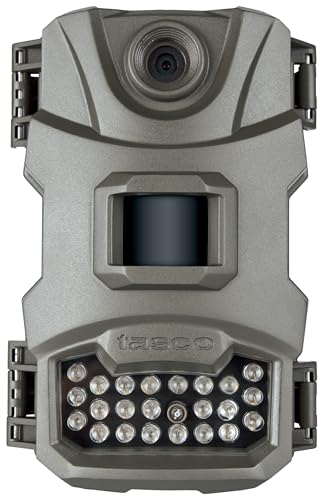
High-Resolution Images: Crystal clear 12MP images for detailed captures

Trail cameras with night vision motion activated weather-resistant: Rohs Certified Wildlife Trail Camera Designed for Reliable, Durable Outdoor Use. IP66 Dustproof And Weather-Resistant Case Helps Protect The Trail Camera In Outdoor Environments

Fast trigger speed: The WOSODA trail cameras will be triggered instantly in 0.3s without delay, once detecting the movement, you will never miss any exciting moments even at night, and the trigger distance is up to 60ft.
On-Device Controls: Screen vs. App-Only Setup
The Pro 3.0’s built-in 2-inch LCD screen offers complete control without your phone. This screen allows you to adjust settings directly on the camera, show signal strength instantly, and troubleshoot without needing an extra device. You can change parameters like resolution, exposure, and Wi-Fi settings on the spot, saving battery life since you avoid powering up your phone just to make simple adjustments. However, in the field, both models rely on a battery pack that must be connected properly, with a green light confirming installation to avoid power issues. When sighting in a night vision scope, careful adjustments of parallax and focus are essential to prevent blurry images at long range. For example, the green hue in night vision displays is intentionally used because the human eye is most sensitive to green light, enhancing clarity in low-light conditions. Understanding how a thermal scope identifies heat signatures can also improve target detection in complete darkness.
In contrast, the X 3.0 depends entirely on the app for setup and adjustments. To change settings, you must connect via Wi-Fi, open the app, and wait for synchronization, which takes more time and consumes additional battery. When transferring data, the Pro 3.0’s keypad navigation provides quick menu access, whereas the X 3.0 requires navigating through the app interface, making field adjustments less immediate.
If having quick, independent control in the field matters most, the Pro 3.0’s screen clearly has the upper hand. It enables on-the-spot tweaks without relying on a mobile device, making it especially useful in environments where quick adjustments and troubleshooting are crucial.

New version trail cam: Clear Day & Night Imaging Capture sharp 64MP photos (adjustable: 5/16/36/48/56/64MP) and smooth 4K HD videos (3840x2160P /2560x1440P). The high-quality optical lens ensures crisp daytime images and night vision performance, making it ideal for wildlife observation, deer scouting, and property surveillance.

[SIMPLE & RELIABLE TRAIL CAMERA FOR BEGINNERS] Designed for first-time users, this entry-level trail camera focuses on easy operation and dependable performance. The classic solid brown housing blends naturally into outdoor environments, making it ideal for wildlife monitoring and backyard use. With clear, straightforward controls, anyone can start using it in minutes—no technical experience required. A perfect choice for hunters, landowners, and beginners looking for a no-frills, easy-to-use trail camera.(8×AA batteries and SD card not included.)

co2CREA hard travel case replacement for Wildgame Innovations trail pad VU60 SD card reader or Stealth Cam viewer SD card reader viewer 4.3" LCD screen. Hard EVA shell case is shockproof dustproof and water resistance, protect your Wildgame trail cam sim card reader SD card viewer from drops, scratches, bumps, splash, and dust.
Photos, Video, and On-Demand Capture: X 3.0 vs. Pro 3.0
The Pro 3.0 offers remote on-demand video requests through the app, a feature the X 3.0 does not have. This allows you to pull footage anytime without physically visiting the camera, providing greater convenience. Both models perform similarly in raw photo and video quality, producing sharp daytime images and comparable 1080p videos. However, the X 3.0 has a slight edge in nighttime stills thanks to its low-glow infrared, which improves wildlife detection after dark. The Pro 3.0 counters with no-glow IR for stealth and adds audio-enabled video capabilities. Neither model significantly impacts battery life in this aspect; choosing between them depends on whether remote footage access or minimal disturbance is your priority. Understanding the night vision camera price can help you decide if these features justify the cost compared to standard models. Both cameras share a trigger speed of less than 0.5 seconds, ensuring rapid capture of passing wildlife.
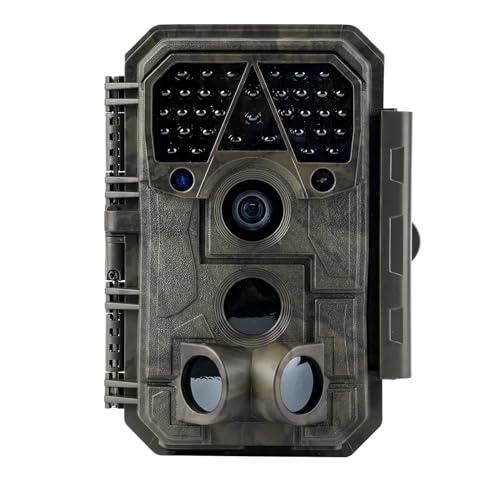
Crystal-Clear 64MP Photos & 1296p HD Video – Stunning detail day or night, thanks to advanced image tech and a high-performance f/1.6 aperture lens.

64MP Photos & 1296P HD Videos: Equipped with a high-quality optical lens and advanced image sensor, the E5S captures ultra-sharp 64MP photos and smooth 1296P HD videos.

Excellent Detecting Sensitivity & Good Sound Recording: The combination of 0.2s fast trigger speed, 3 continuous shots, and the sensitive motion-activated sensor avails to capture more exciting moments. The wildlife camera is created for the fast-paced action and highlight of scenes. It records clear sounds thanks to the high quality microphone on the left side of the camera body. It keeps recording by overwriting the old photos and videos when the SD card is full, perfect for security purposes.
Power, Memory, and Battery: Do the Models Last the Same?
The Reveal X 3.0 lasts significantly longer on a charge than the Pro 3.0 under similar conditions. In battery longevity tests with photo-heavy use, you can expect about 6.8 months of operation from the X 3.0 compared to just 3.2 months from the Pro 3.0. This nearly doubled runtime makes a big difference for extended deployments. For video-focused use, both cameras drain faster—around 1.7 months for the X and 1.5 months for the Pro—yet the X still maintains a slight edge. Properly aligning your camera involves the same sighting in a thermal principles used for optics to ensure accurate detection. Just as a bump helmet prioritizes impact protection over ballistic resistance, these cameras prioritize battery efficiency over high-end video features. Understanding how infrared radiation is converted into a visible image helps you evaluate performance trade-offs.
Without external power sources, you’ll find yourself replacing batteries more frequently with the Pro 3.0. However, both models support DC 12V input, allowing you to connect them to solar panels or external batteries. Using external power options like Tactacam’s Lithium Cartridge can extend runtime considerably, making long-term monitoring more viable.

【Full Compatibility -Edge Series Cameras】Seamlessly compatible with all moultrie edge cellular trail camera (Edge/Edge Pro/Edge 2/Edge 2 Pro) . Precisely fits original battery slots, Trusted by hunters and wildlife researchers.

TOP-QUALITY GEAR - The HME Trail Camera 12V/Solar Auxiliary Power Pack is a versatile and valuable accessory designed to enhance the performance and longevity of your trail cameras, especially in remote or extended-use settings
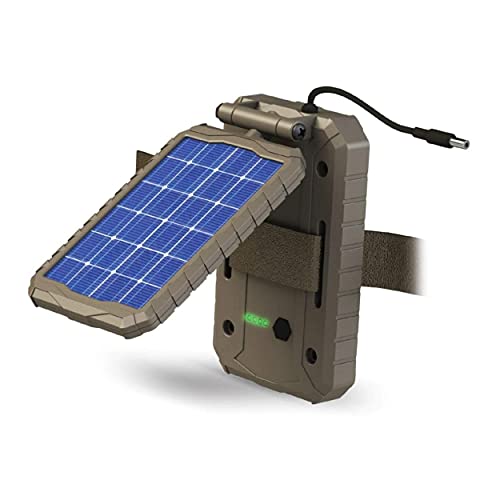
EXTENDED CAMERA FIELD LIFE: Embrace renewable energy, eliminating the need for traditional batteries and ensuring a cost-effective approach to keeping your trail cameras charged; A 3000mAh Li-ion Battery extends the field life of your trail camera
What $30 Extra Gets You: Pro 3.0 Features vs. X 3.0 Value
Spending an extra $30 on the Pro 3.0 unlocks significant upgrades in camera quality and overall usability. The Pro model features 4K photo capabilities, providing sharper and more detailed images compared to the X 3.0. It also includes no-glow infrared for stealthy nighttime shots without spooking game, and a 2-inch LCD screen that allows you to adjust settings and aim the camera directly on the device—crucial when cellphone signals are weak or unavailable. This screen supports live Wi-Fi aiming for precise adjustments and real-time monitoring. For additional concealment, you can review easy steps and tips on hiding your camera to avoid detection by both wildlife and thieves.
Additional benefits include built-in GPS, which helps you keep track of camera locations, and internal storage to save photos and videos without needing external memory cards. The improved user interface offers quicker setup and easier adjustments, saving valuable time in the field. You also get HD photo and on-demand video recording functions through the app, with customizable video lengths and an upgraded sensor for clearer captures.
While the X 3.0 keeps things straightforward and budget-friendly, the Pro 3.0’s bundle of premium features—such as GPS, internal storage, and enhanced IR—makes that extra $30 a smart investment for serious outdoor monitoring and professional use.
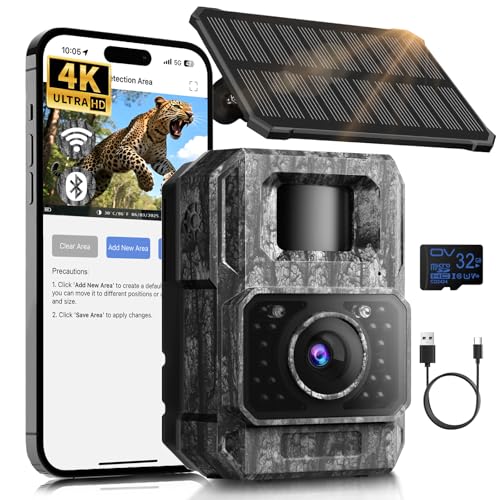
𝐍𝐎𝐓𝐄: 𝐢𝐭 𝐢𝐬 𝐍𝐎𝐓 𝐜𝐨𝐦𝐩𝐚𝐭𝐢𝐛𝐥𝐞 𝐰𝐢𝐭𝐡 𝐡𝐨𝐦𝐞 𝐖𝐢𝐅𝐢, 𝐝𝐨𝐞𝐬 𝐍𝐎𝐓 𝐬𝐮𝐩𝐩𝐨𝐫𝐭 𝐜𝐞𝐥𝐥𝐮𝐥𝐚𝐫/𝟒𝐆/𝟓𝐆 𝐧𝐞𝐭𝐰𝐨𝐫𝐤𝐬, and 𝐝𝐨𝐞𝐬 𝐍𝐎𝐓 capable of real-time motion alerts or push notifications. The camera creates its own short-range Wi-Fi hotspot (𝐍𝐨𝐧-𝐂𝐞𝐥𝐥𝐮𝐥𝐚𝐫) for setup, and downloading files only. Wi-Fi range is up to 33–50 ft in open areas. The camera records automatically even when your phone is not connected. No subscription or monthly fees
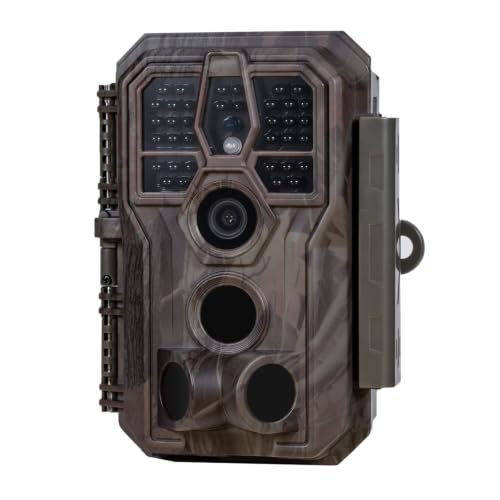
64MP Photos & 1296P HD Videos: Equipped with a high-quality optical lens and advanced image sensor, the E5S captures ultra-sharp 64MP photos and smooth 1296P HD videos.

【64MP 4K Video & 65ft Clear Night Vision】:The trail cameras with night vision motion activated waterproof deliver crisp 64MP photos and ultra HD 4K videos even in total darkness, with an effective night vision range reaching 65 ft. Equipped with low-glow infrared lights, this game camera won’t scare off nearby creatures, so the trail camera can perfectly record swift wildlife and fleeting wild scenes without any omission. Whether you pick this compact trail cam or our upgraded model, the game cameras with night vision motion activated waterproof always maintain stable capture performance day and night.
Final Verdict: Choose X 3.0 for Budget, Pro 3.0 for Stealth
Choose the Pro 3.0 for ultimate stealth. Its no-glow IR flash remains invisible to both wildlife and humans, allowing you to set it up discreetly without disturbing your surroundings. It offers an 80-foot flash range, providing ample nighttime coverage without giving away its position. The built-in 2-inch LCD screen simplifies concealed setup and enables you to view high-definition videos instantly. GPS tracking within the app also lets you pinpoint the camera’s exact location for precise management across your property. Understanding night vision scope prices can help you compare the value of this upgrade against other budget options. For optimal performance, consider how night vision goggle types handle different lighting conditions. For context, the PVS-14 is favored for its versatility and single-eye use in tactical scenarios, much like this camera’s adaptable design.
For just $30 more, you gain undetectable operation and superior image quality. This trade-off results in shorter battery life but ensures your camera stays hidden and captures clearer footage—ideal when stealth is your top priority.