Pulsar vs. AGM Thermal: Which Brand Is Best for You?
If you’re trying to choose between Pulsar and AGM thermal scopes, the decision often comes down to how much you’re willing to spend and what features matter most to you. Pulsar generally offers higher resolution and advanced apps like Stream Vision 2, making it ideal for long-range hunting beyond 1,800 yards.
On the other hand, AGM provides reliable thermal imaging at a more affordable price point. It’s perfect if you’re on a tighter budget.
Below, you’ll find a detailed comparison to help you decide which brand fits your needs best.
What’s the Real Difference Between Pulsar and AGM Thermal?
Pulsar generally targets the high-end market with its flagship models featuring 640 and 1024-class sensors, offering superior thermal image quality. AGM, on the other hand, provides solid mid-range options using 384 and 640-class sensors that deliver dependable performance at a more affordable price. This difference impacts the level of detail and clarity you get in thermal imaging. Pulsar’s focus on premium hardware means you often see finer detail and sharper images, which appeals if maximum resolution is your priority. AGM’s approach emphasizes reliable, practical performance suitable for most field conditions without the premium cost. For those interested in integrating thermal imaging into a custom build, building a DIY thermal drone is a growing trend that leverages similar sensor technologies. Choosing between these brands may also depend on specific use cases, as a buyer’s guide to the best choices highlights top night vision cameras for different environments and budgets. For instance, setting up a device like the Tactacam Reveal follows a step-by-step guide that can help you get started with field monitoring. Ultimately, choosing between them depends on whether you value the highest resolution and brand prestige or a balance of solid performance and budget-friendly pricing. However, both brands benefit from ongoing technological progress, as firmware and software updates are transmitted via Wi-Fi or Bluetooth every 3–6 months to keep devices current.
Who Has the Cleaner Thermal Picture: Pulsar or AGM?
Pulsar typically offers a cleaner thermal picture than AGM. This advantage comes from their use of higher-resolution sensors paired with a finer pixel pitch—1024×768 HD sensors at 12 µm—that produce sharper contours and reveal less blocky detail, especially at longer distances. Pulsar’s sensors also display lower thermal noise thanks to optimized NETD values and proprietary image processing, which enhances contrast in fog or rain. However, the overall clarity of your thermal image also depends heavily on image calibration management. Pulsar’s calibration options—Automatic, Semi-Automatic, and Manual NUC—help control ghosting and maintain image clarity. AGM provides robust sensors as well, but if calibration is neglected, even their premium hardware can perform poorly. For the most stable and clear thermal imaging, Pulsar’s comprehensive system-level approach tends to deliver superior results. For users comparing these technologies, understanding the differences between night vision vs. thermal can help clarify which overall imaging solution best matches their typical viewing conditions. Additionally, since a bump helmet’s impact-resistant shell helps stabilize mounted optics during active movement, pairing your thermal device with a secure helmet mount reduces micro-shakes that can blur long-range detail. Real-world footage often reveals that false color palettes can mimic the ghosting artifacts seen in poor calibration, so learning to distinguish them prevents misdiagnosing a sensor issue.
Why Detection Range Matters for Hunters and Tactical Users
Detection range determines how early you can spot a heat signature, making it a primary concern for hunters and tactical users. It doesn’t measure how far you can identify the target—only how far you can detect it. Longer range gives you more time to scan open fields or ridgelines before animals slip into brush or targets move out of standoff distance.
For hogs and coyotes, a detection range of 1,000 to 1,750 yards generally covers the job. However, identifying targets at the full range is rare; you often confirm ID at about one-third of that distance. This discrepancy arises from infrared sensitivity and image resolution. A 640 sensor with a 35 mm lens can push detection about 30–40% further than a 384 sensor, and larger lenses boost reach further. For example, the Pulsar Thermion 2 XQ50 offers 1,975-yard detection with a 640×480 resolution and F1.0 fast aperture germanium optics to maximize early detection in open terrain. Unlike cellular trail cameras, which rely on data plans and monthly subscription costs to transmit images, thermal scopes have no recurring fees once purchased. For a trouble-free setup outdoors, the best options prioritize green light for hunting to preserve night vision and avoid spooking game. Understanding how work mode functions on these devices can help users optimize power management for longer field sessions.
Always interpret advertised detection figures as search capability rather than a confirmation distance. In tactical situations, early detection matters more than positive identification. Extra headroom in range helps compensate when humidity, terrain, or weather degrade real-world performance.
Does Pulsar’s Higher Price Buy Real Performance?
The higher price of Pulsar thermal optics does translate to real performance benefits, but whether they matter to you depends on your priorities. The Thermion 2 XG50, priced significantly higher than the AGM Adder TS50-640, offers a detection range that’s roughly 86 meters longer, along with a more refined 640×480 sensor and superior image processing. These improvements can enhance your ability to identify targets at greater distances and in more challenging conditions, but for most hunting scenarios, the difference is marginal. However, Pulsar’s ND ratings have been criticized as “completely made-up” without standardized measurement procedures, making comparisons unreliable. Similarly, the trail camera cost discussion reinforces that brand premium often relates to features and perception rather than pure necessity.
Where the premium value of Pulsar equipment really stands out is in its polished software interface and solid build quality, which appeals to serious users who prioritize durability and user experience. However, this also reflects the brand’s reputation, meaning you’re not just paying for hardware but for brand perception as well.
In contrast, AGM’s thermal devices provide solid clarity at a lower price point. Many shooters find that the actual difference in image quality or detection range in real-world use is negligible. The choice ultimately hinges on whether you value the subtle hardware advantages and brand refinement enough to justify the higher cost, or if you prefer getting reliable performance at a more accessible price.

[HIGH SENSITIVITY DETECTOR]- 384x288 Thermal sensor, 35mm detective lens, 3.5x basic magnification and a 7.5° horizontal field of view allow targets as far as 1969 yards away to be viewed clearly.

Quick View: Explore the Oneleaf.ai Mars MT1000LRF, a cutting-edge thermal imaging scope with interchangeable lenses, ultra-sensitive NETD <20mK detection, 640x512 Sensor, 2x base magnification, 1x-8x digital zoom, 30/50/60Hz adjustable Refresh Rate and advanced features like a built-in Rangefinder and Ballistic Calculator. Perfect for hunting, security, and outdoor adventures.

Clear Target ID with Dual Light Fusion: Combines 256×192 thermal imaging and 2K visible light to help identify targets and terrain with greater confidence in low light or darkness. Note: This device does not have night vision functionality.
Software and App Experience: Pulsar’s Polish vs. AGM’s Simplicity
Pulsar’s Stream Vision 2 app offers a comprehensive, feature-rich interface, whereas AGM’s software experience is intentionally straightforward. Pulsar’s app enables you to use your phone as a live viewfinder, adjust camera settings remotely, and manage recordings with cloud storage options. Its user interface guides you through polished, multi-step Wi-Fi pairing, then provides real-time view and adjustments like contrast and zoom. Firmware updates can be performed directly within the app, and downloading or sharing files is streamlined, making it easy to manage your content on the go. The app menu also includes important tools for language selection, ballistic downloads, and support, with upper corner controls for disconnecting or removing the device and an auto-connect toggle for seamless session persistence. Unlike Pulsar, AGM does not provide an easy guide to cancel your subscription directly from its app, which may frustrate users who want to quickly manage their account settings.
In comparison, AGM’s app approach prioritizes simplicity, but official details remain unconfirmed. Without verified documentation, features like remote control or cloud sharing are uncertain. The design minimizes controls to reduce complexity, appealing if you prefer a no-fuss experience. While Pulsar’s ecosystem is ideal for active photographers who want to fine-tune their device, AGM’s streamlined interface suits users who favor ease over extensive customization.

iOS and Android Compatibility: The P1 thermal imager supports all USB-C smartphones and computers, including iOS, Android, and Windows. For iPhones with a Lightning port, a Type-C to Lightning adapter is required (sold separately). App name: Thermal Master.

【Ultra-Sharp Thermal Imaging】 Capture clear, detailed heat signatures with a high-resolution thermal sensor enhanced by advanced image-processing technology at 240 x 240 TSIR Resolution. A wide field of view of 50°x 50° and smooth 25 Hz high-refresh-rate output ensure accurate visuals—perfect for home inspections, HVAC troubleshooting, automotive diagnostics, and electrical system checks.

NOTE: Thermal cameras detect heat from surfaces — not through walls. Temperature differences reveal insulation gaps, moisture issues, and overheating components
Pulsar’s Magnesium Alloy vs. AGM’s Aluminum Builds
Pulsar’s magnesium alloy builds are notably lighter than AGM’s aluminum constructions. Magnesium alloy offers a lower density, which translates into a significantly reduced weight—often up to 30% lighter than aluminum. This ultralight design helps reduce hand fatigue during extended use and makes carrying the device more comfortable. Pulsar’s focus on material innovation means they use magnesium throughout the shell, including in models like the Feinmann F01, which weighs just 46 grams. The material’s rigidity ensures impact resistance without adding extra weight, and complex shell cutouts do not weaken structural integrity. Pulsar’s magnesium alloy shell also remains cooler to the touch compared to plastic mice, providing a distinct tactile experience. Unlike thermal imaging devices that detect infrared radiation, night vision goggles typically amplify visible and near-infrared light, which explains their different material and weight considerations. For those setting up a trail camera, understanding the mounting and attachment process is crucial for proper placement in the field. Budget-conscious shoppers should research night vision camera prices to compare features across brands.
AGM prefers aluminum alloy for its thermal and shock resistance qualities, which prioritize durability over weight savings. Aluminum offers a steadier, more predictable heft that can handle rigorous field use and harsh environments. While it’s heavier, it provides a robust enclosure, making it less vulnerable to dents and deformation. Overall, magnesium alloy creates a lightweight, impact-resistant shell ideal for users prioritizing portability, whereas aluminum builds emphasize durability and shock resistance for demanding field conditions.
AGM’s Budget Scopes vs. Pulsar’s Premium Picks
AGM’s budget scopes and Pulsar’s premium models serve different needs, with a clear price difference reflecting their features. AGM’s Rattler V2, priced around $995, offers decent thermal imaging with color, suitable for short-range hunts under 200 yards. It provides acceptable battery life for quick sessions but exhibits less contrast at night and basic image processing, limiting its effectiveness at longer distances or in low-contrast conditions. For those prioritizing portability and ease of use in the field, durable flashlight builds are a key factor to consider alongside your thermal scope choice. Unlike thermal systems that detect heat, night vision goggles amplify ambient light to create a visible image. For hunters seeking a reliable alternative without cellular connectivity, non-cellular trail cameras offer a simple and cost-effective option for monitoring game.
In contrast, Pulsar’s premium models like the Thermion 2 XQ50 are designed for serious hunters. They deliver superior thermal color, sharper image quality, and detection capabilities extending beyond 1,800 meters. These units typically feature longer battery life, allowing for extended use without frequent recharging. While the cost is significantly higher, the improved sensor resolution and advanced image refinement make these models better suited for precision, longer-range hunting, and more demanding conditions.

Fast Targeting. Wide Field of View: The RattlerV2 19-256 offers a 2.5x base magnification and a wider field of view — ideal for close- to mid-range scanning and fast-moving targets. Whether you’re hunting hogs in thick brush or predators on the move, this thermal scope keeps your target in sight and your response time sharp.

Extended Range. Wider Opportunity: With a 25mm Germanium lens and a powerful 3.5x base magnification, the RattlerV2 25-256 gives hunters a serious edge. Its thermal imaging scope lets you detect heat signatures out to 1,250 yards.
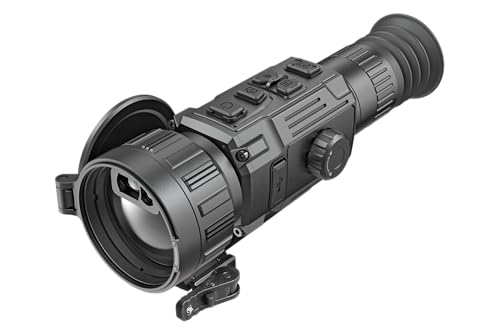
Elite Thermal Clarity at Long Range With a 640×512 resolution 12μm sensor and sub-15mK sensitivity, this thermal imaging riflescope delivers crisp visuals even in total darkness. The result? Detection range up to 2.2 miles—ideal for hunters scanning wide, open fields.
Choose Pulsar or AGM by Your Hunting Setup
For open-field predator control, Pulsar’s Thermion 2 XL series offers a detection range of up to 2,800 meters, making it ideal when you need to spot targets at long distances. AGM’s Adder V2 LRF extends even further, reaching up to 3,300 meters, providing extra reach for expansive terrain. Both handle 50–60 mm lenses effectively, so your choice depends on ergonomics and how quickly you can navigate menus. If your Stealth Cam stops taking pictures, power supply issues are a common cause to check first. When comparing build quality, both brands offer rugged construction suitable for harsh field conditions.
In woodland or brush conditions, handling and agility become more important than maximum range. The lighter Pulsar Talion weighs only 0.78 kilograms, making it easier to carry during prolonged stalking or driven hunts. AGM’s compact scopes also excel in tight cover, with simple controls that facilitate quick target acquisition without extensive fumbling.
For truck guns or tripod-mounted setups, weight is less of a concern. Here, priority shifts to display clarity and ease of battery replacement. Your choice should fit the terrain: opt for longer-range models for open fields, and select more compact, maneuverable scopes for thick cover. For added convenience, consider the battery life of each model when planning extended outings.

SEE MORE THERMAL DETAIL WITH SUPER RESOLUTION: Super Resolution enhances 256×192 thermal images up to 512×384 resolution, revealing clearer outlines and finer heat signatures for easier target recognition. This helps you observe wildlife, track targets, and explore your surroundings more clearly, especially in situations where details are difficult to discern with the naked eye

[High-Resolution Thermal Imaging]:The i4SEE EM10-256 Thermal Imaging Monocular features a 256×192 uncooled VOx infrared detector and a 10mm F1.0 lens, delivering a detection range of up to 500 meters (550 yards). With a NETD of 30mK and a 50Hz frame rate, it provides crisp, real-time thermal imaging for night vision, hunting, and outdoor adventures. Whether you're tracking game or navigating in complete darkness, this thermal monocular ensures superior performance and reliability.

High-Resolution Thermal Imaging: Equipped with a 2-inch display and 320240 resolution thermal camera, this scope offers clear heat signatures with real-time 50Hz refresh rate and 3x digital zoom for spotting targets up to 100 meters away
How Much Should You Spend on a Thermal Scope?
Spending between $1,500 and $2,000 strikes a good balance for most hunters. At this range, you’ll find thermal scopes that offer decent resolution and useful features like recording. These scopes typically have sensor resolutions around 240×180 or 320×240 pixels, which provide clearer images and better detail than entry-level models. They are suitable for detecting heat signatures out to 100–150 meters, making them versatile for many hunting scenarios. While they may lack some advanced features found in higher-end units, they represent a solid upgrade without overextending your budget.

UNMATCHED CLARITY: With a high IR resolution of 256x192 and a smooth 50Hz refresh rate, the thermal monocular provides vivid thermal images, capturing every detail of your surroundings with precision.

Ultra Sensitive Thermal Sensor: cutting-edge thermal scope the ThOR LTV delivers an ultra clear visual with its 12 micron sensor and 60Hz refresh rate, providing a distortion free image

Advanced Image Enhancement Technology: This thermal camera adopts advanced TISR enhancement technology, upgrading 160x120 IR resolution to 320x240 super resolution. Paired with a 2.8-inch LCD, 25Hz refresh rate and ≤40mK thermal sensitivity, it delivers sharp, smooth thermal details.
Pulsar vs. AGM: Final Verdict for Your Thermal Budget
If you’re split between Pulsar and AGM within your thermal budget, the decision hinges on whether you prioritize top-tier image quality or a more budget-friendly, balanced performance. Pulsar offers higher sensor resolution and a refined software ecosystem, which translates to clearer images and smoother mobile integration. While this comes with a higher price tag, it provides you with longer-range detection and advanced processing capabilities. AGM, on the other hand, provides solid thermal performance at a lower cost but sacrifices some image clarity and firmware sophistication. Its sensor resolution is lower, making it suitable for shorter distances, but it won’t match Pulsar’s detection depth and detail. If your budget is tight and your engagement distances are shorter, AGM is a practical choice. However, for uncompromising image fidelity and smarter software features, stretching for Pulsar may be the better investment. Align your spending with your typical shooting range and your desire for premium tech.