Bump Helmet vs. Ballistic Helmet for Night Vision Mounts
Figuring out whether you need a bump helmet or a ballistic helmet can be confusing, especially when both support night vision mounts and gear.
The key factor is whether you’re primarily concerned with impact protection or ballistic defense.
Understanding these differences helps you pick the right helmet for your specific situations.
Keep reading to get the full breakdown and make an informed choice.
What’s the Real Difference Between Bump and Ballistic Helmets?
Ballistic helmets provide significantly higher protection than bump helmets. Bump helmets are designed primarily for impact resistance from falls or debris, with rigid polymer shells that are lightweight and durable but offer no ballistic defense. They are suitable for activities where impact from non-projectile objects is a concern, such as rock climbing or UTV riding. In contrast, ballistic helmets are engineered for combat or situations with gunfire risk. Using layered fibers like Aramid, they are built to stop high-velocity projectiles and meet strict safety standards for durability and protective integrity. This is similar to how selecting a thermal scope requires understanding the specific threats and environments you’ll face, just as knowing a camera’s night vision capability is crucial for low-light planning. While bump helmets are easier to customize with paints or wraps, ballistic helmets prioritize protection, making modifications more difficult, similar to the specialized thermal imaging components used in custom drone builds. Your choice depends on whether your environment poses impact hazards or the threat of ballistic attacks, as well as your budget since bump helmets are more affordable.
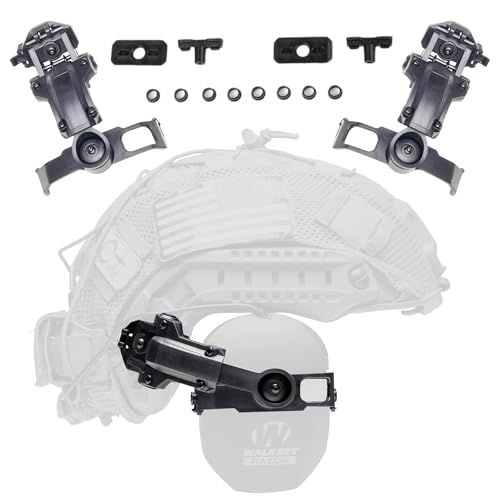
DESIGNED FOR OPS-CORE, FAST, MICH & ACH HELMET RAILS: This ARC rail headset adapter is designed to fit ARC rails, along with MICH, Ops-Core, and FAST helmet rails, ensuring a secure and stable fit for reliable tactical ear protection


HIGH-QUALITY VISOR: Optical Class-1 tinted lens tested for minimal distortion to ensure uncompromised vision
The Weight, Cost, and Use Case Advantages of a Bump Helmet
Bump helmets are an excellent choice when lightweight, affordability, and specific application benefits matter most. They typically weigh about half as much as ballistic helmets, which helps reduce neck fatigue during prolonged use—especially important when mounting night vision devices. With prices often below $300, you can equip entire teams for training exercises, airsoft competitions, or search and rescue missions without breaking the bank. Ballistic helmets are armor and not required for these low-risk recreational or training environments. For mounting optics like red dot sights or magnifiers on your helmet, choosing a cantilever scope mount can provide the necessary eye relief and stability. Selecting the correct thermal clip-on is another key consideration to ensure compatibility and optimal performance with your existing optics. Their sleek designs and tough high-impact shells ensure durability in mobile, non-combat environments where ballistic protection isn’t required. Evaluating the SD card speed is also a critical factor for recording and reviewing night vision footage effectively. Additionally, they maintain full compatibility with standard night vision mounts, offering a streamlined, low-profile platform ideal for scenarios focused on agility and quick deployment.

1. The NVG lanyard is designed for prevent night vision goggles falling down when accidental release or mount failure happens

Superior Material:The helmet bracket is made of high-quality aluminum alloy with high oxidation resistance. The surface is color-locked,so it will not fade. The special process makes the surface smooth and work smoother.

FINE WORKMANSHIP - Made by CNC aluminum alloy,the mount holder is durable and lightweight.
When Your Safety Demands a Ballistic Helmet
Ballistic helmets are essential when your safety demands protection against small arms fire and fragmentation. They are designed with multiple layered composites that can absorb and disperse high-velocity projectiles and blast fragments. If you’re operating in environments where handgun rounds, rifle fire, or explosive debris are common threats, a ballistic helmet provides the necessary level of defense. This is crucial because ballistic protection ensures your head remains protected, just as understanding orbs in night vision ensures your equipment functions correctly under low-light conditions. A ballistic helmet can also be a critical platform for technology, such as when mounting a thermal imaging drone for aerial reconnaissance during a search operation.
Unlike bump helmets, which are mainly for impact protection, ballistic helmets meet strict safety standards required for direct enemy contact or near blast hazards. The reinforced shell construction is specifically engineered to defeat these threats, ensuring your head remains protected under extreme conditions. For high-risk missions such as counter-terrorism raids or urban patrols, selecting a helmet that aligns with the operational threat level is crucial for your safety, just like knowing the best strategies for concealment can be critical for operational success.

What's included: An PJ type tactical helmet, tactical headset, helmet cover, accessory kit, and battery pouch. Perfect for airsoft, paintball, tactical training, and outdoor activities. An ideal gift for loved ones.


What's included: An PJ type tactical helmet, tactical headset, helmet cover, accessory kit, and battery pouch. Perfect for airsoft, paintball, tactical training, and outdoor activities. An ideal gift for loved ones.
Night Vision and Accessory Compatibility: What Both Helmets Share
Night vision and accessory compatibility are consistent across bump and ballistic helmets because they share the same mounting standards. Both helmet types feature identical mounting interface systems, including side rails, top rails, and front NVG shrouds. These allow you to attach lights, gauges, communication devices, cameras, and night vision goggles with ease. The modularity of these mounting systems ensures your gear—such as infrared illuminators or digital recorders—can be swapped or upgraded without compatibility concerns.
Interchangeable mounting hardware works seamlessly between bump and ballistic helmets, enabling quick transfer of your entire night operations setup. Whether mounting an NVG or a laser pointer, both helmet types provide firm support and reliable retention thanks to standardized rail configurations. This shared compatibility streamlines gear management and ensures you can customize your helmet quickly for different missions or conditions.

Material: The main plastic made of nylon.

① Enhanced Compatibility Design Designed as a replacement side rail mounting interface for tactical helmets, this bracket is compatible with IHPS-style and airsoft helmet systems. It provides a stable connection base for accessory mounting, ensuring reliable performance during training, outdoor sports, and airsoft gameplay.

3-Hole Type 2 Skeleton NVG Mount Shroud constructed of full metal aluminum material, extra strong shock absorption ability.
Choosing Your Helmet: Matching Type to Mission and Threat
Your choice of helmet depends on the specific threats you face and the physical demands of your mission. If there’s a realistic chance of gunfire, opt for a certified ballistic helmet. Its dense materials are designed to stop pistol rounds and provide critical protection. Always check certification standards like NIJ Level IIIA to ensure the helmet meets safety requirements—don’t rely solely on appearance. For training, airsoft, or low-risk activities where impact is the primary concern, a lightweight bump helmet is suitable. These helmets are considerably lighter, making them more comfortable for extended wear, and their rail systems are designed to accommodate the same mounting platforms for accessories like night vision as their ballistic counterparts. Consider how long you’ll be wearing the helmet and how physically demanding the task is. While bump helmets save weight, they do not offer ballistic protection, so your gear must match the threat level of your operational environment. For night vision use, the price of your thermal imaging accessories can be a significant part of your total setup cost, but using motion detection can extend your situational awareness without constant active scanning. The light spectrum you choose, such as visible red light versus green, can also impact target visibility and stealth during nighttime operations.

【 Tactical Protective Helmet Size: 56-62cm】-- (measurements may have a 1-2cm discrepancy due to manual measurement). Please measure your head circumference before purchasing


What's included: An PJ type tactical helmet, tactical headset, helmet cover, accessory kit, battery pouch,NVG mount,GPNVG 18 Dummy Model,Helmet Light,and a MS2000 helmet light. Perfect for airsoft, paintball, tactical training, and outdoor activities. An ideal gift for loved ones.