Night Vision vs. Thermal for Coyote Hunting: Which Is Better?
Wondering whether thermal or night vision is better for coyote hunting? The truth is, neither works perfectly alone—thermal is best for detecting heat signatures in complete darkness and through obstacles.
Night vision helps you identify the target before you take a shot.
By understanding how each tool works, you can choose the setup that fits your needs and environment.
Keep reading to see which option might be right for you.
What Makes Thermal and Night Vision Different for Coyote Hunting?
Thermal imaging and night vision each have distinct advantages for coyote hunting. Thermal technology detects heat emissions from animals, creating an image based on temperature differences. This means it can identify a stationary coyote even in complete darkness, fog, smoke, or light brush, by highlighting its warm body against cooler surroundings. Thermal systems work independently of ambient light, making them highly effective in conditions where night vision struggles. For example, night vision requires some ambient light or an infrared illuminator to function, similar to how Blink Camera uses infrared LEDs for night vision in low-light settings. Both device types also vary in cost, with thermal generally commanding a higher price for comparable performance and detection range.
Night vision amplifies existing light from stars, moon, or an infrared illuminator to produce a visible scene. It shows details like fur and facial features more clearly and provides a natural-looking image. However, as ambient light diminishes and infrared illuminators become necessary, coyotes may become aware of your presence because IR illumination can be detected. Night vision equipment becomes less effective in heavy fog or smoke, and it relies heavily on some level of available light.
Why Thermal Wins for Detection in Coyote Hunting
Thermal detection far surpasses night vision in spotting coyotes quickly and reliably. It can identify heat signatures at distances of 1,000 meters or more, allowing you to find animals before they reach your hunting zone. This rapid detection reduces scan times by up to 3.5 minutes compared to traditional night vision, giving you a critical edge in the field. Thermal imaging provides superior contrast, making it easier to scan open terrain swiftly and pick out warm-bodied animals against cooler backgrounds. Reviews of top picks highlight that thermal units deliver superior contrast in varying conditions, ensuring consistent performance. These same reviews also note that high-resolution sensors are key to distinguishing distant targets from background noise, a benefit that becomes crucial in mixed terrain.
Moreover, thermal’s ability to detect heat allows you to find coyotes hiding in dense brush or tall grass, where their bodies stand out clearly against cooler surroundings. Unlike night vision, thermal does not depend on ambient light or IR illuminators—its operation remains consistent in complete darkness. The clarity you get from thermal means you can acquire targets fast, focusing on heat signatures rather than hunting for fine detail. This makes thermal the primary detection tool for efficient and confident coyote hunting at night. For optimal setup, pairing your thermal scope with a top game camera ensures reliable performance for scouting and recording coyote activity.

TURN YOUR DAY SCOPE INTO A THERMAL OPTIC IN SECONDS — Clip-on design mounts in front of your existing scope without affecting zero, magnification, or reticle. Keep the optic you trust and add thermal only when you need it.

Extended Range. Wider Opportunity: With a 25mm Germanium lens and a powerful 3.5x base magnification, the RattlerV2 25-256 gives hunters a serious edge. Its thermal imaging scope lets you detect heat signatures out to 1,250 yards.
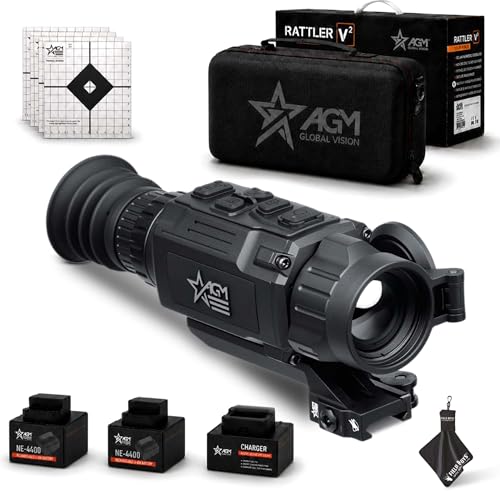
ZERO IN, HUNT THIS WEEKEND: This thermal scope bundle ships with 5 AGM thermal zeroing targets and a Field Boys optic cloth, so you can sight in and head out the same day. Thermal scopes can't read ink targets, you need thermal-contrast targets, and they're included.
Which Works Better in Darkness, Brush, and Bad Weather?
Thermal imaging outperforms night vision in darkness, brush, and bad weather. Because it detects heat instead of relying on light, it can identify warm-bodied targets like coyotes through dense grass or partial concealment, where night vision struggles without a clear line of sight. In fog, thermal imaging only loses about 30 to 40 percent of its detection range, whereas night vision effectiveness drops by 85 to 90 percent. Light rain or snow also has little impact on thermal performance, as it continues detecting heat contrasts, while night vision images degrade due to moisture scatter. Using thermal imaging in these conditions also means sacrificing stealth—night vision depends on ambient or IR light, which can reveal your position. For hunts in darkness-heavy terrain, thick brush, or foul weather, thermal imaging provides a reliable edge for detection. digital night vision relies on an image sensor and processor rather than intensifier tubes, which affects its performance in low-light versus thermal detection. A DIY build for a night vision camera requires tools like a soldering iron, a camera module, and an IR illuminator to capture images in the dark. When choosing equipment, a top picks comparison helps buyers evaluate quality and performance across different models.

Fast Targeting. Wide Field of View: The RattlerV2 19-256 offers a 2.5x base magnification and a wider field of view — ideal for close- to mid-range scanning and fast-moving targets. Whether you’re hunting hogs in thick brush or predators on the move, this thermal scope keeps your target in sight and your response time sharp.

【256x192 RESOLUTION】- Features with a 12μm sensor with an impressive NETD<25mK and a high refresh of 50Hz, enabling you to detect subtle temperature differences in various weather.

[HIGH SENSITIVITY DETECTOR]- 256x192 Thermal sensor, 25mm detective lens, 3.5x basic magnification and a 7.0° horizontal field of view allow targets as far as 1422 yards away to be viewed clearly.
When Night Vision Helps You Identify the Target
Night vision provides crucial details that thermal imaging cannot. While detection indicates an object is alive, positive identification confirms exactly what it is. At typical hunting or surveillance distances of 100 to 250 yards, night vision allows you to see fur patterns, ear shapes, and body posture, which are essential for accurate species confirmation. This level of detail helps distinguish a coyote from a dog or calf, preventing costly misidentifications. Many models achieve target identification up to 1315 feet using an 850 nm infrared illuminator with seven adjustable brightness levels. Understanding night vision scope prices can help you find a model with these essential identification features without overspending. For those comparing gear, the Tactacam Defend offers a similar 850 nm infrared illuminator with adjustable brightness to support these identification needs. However, ambient light sources can create orbs that obscure these critical details, so managing reflective surfaces is key.
Night vision also reveals gait and body language, offering insights into the animal’s behavior and health. These cues are vital for ethical decision-making, ensuring you don’t mistake an innocent animal for a threat. Additionally, night vision displays fences, branches, and slopes behind your target, giving you awareness of the surroundings and backstop for your shot. When certainty matters more than just detection, night vision provides the critical details that lead to accurate, responsible targeting.
Which Tech Helps You Aim Faster on a Coyote?
Thermal imaging helps you aim faster on a coyote because it detects body heat at over 1,300 meters, allowing you to locate the animal instantly without relying on ambient light. Its sensor resolution enables it to spot coyotes 3.7 times farther than Gen 3 night vision, dramatically reducing the time needed to find and target the animal. Since color rendering is irrelevant in thermal imaging, you just react to heat signatures against cold backgrounds, making your targeting process quicker and more efficient. For example, a hunter using a thermal system to spot a coyote’s heat signature in a heavy wind can avoid the equipment setup delays of deploying a decoy like the MOJO Critter while waiting from a truck.
Night vision works better only at short ranges once you’ve already identified the target. It provides terrain detail to help keep the coyote centered in your view, but switching from thermal to night vision can cause delays. This lag wastes crucial seconds when the animal stops moving. To aim faster, use a thermal system as your primary device—this way, you avoid fumbling between multiple tools at the moment you need to make a shot.

Includes AGM RattlerV2 19-256 Thermal Imaging Scope, 5 AGM Thermal Targets which allows for easy zeroing of the thermal rifle scope, and Microfiber Optics Cleaning Cloth by Field Boys, a Trademarked Brand.

High-Resolution Thermal Imaging: Equipped with a 2-inch display and 320240 resolution thermal camera, this scope offers clear heat signatures with real-time 50Hz refresh rate and 3x digital zoom for spotting targets up to 100 meters away
Cost Breakdown: Thermal vs. Night Vision for Coyote Hunting
Thermal imaging generally costs between $800 and $1,500 for entry-level scopes that are suitable for hunting. While this higher upfront investment can seem steep, thermal offers advantages like longer battery life and instant target detection in total darkness. Understanding how these devices detect heat signatures lets you appreciate why they perform so well in complete darkness. Digital night vision, on the other hand, usually falls between $400 and $900, making it more budget-friendly initially. However, digital NV often requires a separate infrared illuminator, which adds to your total cost, and you’ll likely need extra batteries for prolonged hunts. Mount compatibility also matters: thermal devices often use standard mounts, whereas night vision units might need adapters for your rifle, and some users may even need a quality J Arm to properly secure their setup. Additionally, the overall savings tips highlighted in thermal goggle cost guides often recommend buying during off-season sales for better deals. If you hunt regularly—more than 10 to 15 nights per season—the higher cost of thermal equipment can be justified by its performance and durability. For infrequent outings, staying within the $400 to $900 range with night vision is a more cost-effective choice. Your budget and how often you hunt are key factors in making the best investment.

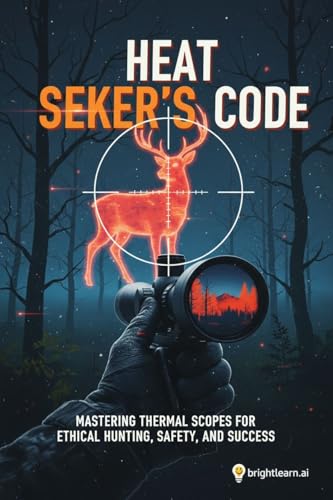
Thermal Scope Design Features a detailed thermal image of a coyote locked in crosshairs, symbolizing precision predator hunting.

🎁 Complete Kit: Includes flashlight, 2 rechargeable batteries, USB charger, dual control remote pressure switch (momentary/constant-on), Picatinny and scope mounts / quick-release scope mount (fits 1inch to 30mm scopes), 20mm Picatinny/Weaver rail and a carrying case. 1-year for hunting flashlight kit, lifetime for coiled wire tailcap tactical switch(velcro backing include)

Thermal Scope Design Features a detailed thermal image of a coyote locked in crosshairs, symbolizing precision predator hunting.
Best Budget Pick for Coyote Hunting: Thermal or Night Vision?
Digital night vision is the most budget-friendly option for coyote hunting after dark, with entry-level models costing between $400 and $900. These devices provide better color accuracy, making target identification easier, especially in dense cover. However, they rely more heavily on an infrared illuminator, which can give away your position or be less effective in open terrain. Power consumption is higher than thermal units, so carrying spare batteries is essential for longer hunts. For those using a Stealth Cam, understanding how to manage battery life and adjust infrared illuminator settings can improve concealment during setup. For hunters considering a DIY approach, building your own thermal camera with basic electronics knowledge can reduce costs and allow for customized features. Unlike thermal, digital night vision can be used during daylight without damaging the sensor, but its performance in bright conditions is limited compared to thermal detection.
If you mainly hunt in open fields or broken terrain, investing in a thermal scope can be more effective. Thermal devices detect heat signatures without needing an external light source, allowing you to scan large areas quickly and detect coyotes faster. Budget thermal options tend to cost more upfront but offer superior detection capabilities for the money. Choose digital night vision for close-range, dense cover situations and thermal for detection-first hunting over expansive areas where speed and distance matter most. Your terrain should guide your best budget choice. For daytime use, thermal scopes provide a clear advantage by detecting temperature differences even in full sunlight, though glare can reduce contrast.

Day or Night Viewing - Capture video in both daytime and nighttime modes. Store files directly to a microSD card for easy viewing and sharing.
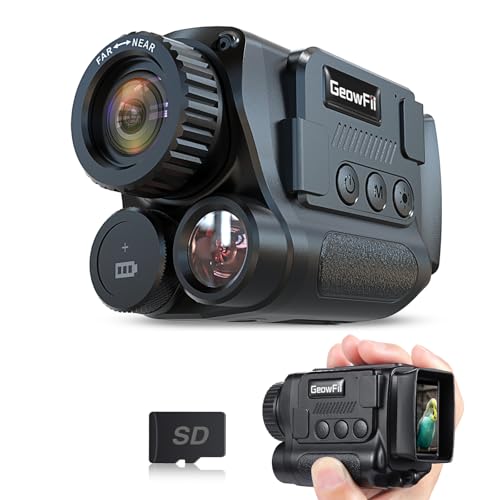
4K Upgraded & Practical—— GeowFiiTech Night Vision Monocular features a 4K version with a 25mm multi-coated lens, enhancing imaging for day and night use. With 4K video, 40MP photos, and essential functions, this monocular night vision meets outdoor needs effectively

Enhanced Fixed Magnifier with Expanded Field of View: The Gen II features an upgraded fixed magnifier boasting a wider objective lens. This delivers a significantly enhanced field of view for superior situational awareness and target acquisition, surpassing the limitations of a removable 2x magnifier.
Best Setup: Thermal Scan, Night Vision Confirm
Using a thermal scanner for detection combined with night vision for confirmation offers an optimal two-device workflow for serious coyote hunters. This approach ensures you can spot heat signatures from over 900 yards away in fog, thick brush, or darkness. The quick heat detection of a thermal scanner uncovers heat sources without requiring detailed visual clarity, making detection safe and efficient during wide-area sweeps. Understanding the drawing basics and tools for optics can also help you visualize reticle placement and field of view when zeroing your gear. However, when choosing the right gear, it helps to consult a night vision camera apps review to compare mounting options and resolution specs for the confirmation phase. Understanding the underlying technology of image intensification tubes helps clarify why night vision provides clearer detail than thermal for target identification.
Once a heat signature is identified, you switch to a night vision rifle optic. Night vision provides superior visual clarity, revealing body shape, posture, and potential shot placement better than thermal’s heat-only display. Keeping the thermal scanner in your hand allows for continuous detection, while the rifle-mounted night vision optic is used for precise confirmation and shot execution.
This find-first, confirm-second system aligns with the natural predator hunting sequence. It reduces neck strain by avoiding prolonged rifle-mounted optic sweeps through the dark, which can be uncomfortable and unsteady. Thermal handles the detection phase, offering range and heat signature differentiation, while night vision excels at confirming the target’s identity and preparing for a clean shot.
3 Mistakes That Waste Money on Coyote Night Optics
Buying night optics for coyote hunting without considering your actual hunting conditions can lead to wasted money. First, avoid confusing digital night vision with thermal imaging. Digital night vision amplifies available ambient light, making it useful in open fields or less dense cover, but it struggles in thick brush. Thermal imaging detects heat signatures and can find coyotes hiding behind dense cover where light-based devices fail. Expect to pay significantly more for thermal units, but they provide a clear advantage in challenging cover conditions. Because these scopes range from $2,000 to over $10,000, impulsive buying poses significant financial risk.
Second, pay close attention to infrared illumination. Many scopes rely on built-in IR lights to enhance visibility in complete darkness. A weak IR illuminator may work at short ranges of around 75 yards but quickly become ineffective beyond that. If you plan to shot at longer distances, you’ll need a stronger, more powerful IR illuminator. Otherwise, you might think your scope is defective when it simply isn’t powerful enough to properly light the scene.
Third, prioritize device durability over a low price. Cheaper optics often lack the ruggedness required for field use, making them prone to damage from bumps, recoil, or weather conditions. A low-cost scope might save you money initially but could end up costing more in replacements or repairs. Make sure the scope’s construction is robust enough to withstand hunting conditions and match your typical shot distances. Choosing a scope that balances durability, power, and price ensures your investment won’t end up as an expensive paperweight.