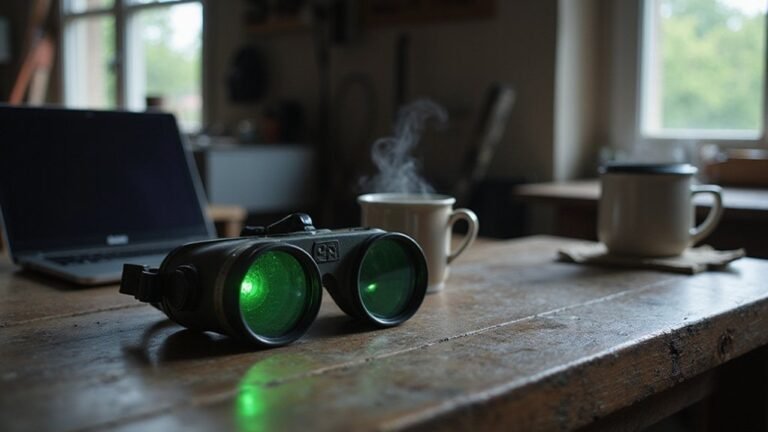
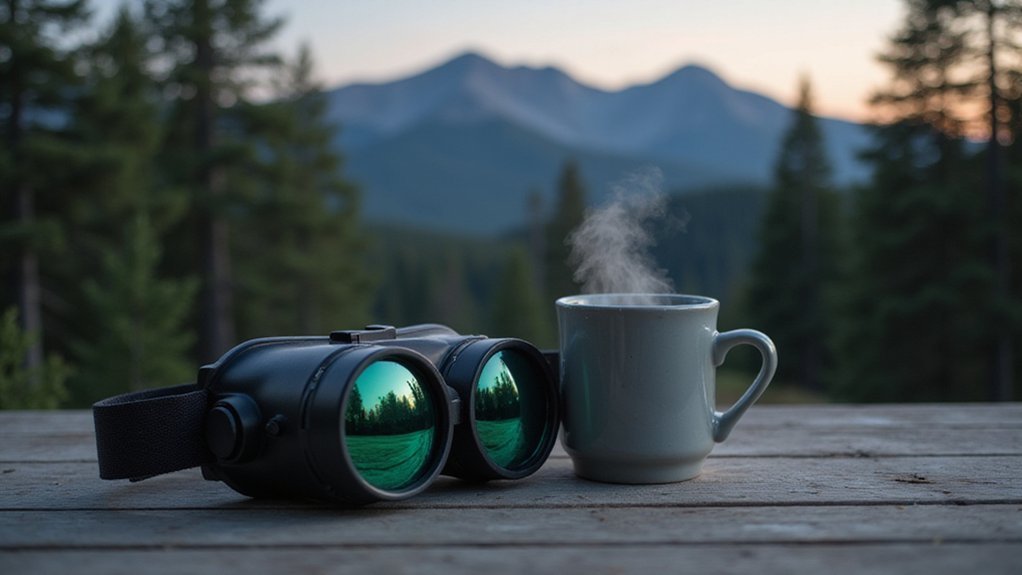
Why Are Night Vision Goggles Green?
Ever wondered why night vision goggles glow green and not another color? That green hue isn’t random—it’s carefully chosen to match your eyes’ sensitivity in low light.
This design choice helps you see more clearly and comfortably in the dark. Keep reading to find out exactly why green is the color that makes night vision work best.
What Happens Inside a Night Vision Tube, Step by Step?
Inside a night vision tube, the process occurs in five precise steps. First, the objective lens captures faint ambient light, such as starlight or moonlight, and focuses it into the tube. This tiny amount of light then strikes the photocathode, where photon conversion begins. The photocathode’s light-sensitive layer ejects electrons in response to incoming photons, maintaining the spatial details of the original scene.
Next, these electrons enter a vacuum gap where an electric field accelerates them toward the microchannel plate (MCP). The MCP contains millions of tiny channels; as electrons pass through, they cause secondary emission, effectively multiplying the number of electrons. This electron multiplication transforms each initial electron into thousands, creating an avalanche effect that significantly amplifies the signal. The microchannel plate is a key component found in Gen 2 and later devices, enabling this critical amplification step. Unlike thermal imaging, which detects heat signatures, this process relies on ambient light to form an image. For those interested in building their own low-light imaging systems, similar DIY drone projects often integrate such components with stabilization technology.
Finally, the multiplied electrons are directed toward a phosphor screen. When the electrons strike this screen, they cause it to emit light, producing a visible, bright green image that you see through the eyepiece. This entire process converts almost complete darkness into a clear, bright image, allowing you to see in low-light conditions with remarkable detail.
Why Does the Night Vision Phosphor Screen Glow Green?
The green glow of a night vision phosphor screen exists because your eyes are most sensitive to green light, which peaks around 555 nanometers. This choice maximizes the amount of detail you perceive because your visual system processes green shades more efficiently. The phosphor converts amplified electrons into visible green light, making the image clearer and easier to interpret during low-light conditions. This color selection isn’t random; it leverages your eye’s natural sensitivity, reducing eye strain during extended use. Additionally, green provides superior contrast compared to other colors, helping you distinguish shapes, contours, and subtle differences with less effort. You’ll also see more shades of green than other hues, which enhances detail without increasing brightness levels. Overall, the green glow is a practical feature, optimized to align with the way your eyes process light for better night vision performance. Infrared illuminators can enhance this by providing additional light invisible to the naked eye, ensuring the phosphor screen stays active in complete darkness.
Why Your Eyes Are Wired to See Green Best in Night Vision
Your eyes are wired to see green best during night vision because your retina contains a high concentration of green-sensitive cones. This allows you to distinguish many shades of green, which enhances your ability to detect fine details like textures and edges in low-light conditions. Models with four lenses can offer wider fields of view and improved depth perception for tactical applications. Green light also causes less eye strain during extended viewing, helping you stay focused without fatigue. Additionally, observing in green minimizes disruption to your natural night vision, so you can shift your gaze away and back without losing your dark-adapted sensitivity. That’s why green fits your biology perfectly and is optimal for night vision. This biological advantage is rooted in human ancestors’ evolutionary reliance on green vision in forested environments. Night vision goggles work by amplifying ambient light using image intensifier tubes. Similarly, when building a trail camera security box, you can use green-filtered components to reduce visibility to animals and preserve your own night vision.

WIDE FIELD OF VIEW – 1× magnification and 40° wide-angle field of view for close-range night awareness up to 90yd, plus 2× digital zoom. Green filter option included for your preferred viewing experience. Ideal for airsoft, tactical use and camping.
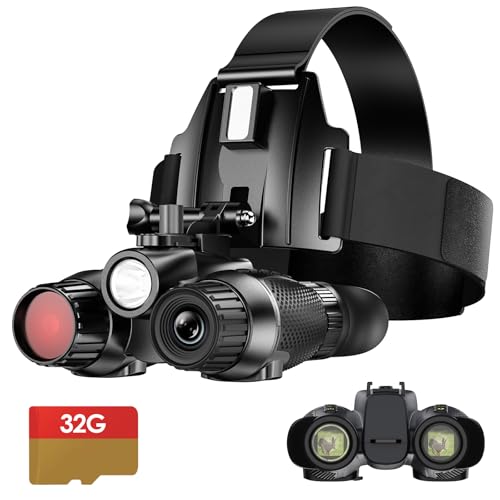
【3D Naked-Eye Effect】Enjoy clear and detailed 3D virtual reality night vision with dual-screen, dual-eyepiece naked-eye 3D viewing. Capture stunning 36MP photos and ultra-high-definition videos.

Enhanced Visual Clarity: 1.54" HD high definition large screen with wider viewing range, equipped with 7x high magnification telescope and 20mm adjustable focus high transmittance photosensitive lens, making it easier to search and find farther targets
How Green Outperforms Every Other Color for Low-Light Detail
Green outperforms every other color in low-light conditions because your eyes are naturally more sensitive to green hues. Your eye’s retina contains rod cells that are most responsive near 500–555 nanometers, which correspond to green light. This means green displays appear brighter at the same intensity compared to red or blue, helping you preserve critical contrast when visibility is limited. Additionally, your eyes distinguish more shades of green than other colors, increasing the number of perceivable tones in a monochrome scene. This finer differentiation enhances the visibility of edges and textures, making details pop even in darkness. As a result, a green display provides better depth, more detail, and clearer object definition than any other single-color option. Understanding thermal imaging technology reveals that while thermal scopes detect heat rather than light, they similarly prioritize display clarity for human vision. Using green minimizes eye fatigue during prolonged use, allowing for longer operational periods. This performance advantage is rooted in the specific wavelength sensitivity of the human eye, which aligns perfectly with the phosphor screens used in typical night vision devices. This superior performance in low light is why many optical devices, such as a cantilever scope mount, are designed to pair with green night vision systems for optimal clarity.
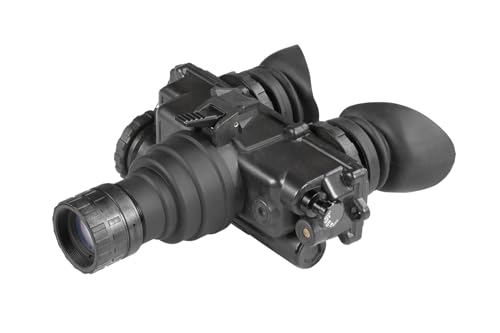
U.S. Military-Grade Night Vision Reliability: Crafted to meet the rigorous demands of the U.S. Military, the AGM PVS-7 night vision goggles deliver unmatched performance and dependability in the field. This rugged, battle-proven device is your trusted companion for secure and precise night operations

2.7'' WIDE SCREEN: This night vision binoculars is with the 2.7'' LCD super clear screen.It featured with excellent optical clarity, fully-coated 25mm objective lens,10X lens magnification,8X digital zoom to offer you more full field.The 7 gears adjustment allows you to watch animals/plants clearly within 1312ft in totaly darkness.Be sure to adjust the lens after zoom in/out for a clear display.

1:1 Realistic AN/PVS31 Night Visions Goggles. It looks real that your competitor/enemy/adversary can't tell the difference.
Why Green Night Vision Images Reduce Eye Strain During Extended Use
Green night vision images reduce eye strain during extended use because your eyes are most efficient at processing green light, especially around 555 nm, which requires less effort. This wavelength aligns with your peak visual sensitivity, making it easier for your visual system to perceive details without overexertion. Since your rods, responsible for low-light vision, are highly sensitive to green, they help you distinguish shapes and contours with minimal cognitive load. This improved contrast in green images allows you to interpret blurry or low-contrast scenes more clearly, decreasing the need for your eyes to strain to see details. Over time, this reduces fatigue and keeps your eyes sharper during long night operations or extended periods in darkness. By minimizing the effort needed to process visual information, green night vision images support sustained comfort and reduce the likelihood of eye strain. For comparison, a thermal camera relies on detecting heat signatures rather than amplifying ambient light, operating in a completely different wavelength range. Unlike night vision, these daylight thermal scopes can function effectively in broad daylight by sensing temperature differences. When choosing between technologies, consider that thermal imaging systems are often more expensive due to their specialized sensor arrays and ability to detect subtle temperature variances.
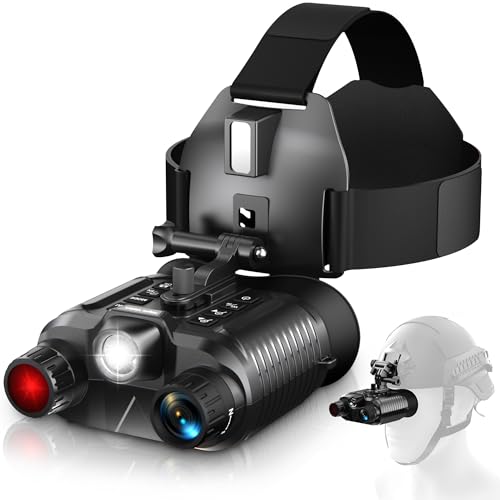
【Advanced Night Vision Technology & Fill Light】Equipped with an 850nm infrared illuminator and Starlight CMOS sensor, they deliver clear visibility in low-light conditions and 7 adjustable IR levels and 7-steps fill light for clear observation up to 1312 feet (400 meters) in total darkness

Perfect Protective Eyeglass: With Ergonomic design, it is safe and clearly when wearing it, provides with widen view vision

【 Just Throw Away Uncomfortable Goggle ! 】We know you're searching a comfortable but cool goggles for your kids.AGM spy night vision goggles is your choice.This night vision goggle is designed for a comfortable fit, very comfortable nose pad and adjustable elastic bands make kids get rid of the uncomfortable feeling when wearing glasses.Power: 4x AAA batteries (Not included).
Why Green Became the Night Vision Standard (It’s Not Random)
The green glow of night vision goggles became the standard because green phosphor screens were the first to emit this color, not by deliberate design but through practical limitations of early image-intensification tubes. The choice was then reinforced by display psychology, which shows that green is ideal for low-light conditions. Your eyes are most sensitive to green wavelengths, so the image appears brighter and more detailed than with other colors. Additionally, the ability to differentiate more shades of green enhances contrast in monochrome images, making details clearer. Green is also less tiring for your eyes during prolonged use, reducing fatigue and allowing for longer operational periods. While it started as a technical accident, the preference for green has persisted because it naturally aligns with how your eyes see best in darkness. This differs from thermal cameras, where color palettes are chosen to highlight temperature differences rather than human visual sensitivity. For a similar kind of precision reset in a different device, you can follow a step-by-step guide to reset your Tactacam Reveal X. For best results when setting up any outdoor camera, be sure to consider proper placement angles to avoid false triggers from swaying branches or direct sunlight.

AGM PVS-14 is a rugged, multi-purpose night vision monocular used globally in challenging environments.

Ultra-Clear 2K Resolution – See What Others Can’t: GOYOJO GNG2K Night Vision Monocular delivers sharp 2688x1520 HD night vision with a smooth 60Hz refresh rate. Whether you’re securing your property, spotting coyotes at night, or navigating a pitch-dark trail, you’ll enjoy crystal-clear visuals without lag or blur — even in total darkness.

Ultralight Powerhouse for Tactical Efficiency Weighing just 17.6 oz (500g), the AGM Global Vision UNVG NL1 reduces neck fatigue during extended operations. The lightweight composite housing allows for faster movements and longer wear in high-stakes environments.
What Other Colors Can Night Vision Goggles Use (And Why They Don’t)?
Green isn’t your only option in night vision, though it remains the most common. White phosphor displays a grayscale or bluish-white scene, offering a more natural appearance while maintaining low-light detail. Black-and-white systems lack any color tint, providing a stark, high-contrast image that some users prefer for sharpness. Rare red phosphor variants exist, but they are uncommon because green’s visibility and eye comfort make it the best choice for most applications. Your ability to perceive colors at low light levels is limited, and green light offers the best balance for detecting details and reducing eye strain. Manufacturers select different phosphor materials to produce these hues, but green’s combination of contrast, comfort, and familiarity keeps it the dominant option in both military and civilian night vision gear. For outdoor use, some modern devices integrate a LRF thermal scope to combine night vision with long-range distance measurement.
compact, rugged design; head or helmet-mountable for hands-free operation
U.S. Military-Grade Night Vision Reliability Crafted to meet the rigorous demands of the U.S. Military, the AGM PVS-7 night vision goggles deliver unmatched performance and dependability in the field. This rugged, battle-proven device is your trusted companion for secure and precise night operations.
U.S. Military-Grade Night Vision Reliability: Crafted to meet the rigorous demands of the U.S. Military, the AGM PVS-7 night vision goggles deliver unmatched performance and dependability in the field. This rugged, battle-proven device is your trusted companion for secure and precise night operations
What the Green Glow Reveals (and Hides) About the Real Scene
The green glow on the screen hides the true colors of the scene by translating amplified light intensity into a monochrome display. Instead of showing actual hues, the phosphor screen converts signals that are normally invisible into a single green output. This process emphasizes high contrast, making shapes and edges stand out clearly, which helps you detect movement and obstacles through brightness differences. However, this gain in clarity comes with a loss of color information. The green glow doesn’t reveal whether leaves are red or brown; it only indicates how bright they are relative to their surroundings. As a result, your perception of natural environments—like camouflage patterns or foliage colors—is obscured. What you see is a functional map of light levels aimed at maximizing contrast and detail. Night vision goggles are built around a microchannel plate that amplifies photons into visible signals, a core component detailed in night vision camera technology. The green hue prioritizes making shapes and edges more visible in dark environments, sacrificing the scene’s authentic colors for enhanced readability. Unlike night vision, which amplifies existing light, thermal cameras detect heat signatures to reveal objects in complete darkness.