Why Are Night Vision Goggles So Expensive?
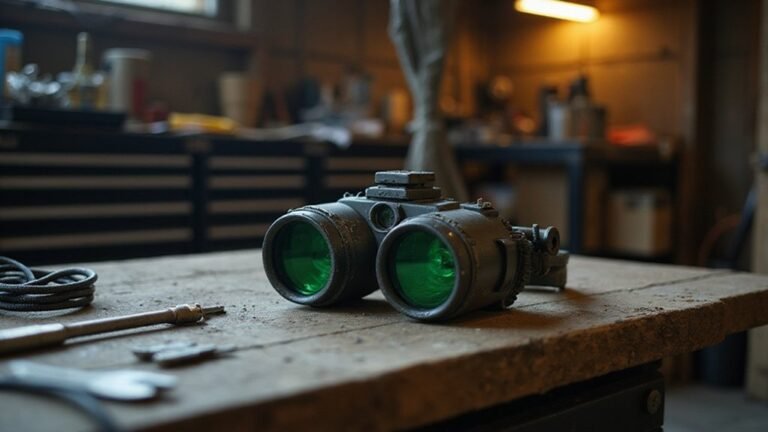
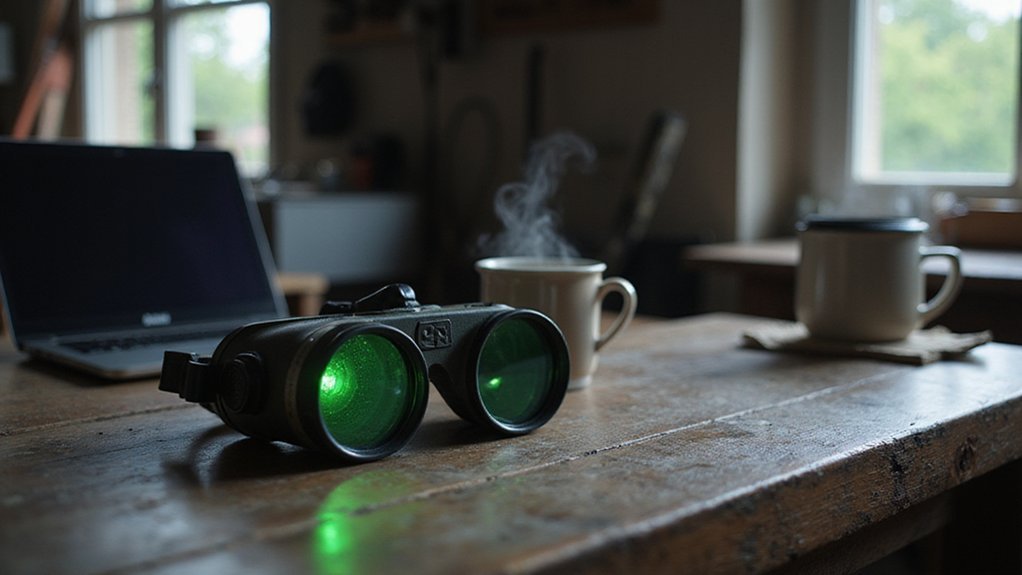
Night vision goggles can seem outrageously expensive, often costing thousands of dollars per unit. That’s because you’re not just buying a simple device—you’re investing in a high-tech piece of military-grade equipment.
Inside, complex tubes and exotic materials drive up both the cost and the complexity of manufacturing.
The detailed craftsmanship, strict quality tests, and limited production runs, mostly for military and law enforcement, all push the price even higher.
Keep reading to see exactly how these factors add up to make night vision gear so costly.
Why Are Night Vision Goggles So Expensive?
Night vision goggles are so expensive because they are essentially miniature military laboratories rather than consumer electronics. You’re not just paying for a simple camera; you’re funding highly specialized, small-batch manufacturing processes that are much more intricate than those used for smartphones. These devices require highly trained technicians to assemble, as automation is limited due to the complexity and precision needed. This specialized labor cost, combined with the limited number of suppliers in the market, keeps prices high. Unlike thermal drones, which benefit from more accessible commercial components, night vision relies on custom-built assemblies that cannot be mass-produced on standard lines. For instance, thermal imaging tends to be more affordable because it uses commercially available sensors, whereas night vision requires specialized vacuum tube technology.
You’re also investing in advanced optics and sensors capable of converting single photons into a clear image. These components must amplify light without distorting colors or creating halos, which demands sophisticated technology. Real-time image processing requires complex electronics that are not cheap to develop or produce. Moreover, you’re paying for military-grade durability—such as aircraft aluminum housings, waterproof seals, and rigorous testing—to ensure the goggles withstand harsh environments. Maintaining this level of ruggedness and user comfort involves premium materials and meticulous engineering, which naturally adds to the cost. For a cheaper alternative, you could apply step-by-step DIY tips from building a trail camera security box to protect a budget-friendly night vision device, though it will lack military-grade optics and photon amplification.
Why High-Performance Tubes Cost Thousands
High-performance tubes cost thousands because each one undergoes a rigorous selection and testing process that filters out anything but the best performers. You’re paying for units that pass extensive assessments for resolution, signal-to-noise ratio, and light amplification. Only tubes with superior photon sensitivity meet the standards, allowing you to see in near-total darkness. This meticulous grading directly affects durability since higher-performing tubes require precise material handling and fabrication; any flaw renders them unusable. The small production runs contribute to the high cost, as you’re not benefiting from economies of scale, much like the specialized manufacturing of Tactacam Reveal trail cameras. Additionally, specialized materials like gallium arsenide drive costs further due to their complexity and expense. Ultimately, you’re paying for a carefully vetted, low-volume component that delivers exceptional low-light visibility, not a commodity product.

Dual Tube Gen 2+ Level 1 System Delivers exceptional clarity and depth perception using Gen 2+ Level 1 IIT, perfect for tactical, surveillance, and night patrol operations.

POLARIZED LENSES - Polarized lenses eliminate intense reflected light, reducing glare and distracting reflections. In order to ensure the safety of night driving, the polarizing effect will be weaker than ordinary sunglasses, to avoid filtering out too much light and blocking the line of sight.

Precision Engineering Raises Manufacturing Costs
Precision engineering significantly raises manufacturing costs due to the complexity involved. You are paying for highly integrated optical and electronic components that must function seamlessly together. Each subsystem—such as optics, the image intensifier, and power controls—requires precise matching to ensure maximum brightness and resolution. This isn’t a simple, off-the-shelf assembly; it demands careful calibration and alignment throughout production. Similarly, even complex outdoor trail cameras require a reset procedure to restore performance after a malfunction. Additionally, modern night vision devices rely on photocathode technology to convert photons into electrons, which is a delicate and expensive process to manufacture. These same devices also benefit from thermal detection principles that enable operation in total darkness without ambient light.
In addition, high-rejection quality control plays a critical role. Every unit undergoes rigorous testing to verify performance standards. Units that do not pass these tests are either reworked or scrapped, which reduces overall yield. This meticulous process, combined with the low-volume manufacturing typical for such precise devices, results in substantially higher costs. All these factors mean you’re funding a highly detailed, time-consuming process rather than quick, mass production. Furthermore, the tube quality is the main cost driver, as only a few manufacturers produce high-quality image intensifier tubes, increasing the price.

Built-in Compass for Easy Navigation – Our 4K digital night vision binoculars feature a built-in compass, ensuring you stay on track in the wild. Whether for tactical use, infrared (IR) night hunting, or outdoor adventures, these nocturna nightvision goggles provide reliable navigation in complete darkness.

【4K Video and 40 MP Photos】Record 4K video and take 40 MP photos during daytime or nighttime observation, so you can revisit wildlife sightings and activity that would otherwise be missed. Files are stored on a compatible microSD or TF card; card not included

4K Video and Photos for Day and Night Use: GOYOJO night vision goggles capture crisp 4K video with audio and high-resolution 36MP photos, helping you record clear details during nighttime exploring, wildlife observation, camping, farm security, and outdoor patrol use.
Why Rugged Materials Add Hundreds to the Price
Ruggedizing a night-vision device can add hundreds of dollars to the cost because you’re paying for top-tier materials and manufacturing. High-quality, military-grade housings use aircraft-grade aluminum and polycarbonate, which are far more expensive than standard consumer plastics. These materials are chosen for their ability to withstand impacts, water, and extreme temperatures, but their durability comes with higher costs. Similar to how trail camera buyers must weigh performance and cost between models like the Tactacam Defend and Reveal, manufacturers balance material expense against ruggedness demands for night vision. For those seeking the best options, comparing top picks for clear night sight can help identify where premium materials justify the expense. A similar consideration applies to thermal scopes like the TU651 LRF, where rugged housing protects sensitive internal components.
Optics protection also contributes significantly. Advanced lens coatings and precision layering help maintain image quality despite shocks and moisture. These coatings are complex and costly to produce. Additionally, rugged units require specialized, corrosion-resistant parts that demand custom machinery and skilled labor to assemble, further increasing manufacturing expenses.
Finally, each rugged device must pass rigorous testing for shock, water resistance, and durability. This testing produces prototypes that are discarded if they fail, and higher rejection rates for subpar units push overall costs upward. All these factors combine to make ruggedized night-vision devices considerably more expensive than standard models.

🔦【A MUST-HAVE FOR EXPLORERS】Night Vision Goggles, tailor-made for little explorers! Our Night Vision Goggles for kidsLED beam provides a clear view in the dark, making children's night adventures more exciting and fun. Playing as a spy or agent, exploring the secret world in the dark, every mission becomes immersive and fun!

【Display Model】: The Gayontech PVS15 Binocular Night Vision is just a Dummy Model with no function, can be used for display or cosplay

【Display Model】: The Gayontech Four-Tube Binocular Night Vision is just a Dummy Model with no function, can be used for display or cosplay
Why Small Production Runs Keep Prices High
Small production runs keep prices high because manufacturing these specialized devices involves high fixed costs that must be spread over fewer units. Night vision goggles are produced in limited quantities—typically thousands, not millions—so manufacturers can’t benefit from the economies of scale seen in consumer electronics. The setup costs for calibration, engineering, and quality control are the same whether making 1,000 or 10,000 units, but when spread across fewer goggles, the per-unit cost rises. For instance, a PVS-31A can cost around $13,000 because the expensive setup is divided among relatively few units. Retailers also reflect this with minimum order quantities often set at 100 pieces or more, maintaining high per-unit prices. Even basic monoculars tend to cost $1,300 instead of $200, because the small demand from military and specialized users prevents mass production and lowers costs. A similar dynamic applies to trail cameras, where limited production for specialized outdoor use also prevents the price drops seen in mainstream consumer electronics. The same principle is evident in thermal monoculars, which are also produced in small batches for niche users. The limited demand and niche nature of these products mean you pay for small-batch manufacturing rather than the efficiencies of large-scale supply chains. This pricing structure stems from the military’s original development of the technology, which prioritized rugged performance over consumer affordability.

Day or Night Viewing - Capture video in both daytime and nighttime modes. Store files directly to a microSD card for easy viewing and sharing.
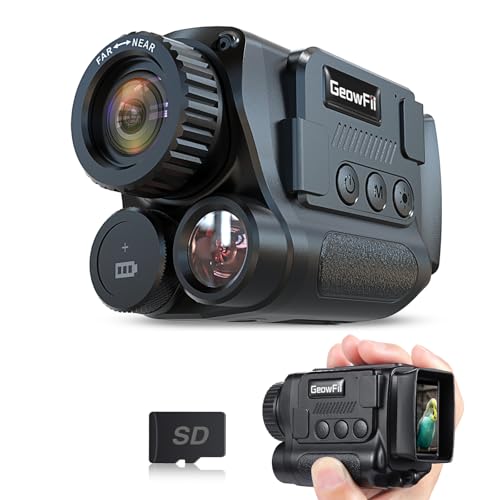
4K Upgraded & Practical—— GeowFiiTech Night Vision Monocular features a 4K version with a 25mm multi-coated lens, enhancing imaging for day and night use. With 4K video, 40MP photos, and essential functions, this monocular night vision meets outdoor needs effectively

NIGHT VISION GOGGLES FOR ADULTS 4K – Experience clear digital night vision with a 4K imaging system and large 4.5" HD screen. Designed for nighttime observation, outdoor exploration, camping, hunting, and wildlife viewing.