What Is an Infrared Illuminator?
If you’ve ever wondered how to see in the dark without using visible light, infrared illuminators are the answer. They emit invisible rays that bounce off objects and are captured by specialized cameras, providing clear images even in total darkness.
This makes them ideal for covert surveillance, wildlife observation, or security.
Keep reading to learn how to pick the right one for your needs.
What Is an Infrared Illuminator and How Does It Work?
An infrared illuminator works by emitting infrared light, which your security camera can detect but remains invisible to the naked eye. It typically projects light between 850 and 940 nanometers. This wavelength range allows the camera sensor to pick up reflected radiation, creating a clear image in complete darkness. Infrared compatibility is essential because your camera’s sensor must be capable of detecting the specific wavelengths the illuminator emits. Since the light is invisible, it provides covert illumination without disrupting the environment or alerting anyone to its presence. The radiation emitted is non-harmful, making infrared illuminators safe to use—they operate silently and do not produce any disruptive light, functioning as a secure and discreet companion to your surveillance system. The principle relies on electromagnetic waves outside the visible spectrum to make night vision possible. This technology is distinct from thermal imaging devices, which detect heat signatures rather than reflected light, and serves a different purpose than a hunting thermal camera used for tracking game in total darkness.

〖Only Support 850nM 940nM 980nM IR Capable Cameras〗 Increase the brightness and range for your security camera with night vision capability. Device with 850nm and Invisible 940nm, 980nm LED illuminators, make sure that your camera is sensitive to 940nM infrared light.

✔AUTOMATICALLY ON and OFF. Built-in with photocell sensor, the ir illuminator automatically switch on at dusk and switch off at dawn, it’s energy saving style. Wave length 850nm Infrared light, the beam light is INVISIBLE to naked eyes but give a red glow.
How Does an Infrared Illuminator Enable Night Vision?
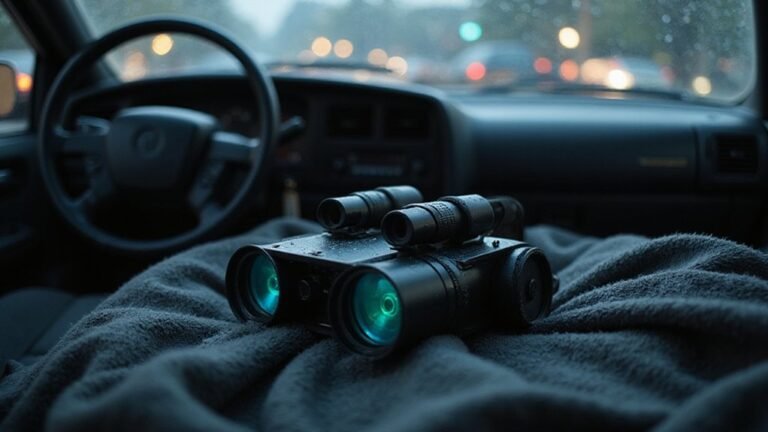
An infrared illuminator enables night vision by providing invisible light that your eyes cannot detect but your camera or night vision device can. It emits infrared wavelengths, typically between 700 and 1000 nanometers, which bounce off objects in the scene. These reflected photons travel back to your device, allowing it to gather visual information in complete darkness. In analog night vision systems, an image-intensifier tube amplifies this infrared light to produce a visible monochrome image. Digital sensors like CCD or CMOS chips capture the reflected infrared signals and convert them into a digital format for display. This process creates enough light energy for clear vision in zero-light conditions, effectively turning darkness into visibility without any detectable light pollution.
850 Nm vs. 940 Nm: Which Infrared Wavelength Do You Need?
Choosing between 850 nm and 940 nm infrared illuminators depends on whether you prioritize range and image brightness or invisibility. The 850 nm wavelength provides better spectral efficiency, resulting in 30–50% longer illumination range and brighter, clearer images because camera sensors are more responsive to it. However, it emits a faint red glow visible in darkness, which may compromise stealth. In contrast, 940 nm is completely invisible to the human eye, making it ideal for covert operations or wildlife monitoring, similar to the discretion offered by covert trail cameras. The trade-off is lower sensitivity, which reduces the maximum range and image brightness. Your choice hinges on balancing the need for performance versus stealth: go for 850 nm for better visibility and distance, or select 940 nm to remain unseen. Ensuring your illuminator is properly aligned with your thermal scope zeroing is essential for optimal performance. This technology is a key component of passive light amplification systems used in modern night vision.

【NIGHT VISION SUPPLEMENT, NOT LIGHTING】-- Used advanced infrared LED in Germany, emits 5W powerful infrared 850nm light which is INVISIBLE to the naked eye. Different from common flashlights – You will see nothing lighting up except a faint red LED if there is not any night vision device working with. [CAUTION!]: You need professional Infrared Equipment (night vision scope / monocular / infrared cameras / goggles) Cooperation to turn night into day on, otherwise you'll think it doesn't work!

1PCS 850nm 48pcs LED IR Illuminator Infrared Night Vision Light Lamp For CCTV Camera IR Illuminators

【NIGHT VISION SUPPLEMENT, NOT LIGHTING】-- Used advanced infrared LED in Germany, emits 10W powerful infrared 850nm light which is INVISIBLE to the naked eye. Different from common flashlights – You will see nothing lighting up except a faint red LED if there is not any night vision device working with. [CAUTION!]: You need professional Infrared Equipment (night vision scope / monocular / infrared cameras / goggles) Cooperation to turn night into day on, otherwise you'll think it doesn't work!
Key IR Performance Metrics: Understanding Range and Clarity
Range and clarity are crucial when selecting an infrared illuminator. Range determines how far you can see, and clarity defines the quality of the image you capture. The range depends primarily on the illuminator’s power output and beam pattern. A higher power output generally leads to greater distance, but environmental conditions like fog, rain, or dust can significantly diminish this effective range. Surface reflectivity also influences performance: light-colored surfaces like white concrete reflect more IR light, extending visibility, while dark surfaces like asphalt reflect less and reduce effective distance. Clarity hinges on achieving a high signal-to-noise ratio, which enhances contrast and detail in the image. This ratio is affected by your camera’s sensor sensitivity and lens aperture. Proper calibration of your sensor ensures that the camera responds correctly to the illuminator’s output, maximizing image quality. The right thermal imaging camera is as critical as the illuminator itself for capturing clear, usable data. It’s important to remember that thermal imaging cannot see through clothing in the way popular myths suggest, as it detects heat radiation from the body surface, not through barriers. Additionally, an energy-efficient illuminator maintains consistent performance over longer periods without overheating, helping you see farther and with better detail. To manage costs while prioritizing these metrics, savvy buyers should consider key factors that drive price and explore options like military surplus.
Active vs. Passive: The Two Main Types of Infrared Illumination
Infrared systems see in the dark using two main methods: active illumination and passive detection. Active illumination projects near-infrared light onto a scene, which is invisible to the human eye. A camera then detects the reflected infrared emissions from objects, allowing it to produce a detailed image even in total darkness. Passive systems, on the other hand, do not emit any light. They rely on thermal detection by sensing the natural heat radiation that all warm objects emit. These systems reveal targets based on temperature differences against cooler backgrounds, making them ideal for stealthy operations. Active illumination offers clearer identification and higher resolution images, while passive thermal detection maintains maximum secrecy, as it does not broadcast any signal. Teams often switch between these methods based on mission needs to balance identification with stealth.
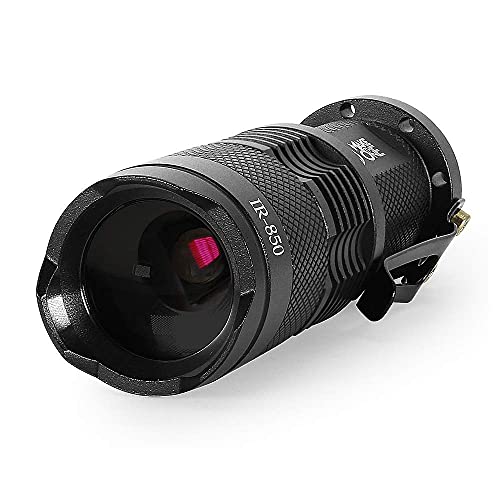
INVISIBLE IR LIGHT: IR Torch is NOT for General Lighting Purpose. It emits invisible but high power 850NM IR light. NOTICE: IR can't be seen by human eyes.Recommend to use 850NM night vision monocular and goggles together, instead of general camera.
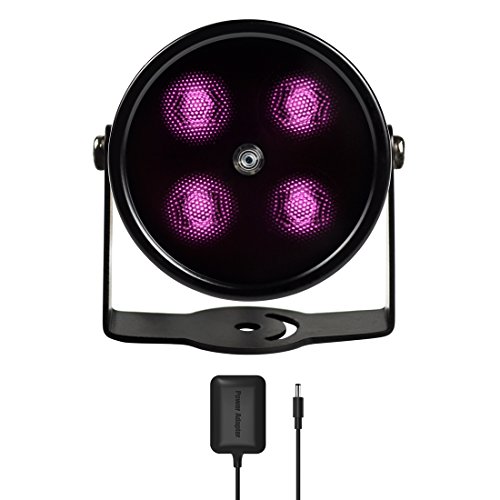
SPECIAL - Upgraded from the most classic mini 4 LEDs IR illuminator with all-around better materials and first ever in black coating
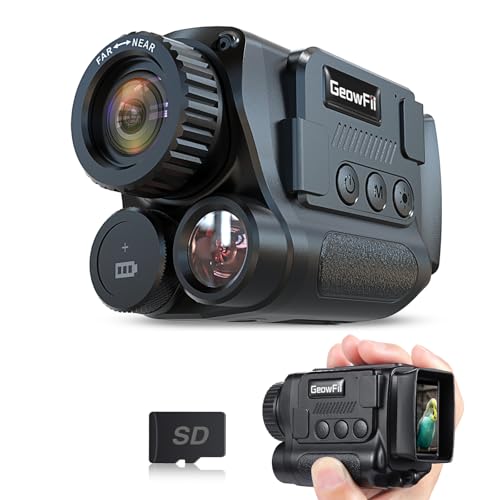
4K Upgraded & Practical—— GeowFiiTech Night Vision Monocular features a 4K version with a 25mm multi-coated lens, enhancing imaging for day and night use. With 4K video, 40MP photos, and essential functions, this monocular night vision meets outdoor needs effectively
Where Are Infrared Illuminators Commonly Used?
Infrared illuminators are commonly used in security and surveillance systems. They enable covert monitoring in complete darkness by operating invisibly to the naked eye. You’ll find them integrated with CCTV cameras to provide 24/7 crime prevention, protecting critical infrastructure such as airports and military installations. These illuminators also play a key role in automotive safety, enhancing night vision for drivers and improving visibility in low-light conditions.
Historical advancements have expanded their applications into wildlife observation, allowing researchers to observe animals non-invasively at night without disturbing them. For budget-conscious projects, understanding the trail camera cost can help allocate funds for a quality illuminator. In industrial settings, infrared illuminators are vital for flaw detection in dark environments and remote temperature sensing, ensuring safety and quality control. For instance, photographers and hunters can use an infrared illuminator to work with game cameras for detailed nocturnal monitoring without a visible flash, and selecting the right trail camera is crucial for balancing performance and budget.
For tactical operations, including reconnaissance and weapon targeting, infrared illuminators offer a significant advantage by providing illumination without revealing your position. This capability has been refined through decades of technological development, making infrared illuminators an essential tool across various fields.
Choosing the Right Infrared Illuminator: A Buyer’s Guide
Choosing the right infrared illuminator depends on your specific application and its requirements. First, determine the infrared wavelength compatible with your night vision device—850nm is common for hunting because it provides minimal visible glow, whereas 940nm is preferred for covert surveillance since it’s effectively invisible. Verify that the illuminator’s spectral output matches your device’ s sensor to prevent damage or reduced performance.
Next, evaluate the power regulation system. Quality-controlled drivers ensure consistent brightness even as batteries drain, preventing output dimming that can compromise visibility. For maximum range, also consider the emitter’s wattage and the size of the objective lens, as higher wattage and larger lenses directly extend effective distance. Unregulated circuits may cause fluctuating beam intensity, which hampers effective observation. Also, assess the beam’s uniformity—look for models with minimal hotspots to achieve an even illumination pattern, critical for clear image capture. You should also consider whether a monocular or binocular system best suits your needs, as this affects your required field of view and depth perception.
The mounting system should be rigid enough to withstand recoil without shifting. Weak mounts can lead to misalignment, requiring constant readjustment. Consider battery type based on your operational scenario: rechargeable batteries are cost-effective and eco-friendly for frequent use, while replaceable batteries offer quick swaps in the field for extended monitoring. Always match the battery capacity and type to your activity frequency and location to ensure uninterrupted operation.

【850nm IR Flashlight Module】850nm IR LED Light Invisible Module Utilizes the Most Advanced IR BLACK LED with Latest Chip Technology, High Efficiency, Low Thermal Resistance,5 Watt of Optical Power. Emits Night Vision IR Light with 850nm Wavelength, Suitable to Use with a Night Vision Scope, NVS, NVG DIY, Camera Phones, Monocular, Goggles and Camera Which Doesn't Block Infrared Light.(Note: IR Night Vision Flashlight is Not an Ordinary Lumen Flashlight, Don't buy it Wrong)
【940nm IR Flashlight Module】940nm IR LED Light Invisible Module Utilizes the Most Advanced IR BLACK LED with Latest Chip Technology, High Efficiency, Low Thermal Resistance,5 Watt of Optical Power. Emits Night Vision IR Light with 940nm Wavelength, Suitable to Use with a Night Vision Scope, NVS, NVG DIY, Camera Phones, Monocular, Goggles and Camera Which Doesn't Block Infrared Light.(Note: IR Night Vision Flashlight is Not an Ordinary Lumen Flashlight, Don't buy it Wrong)
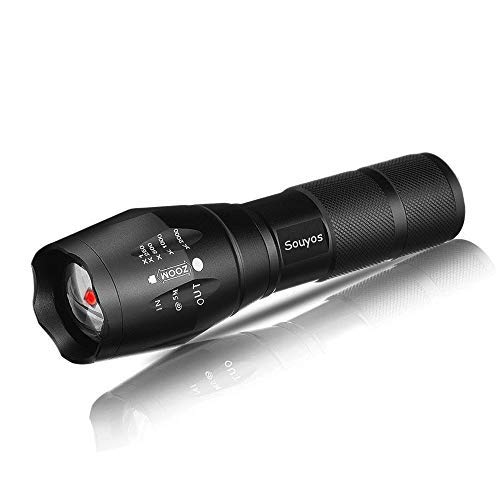
INFRARED FLASHLIGHT [ Not Regular Flashlight:Souyos 850NM IR Flashlight is NOT a regular flashlight with white LED for general lighting purpose]: Emits infrared light which is not seen by bare eyes, IR flashlight is not for the general lighting purpose, press the tail-button to switch the flashlight on/off, PLEASE NOTE THAT: You won’t see any light with your bare eyes (Only a small and faint red glow on the LED to show you that the torch is on)
The Pros and Cons of Built-In vs. External Illuminators
Built-in infrared illuminators are suitable for basic surveillance tasks in small indoor areas or short-range monitoring. They are discreet, energy-efficient, and activate automatically, providing simple infrared safety without user intervention. However, their fixed beam angle and limited output mean you cannot adjust the illumination, which restricts their effective range and the quality of night vision. For applications requiring longer distances or more control over the lighting, external illuminators are preferable. External units allow you to precisely aim and modify the intensity of the light, dramatically increasing coverage and producing a more even scene. Higher wavelengths offer stealth and are a key consideration for covert observation, as they remain invisible to humans and most animals. An understanding of the core components and assembly is crucial for any DIY enthusiast considering adding an external illuminator. Thermal imagers rely on detecting thermal radiation, which is a fundamentally different process from the active illumination discussed here. Selecting the right equipment is a key part of choosing a thermal scope for your specific needs. The trade-off is added complexity and cost, as you’ll need to handle separate mounting, power sources, and potential interference with your camera’s IR system. Your choice depends on whether you prioritize ease of use or need higher performance and flexibility.

Wide voltage constant current design, high efficiency, high power factor and stable circuit structure.

IP65 Waterproof and Dustproof: Waterproof camera IR light has practical metal shell, CCTV IR night vision illuminator, infrared illuminator for camera provide IP65 waterproof and dustproof protection; Infrared lamp high efficiency, 48 led infrared light, intelligent infrared night vision light powered by DC 12V 1A adapter, size: 6 x 7 x 6 cm / 2.4 x 2.8 x 2.4 in
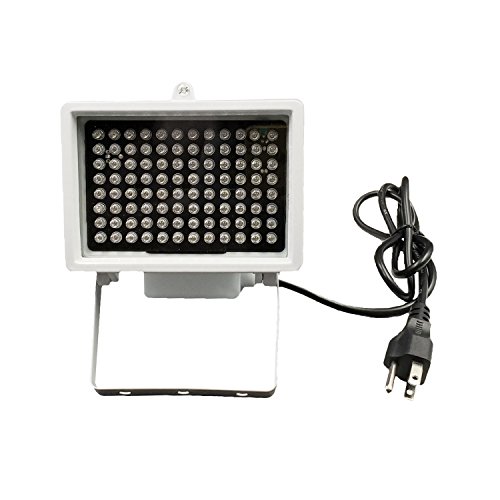
Automatic Switch - Built-in light sensor / CDS, the IR illuminator will automatically turn on at night(available light lower than 10LUX) and turn off at daytime(available light higher than 10LUX)
Infrared Illumination Myths Debunked
Infrared radiation is non-ionizing, so it cannot cause cancer. Unlike ionizing radiation such as X-rays, infrared photons do not carry enough energy to break chemical bonds or damage DNA. This means that exposure to typical infrared illumination is safe and does not increase cancer risk. For those budgeting for night vision, understanding that safety features don’t necessarily raise the night vision scope price can be reassuring. The faint glow sometimes visible as a soft red light comes from near-infrared wavelengths at the edge of human vision.
Regarding eye safety, standard infrared floodlights posed minimal risk even when viewed directly. While staring directly into intense industrial lasers can be dangerous, everyday infrared lighting used for surveillance or night vision typically does not harm your eyes. Choosing a quality thermal monocular involves understanding these safety parameters along with performance features.
Wavelength optimization in these devices ensures they emit pure infrared or near-infrared light, which does not include ultraviolet radiation. Ultraviolet rays are responsible for sunburns and cellular mutations. By excluding UV light, infrared illumination remains safe and suitable for prolonged use without risking skin or eye damage. Photobiomodulation research shows that specific wavelengths of red and near-infrared light can safely interact with human cells to support their function.
What’s Next for Infrared Illumination Technology?
Infrared illumination is poised to expand significantly beyond security cameras into critical areas like automotive safety, healthcare, and smart city infrastructure. Market growth projections indicate that investment and adoption levels will accelerate, driven by breakthroughs in material sciences such as graphene metasurfaces. These advanced materials enable precise control over infrared wavelengths, opening new avenues for applications including cybersecurity and industrial automation. In automotive contexts, infrared technology will be integral to driver monitoring systems and in-cabin sensors. Medical diagnostics will increasingly rely on non-invasive infrared tools for real-time analysis of body heat patterns, enhancing early detection capabilities. Custom optical configurations will be crucial for tailoring these systems to specific needs, from robotics in dark storage facilities to covert security operations. The core triggering mechanism for these applications, often a passive infrared sensor, relies on detecting heat and movement to initiate data capture. As these diverse systems become more sophisticated, rigorous spectral calibration will be essential to ensure the accuracy and reliability of the data they generate, especially in high-stakes environments.