How Long Do Trail Camera Batteries Last?
Wondering how long your trail camera batteries will last? The lifespan can range from a few weeks to over a year, depending on factors like battery type and camera settings.
Choosing lithium batteries and optimizing features like resolution and cellular use can make a big difference. Keep reading to learn how to get the most out of each charge.
Trail Camera Battery Life: The Short Answer
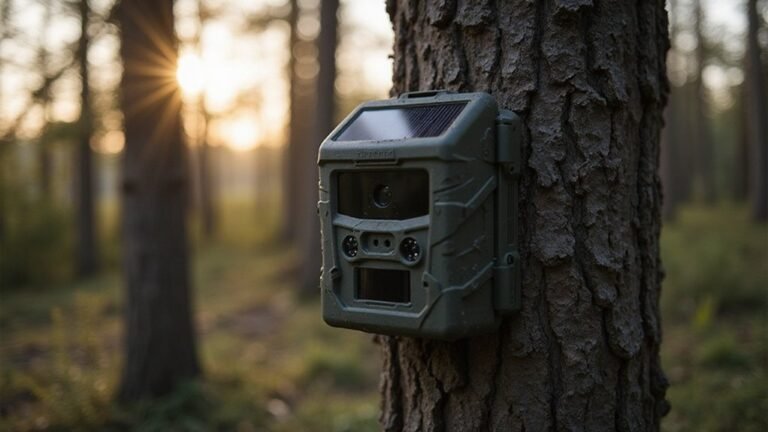
The lifespan of your trail camera batteries varies widely based on usage. At an active site with frequent triggers, video recording, and cold weather, batteries can last just a few weeks. Conversely, in a quiet location with minimal activity, they can last several months. Your camera’s settings are key to extending battery life: lowering trigger sensitivity helps prevent false alerts from wind-blown leaves, increasing the delay between shots reduces unnecessary power drain, and skipping video recording altogether conserves a significant amount of energy. For instance, using thermal imaging technology instead of traditional low-light recording can significantly reduce power consumption in certain conditions.
While you cannot recharge or reuse dead batteries inside the camera, practicing proper battery recycling ensures environmentally responsible disposal. Most trail cameras, including the Tactacam Reveal 3.0 battery type, require a specific number of batteries to operate. Your habits—how often you check, how frequently the camera is triggered, and what features you use—ultimately determine how often you’ll need to replace the batteries. To optimize your setup, consider the benefits of a cantilever scope mount for long-term stability and reduced camera movement, which can help minimize false triggers. Adjusting your settings and monitoring usage can help maximize your camera’s operational time without constant maintenance.
How Battery Type Defines Your Camera’s Lifespan
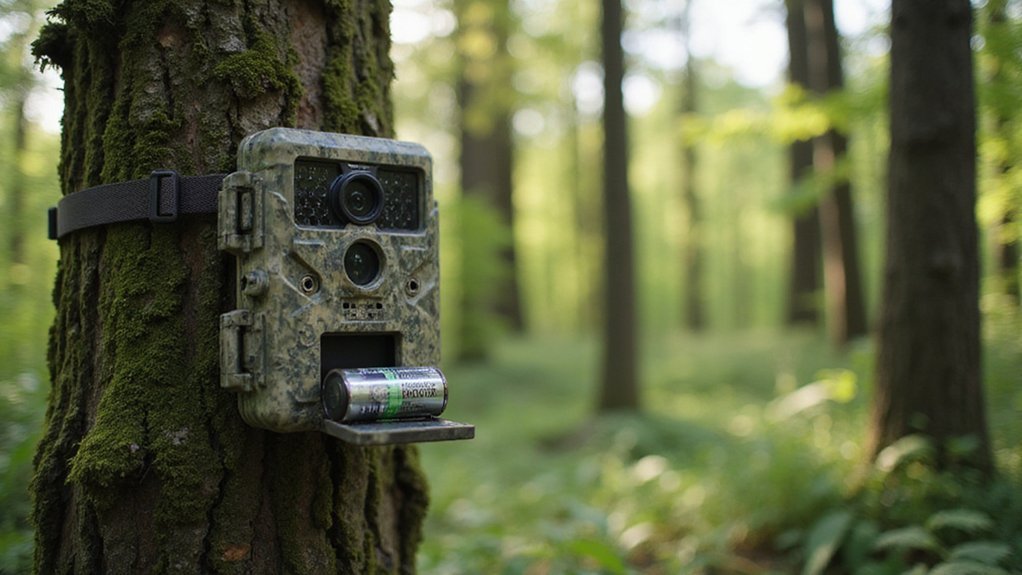
Lithium AA batteries provide the longest lifespan among common options, often lasting up to a year in trail cameras. Their high-voltage stability and performance in cold weather, even in freezing conditions, allow them to capture thousands of photos without needing replacement. This makes them ideal for remote setups where frequent maintenance is inconvenient. When deploying gear in critical scenarios, the importance of reliable, certified performance cannot be overstated. Understanding the camera’s underlying technology can help you choose the best battery for its specific power demands and sensor types. In contrast, alkaline AAs tend to drain quickly, especially in low temperatures, leading to shorter operational periods. NiMH rechargeable batteries are more economical for mid-term use but require regular charging cycles and struggle in cold environments due to lower voltage and poor cold tolerance. A practical way to save on battery costs is by buying them in bulk during seasonal sales. To maximize your camera’s longevity, consider recycling batteries when possible or investing in solar-powered external packs, which offer a more sustainable, near-indefinite power source.

【Long-Lasting Power】1.5V high-capacity AA lithium batteries deliver stable performance for blink cameras, flashlights, gaming controllers and more

8 pack of Energizer Ultimate Lithium AA Batteries

Battery Type: AA Non-rechargeable Lithium Batteries, Voltage: 1.5V, Capacity: 3000mAh.
Which Camera Settings Drain Batteries the Fastest?
Wireless connectivity set for real-time uploads or frequent cellular checks drains batteries the fastest. This feature requires the camera to actively transmit data, which significantly increases power consumption. To maximize battery life, set upload interval to 24 hours for batching photos instead of using real-time uploads. Video mode also consumes much more energy than still photos, especially when recording long clips. High motion sensitivity settings cause the camera to trigger more frequently, often from wind or moving vegetation, leading to rapid battery depletion. For hunters comparing their options, power consumption is a key factor when evaluating a Tactacam Defend vs Reveal camera. Understanding this performance versus cost trade-off is central to choosing the right tool for your needs. Just as a drone requires a reliable thermal camera module, a trail camera needs a power source matched to its consumption. Burst mode, high-resolution images, and trigger delays shorter than 30 seconds further accelerate drain. To extend battery life, reduce upload frequency, lower sensitivity to avoid false triggers, switch to photo mode instead of video, and set longer intervals between captures. Disabling unnecessary features like time-lapse recording can also help conserve power.

【Designed for Moultrie Edge Series】Engineered specifically for the full Moultrie Edge lineup, including Edge, Edge PRO, Edge 2, Edge 2 PRO, Edge 3, Edge 3 PRO ,Edge 4 and Edge 4 PRO trail cameras. Guaranteed perfect fit and seamless compatibility with your device.

Compatibility: KUNLUN rechargeable battery pack replace for Moultrie Power Mag Battery, fully compatible with moultrie Edge cellular trail camera, fit for Moultrie Edge 3, edge, edge 2 pro, edge 2, edge pro camera

【Full Compatibility -Edge Series Cameras】Seamlessly compatible with all moultrie edge cellular trail camera (Edge/Edge Pro/Edge 2/Edge 2 Pro) . Precisely fits original battery slots, Trusted by hunters and wildlife researchers.
How Weather Impacts Trail Camera Battery Performance
Cold temperatures significantly reduce the battery life of your trail camera, especially affecting alkaline batteries. In frigid conditions, alkaline cells can lose up to 80% of their capacity within hours, leading to rapid power drain. Lithium batteries perform better in cold weather, maintaining around 70-90% of their capacity, but even they experience slowed chemical reactions that diminish overall performance. Wind chill factors worsen this effect by accelerating heat loss, making batteries discharge faster. Moisture intrusion poses a major risk; condensation can freeze inside batteries and circuitry, causing malfunctions or permanent damage. High humidity levels corrode terminals and degrade battery connections over time. For cameras with wired setups, using a Quick Connect battery pack can simplify battery replacement in challenging weather and minimize exposure to the elements. Direct sunlight overheats batteries, speeding up chemical breakdowns and shortening their lifespan, so always place your camera in shaded locations. High summer temperatures can be equally damaging, causing significant strain and reducing battery lifespan. Understanding the factors affecting cost for specialized gear can inform your purchasing decisions for accessories like durable power solutions. The high cost of advanced optics in your trail camera is another reason to protect your investment with proper battery maintenance. At higher altitudes, colder air and stronger winds cause more rapid battery depletion, potentially halving your camera’s runtime during winter compared to summer. To maintain optimal operation, consider adjusting your battery replacement schedule based on seasonal weather conditions and environmental exposure.

【DITCH THE 16-AA NIGHTMARE & SAVE HUNDREDS】 Tired of feeding your trail camera fleet 16 expensive AA batteries every few weeks? This 2-Pack 5000mAh rechargeable lithium battery completely replaces the bulky original 16-AA tray. Stop throwing money away on disposable alkaline cells and eliminate the hassle of fumbling with 32 individual batteries in the freezing woods. One investment for seasons of high-ROI monitoring.

Energizer Double A Lithium batteries are the world's longest lasting AA batteries.
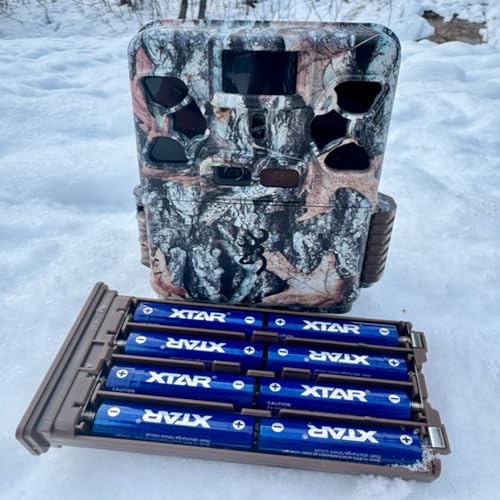
Specifically for Cellular Trail Cams: Tired of "Low Battery" alerts on your brand new cellular camera? Unlike 1.2V Ni-MH rechargeables that fail to power 4G/LTE modules, XTAR CLR 4300mWh delivers a constant 1.5V high voltage. Perfectly compatible with Tactacam Reveal, Spypoint, Bushnell, and more, ensuring full signal strength and reliable photo transmission
Estimating Your Photo Count From Battery Life
Estimating your photo count from battery life is possible with reasonable accuracy if you understand your camera’s power consumption patterns. Typically, alkaline batteries in a standard camera might support between 5,000 and 10,000 photos, while lithium batteries can extend this range to 15,000–30,000 shots. The actual number depends on how your camera uses power and the environment it operates in. For example, cellular cameras transmitting images constantly could only deliver about 2,500–3,500 photos before needing a change, due to higher power drain. Rechargeable lithium-ion batteries have demonstrated notable longevity, lasting 8-9 months or longer in field tests even under harsh environmental conditions. Properly activating your camera ensures it starts with optimal power settings for maximum efficiency. For extended deployments in vulnerable locations, securing your camera inside a durable security box can protect both the camera and its power source from tampering and the elements. Factors like frequent use of high-intensity flash at night or recording high-resolution videos can significantly reduce your battery life. Matching your battery type to your camera’s demands and adjusting settings such as trigger delays or image resolution can help make your photo count estimate more reliable, although variability will always exist in real-world use. For the most demanding imaging tasks, like thermal inspection with a drone-mounted thermal camera, selecting a power source with high capacity and stable voltage is especially critical.
How to Set Your Camera for Maximum Battery Life
You can maximize your trail camera’s battery life by configuring key settings that minimize power consumption and unnecessary activity. First, optimize uploads by using batch mode once or twice daily instead of real-time syncing, and limit cellular connections to a few times per day. Next, adjust your detection settings: increase the trigger delay to 30–60 seconds and lower the PIR sensitivity to drastically reduce false captures, as higher P sensitivity triggers more false positives, wasting power and memory.
Reducing media demands is also essential: lower photo resolution to save power, keep video clips under 10 seconds, and avoid recording in HD or 4K. To support long-term battery health, incorporate solar power where possible and disable features like time-lapse mode when they are not needed. Storing your camera in a cool, shaded place helps prevent heat-related battery drain.
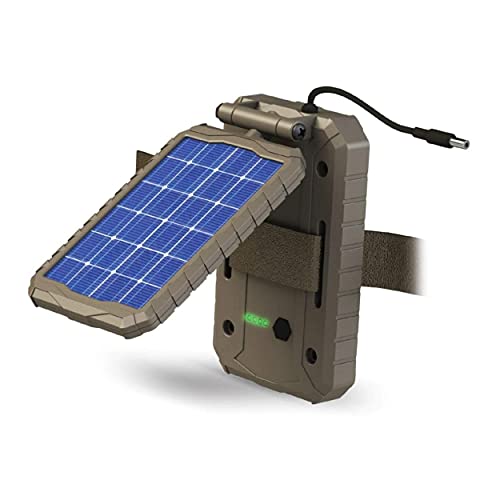
EXTENDED CAMERA FIELD LIFE: Embrace renewable energy, eliminating the need for traditional batteries and ensuring a cost-effective approach to keeping your trail cameras charged; A 3000mAh Li-ion Battery extends the field life of your trail camera
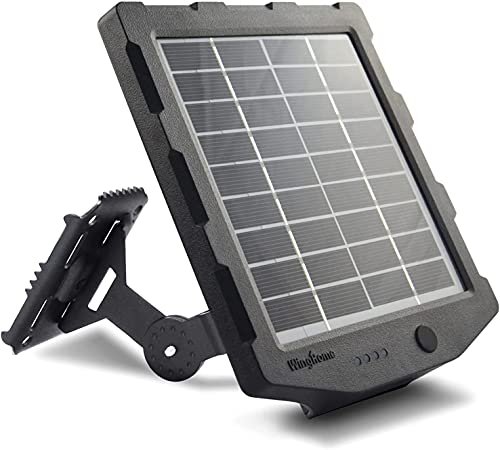
【Universal Compatibility】Compatible with WingHome trail cameras and other brands outdoor security cameras powered by 6V or 12V battery with 4.0*1.7mm and 5.5*2.1mm male plug

【6V/9V/12V Stable Output】The trail camera solar panel supports stable DC output options, including 6V-2A / 9V-1.5A / 12V-1A.Compatible for most brands and for Tactacam Camera, Reveal Cellular Trail Cameras(Gen 1, SK, XB X 2.0, X 3.0, X Pro 3.0). Equipped with 1.7/2.1/1.35mm three specification DC interface, which can be adapted to and provide solar power for most of the hunting cameras.
Choosing the Right Batteries for Your Trail Camera
Lithium batteries are the top choice for powering your trail camera, especially in colder conditions. They last about 2.6 times longer than NiMH batteries in low temperatures and provide a stable voltage below freezing, preventing rapid power drops. In contrast, alkaline batteries tend to fail quickly in cold weather. The best trail cameras combine this reliable power with high-quality night vision to capture clear wildlife images in any conditions. If your camera is set to high-activity modes with frequent videos or cellular uploads, lithium batteries become even more economical because of their extended runtime, despite a higher upfront cost. To maximize battery life, set your camera to upload data once or twice daily instead of more frequently and ensure you’ve properly completed the tactacam reveal setup for optimal network performance. Always use the same brand of batteries and avoid mixing different types to ensure even discharge and prevent damage. While rechargeable Li-ion batteries might seem cost-effective in high-usage areas, for infrequent checks, primary lithium cells are generally better. For demanding outdoor gear, prioritizing quality and value ensures reliable performance over time. For long-term deployments, consider high-capacity lithium-ion batteries rated around92;3000 mAh or more. Remember to recycle used batteries properly to reduce environmental impact.

【7000mAh High-Capacity Battery】Upgraded 7.7V/7000mAh LIT 22 rechargeable lithium battery pack provides extended power for your SPYPOINT cellular trail cameras. Lasts 30% longer than standard batteries, reducing charging frequency and ensuring uninterrupted wildlife monitoring.

Built for Tactacam Reveal Users: Designed for hunters, landowners, and trail camera users running Reveal Pro 3.0, Ultra 3.0, X 2.0 and compatible game cameras on deer trails, food plots, farm roads, wooded land, and remote property

[Wide Compatibility for Reveal Trail Cameras] This rechargeable battery pack works perfectly with Reveal trail hunting cameras: X, XB, SK, X Gen 2.0, X Gen 3.0, X Pro, X Pro 3.0. It delivers stable continuous power for long-term outdoor wildlife monitoring & remote observation.