PVS-14 vs. PVS-15: A Detailed Night Vision Monocular Comparison
Figuring out which night vision monocular suits your needs can be tricky. The PVS-14 offers a lightweight design with a long battery life—over 40 hours on a single AA—making it versatile for various setups.
The PVS-15, on the other hand, gives you stereo depth perception but is heavier, shorter-lasting, and more expensive.
Your choice depends on whether you prioritize flexibility or immersive depth. Keep reading to see how these two options compare in detail and find out which one might be right for your missions.
Why Night Vision Buyers Still Compare the PVS-14 and PVS-15
Even though newer dual-tube designs are available, many buyers still compare the PVS-14 and PVS-15 because each represents a well-established category in night-vision equipment. The PVS-14 remains a reliable baseline, valued for its proven durability and simplicity with a single tube. It offers manual gain control and a built-in IR illuminator, which appeal to users who prefer straightforward operation. Understanding the different camera types helps clarify why single-tube versus dual-tube configurations matter for specific tasks. The PVS-15, on the other hand, features dual-tube ergonomics, including articulated pods that allow for interpupillary adjustments and a more binocular, immersive view. The PVS-14 is about 0.5 inches longer and heavier than many monocular alternatives, such as the UAN V/M. For buyers prioritizing value, the Tactacam Reveal 3.0 offers a modern trail camera alternative at a lower price point. Building your own system, like a DIY thermal drone, requires understanding different sensor types to match mission needs.
Cost is often the deciding factor: the PVS-14 usually serves as an entry-level night vision device, with prices reflecting its older but dependable technology. Used PVS-15 units can sometimes overlap in price with premium monocular options, making them a consideration for more advanced needs. Your choice depends on whether you favor the flexibility and mission readiness of the PVS-14 or the enhanced binocular experience of the PVS-15.
Device compatibility also influences the decision. The PVS-14 attaches easily to helmets and weapons, making it ideal for mobile or tactical use. The PVS-15 is better suited for stationary observation, where its binocular design provides enhanced depth perception and comfort. This trade-off means you should consider whether portability and endurance weigh more for your application or if a dual-eye view offers the benefits you need.
PVS-14 vs. PVS-15: Monocular vs. Goggle Design
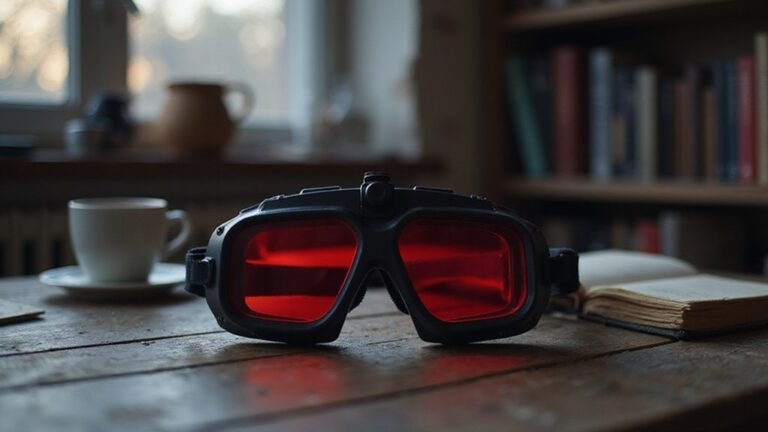
The PVS-15’s dual-tube goggle design provides intensified views to both eyes, reducing eye strain and improving comfort during extended use. However, this setup adds bulk and front-loaded weight, making it a fully hands-free device. It requires more power to operate both tubes, which can decrease battery life. The monocular PVS-14 offers greater flexibility, allowing you to hold it in your hand, helmet-mount it, or attach it to a weapon. Its compact size makes it easier to carry and less cumbersome, though it may cause more eye fatigue during prolonged use compared to the goggle. For those who switch between devices, learning to adjust thermal focus correctly can help maintain image clarity across different optical platforms. Interestingly, some military and law enforcement users have had to consider red night vision goggles due to historical bans on certain filter types. Building a custom security enclosure for such devices can protect their sensitive optical components from impact and weather damage.
PVS-15’s Edge: Binocular Depth Perception
The PVS-15 provides true binocular depth perception, unlike monocular systems that rely on inference. With two tubes, your brain uses the slight disparity between the images to create a sense of stereopsis, or three-dimensional depth. This allows you to perceive distances naturally, even in complete darkness, much like how you see during daylight. Monocular night vision devices typically force you to alternate focus between eyes, diminishing this natural spatial awareness. The green phosphor display common to these goggles is chosen because the human eye can distinguish more shades of green than any other color, improving contrast and reducing eye strain.
This binocular advantage makes land navigation and vehicle operation significantly easier. You can judge obstacles, steps, and spatial relationships more intuitively. Moving quickly through rough terrain or dim hallways feels much more natural, reducing the guesswork associated with monocular systems. Your situational awareness improves because your brain processes depth instantly, instead of trying to interpret flat imagery. Binocular systems enhance comfort and depth perception over monoculars, as detailed in the device comparison. A cantilever scope mount can also offset a monocular forward to improve eye relief.
Surveillance and target recognition also benefit from binocular depth perception. Hazards close to you and distant objects become immediately clear, enhancing safety and decision-making. Your ability to track moving targets across varied distances improves without requiring constant refocusing. The PVS-15 delivers genuine stereo cues, not just inferred depth, providing a decisive edge over monocular devices.
PVS-14 vs. PVS-15: Weight and Helmet Comfort
The PVS-14 is significantly lighter than the PVS-15, directly influencing helmet comfort. Weighing roughly 11 to 12.5 ounces, the PVS-14 causes less strain on your helmet and reduces neck fatigue during extended use. Its more compact weight makes balancing easier with standard counterweights, minimizing front-heavy torque and making long wear more comfortable. For comparison, thermal camera apps offer a completely non-physical alternative by using your phone’s sensor instead of an optical device. Night vision device selection should also factor in your operational needs beyond weight, as the PVS-14’s lighter profile suits patrols while the PVS-15’s dual-tube design excels in depth perception. Understanding how night vision scope prices affect features can help you choose between weight and capability within your budget.
Meanwhile, the PVS-15 weighs about 23.1 ounces, nearly double the PVS-14’s weight. This extra mass requires careful counterbalancing to prevent helmet pitch and ensure stability. Although the heavier system can feel more stable once properly balanced, it inevitably adds more stress to your neck and head, especially when used with bump helmets that lack dedicated counterweights.
You will feel every ounce. The PVS-14 offers a lighter, simpler wear experience, while the PVS-15 sacrifices some comfort to deliver its binocular advantages.

UNMATCHED CLARITY: With a high IR resolution of 256x192 and a smooth 50Hz refresh rate, the thermal monocular provides vivid thermal images, capturing every detail of your surroundings with precision.

Day or Night Viewing - Capture video in both daytime and nighttime modes. Store files directly to a microSD card for easy viewing and sharing.

CLEARLY IN 100% DARKNESS WITH 7 INFRARED ILLUMINATION LEVELS: Upgraded YUANZIMOO night vision monocular features 850nm IR illuminator, 1.3MP FHD CMOS sensor and 7 gears IR levels adjustment. Brings you a wonderful experience both daytime and 100% darkness in your wild explorations
Battery Life: 40+ Hours vs. 10 Hours-Why It Matters
The PVS-14 can operate for over 40 hours on a single AA battery, whereas the PVS-15 lasts only around 10 hours on two CR123 batteries. This significant difference in battery life impacts your operational planning: with the PVS-14, you need to swap batteries far less frequently, which helps maintain your dark adaptation and keeps you in the field longer without resupply. Fewer battery changes reduce logistical concerns and lower the risk of losing situational awareness or missing critical moments. The extended endurance of the PVS-14 allows for continuous or intermittent use over multiple nights, offering greater operational freedom. In contrast, the shorter runtime of the PVS-15 demands more frequent battery replacements or reliance on external power sources, which can complicate field operations. Notably, the PVS14R monocular accepts a Fisher port for remote battery pack connection, extending its versatility for sustained field use. Additionally, users should note that night vision camera bugs can sometimes appear as small, glowing artifacts in the image, mimicking distant light sources. This phenomenon is distinct from the passive infrared sensor used in trail cameras to detect heat and motion. When drawing these devices, learning the correct proportions of the objective lens helps create a realistic depiction of the monocular housing.

Built-In Infrared Illuminator: Employs a powerful IR illuminator to enhance visibility in absolute darkness, effectively extending the viewing range up to 70 yards, perfect for a variety of nighttime activities.
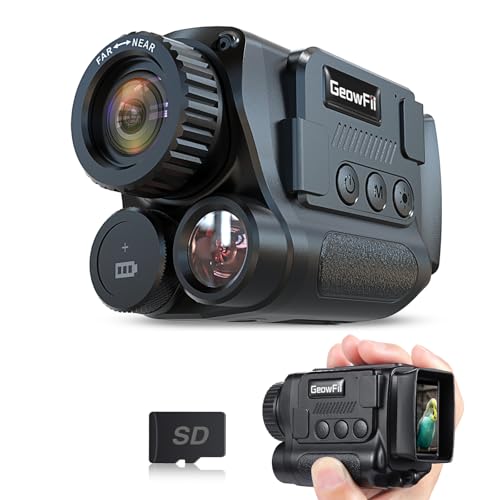
4K Upgraded & Practical—— GeowFiiTech Night Vision Monocular features a 4K version with a 25mm multi-coated lens, enhancing imaging for day and night use. With 4K video, 40MP photos, and essential functions, this monocular night vision meets outdoor needs effectively

VISION UNLEASHED - Explore the dark outdoors confidently with the X-NVM Digital Monocular; Offering advanced resolution, processing & a cutting-edge display, this hunting monocular ensures you get that illuminated view for effortless game identification
Optics, Gain Control, and the Built-In IR Advantage
The PVS-14 offers manual gain control, giving you the ability to adjust brightness based on changing conditions. This feature allows you to dial in the optimal image clarity in varying light levels, making it versatile for different environments. Its conventional optical train provides reliable optical fidelity, ensuring clear and consistent imagery. Many users comparing image intensifier tubes will find that the PVS-14’s performance stands out in reviews. For those seeking the best rated night vision goggles, the PVS-14’s performance often stands out in reviews.
In contrast, the PVS-15 generally lacks manual gain control, relying instead on ambient light or the specific characteristics of its tubes. While it has independently adjustable eyepieces that may improve ergonomic alignment for some users, it may not offer the immediate brightness adjustment that the PVS-14 provides.
Both units include built-in infrared illuminators for close-range work. The PVS-15’s IR source features a dedicated lens for refocusing, indicating a more integrated design. Meanwhile, the PVS-14’s standard IR illuminator performs effectively in total darkness and benefits from its gain control, allowing you to quickly adapt to changing lighting conditions. For DIY enthusiasts adapting these units for thermal hybrid setups, understanding core thermal camera calibration is essential to maintaining image accuracy across temperature shifts. Ultimately, if you prioritize instant brightness adjustment and reliable gain control, the PVS-14 has the edge; if ergonomic adjustment and design integration are more important, the PVS-15 offers advantages.
Mounting and Handling: Versatile vs. Specialized
Mounting and handling differ significantly between the PVS-14 and PVS-15. The PVS-14 offers versatile mounting options allowing you to switch between handheld, helmet-mounted, or weapon-mounted configurations using a J-arm or dovetail interface. Its design enables quick role changes—moving from one eye to both or adapting to different devices—without swapping out the monocular itself. This flexibility makes it easier to navigate, read maps, or switch between tasks while keeping one eye free for situational awareness. Handling balance benefits from the single-tube format, which feels lightweight and unobtrusive, making extended use more comfortable. For weapon mounting, the PVS-14 uses a USGI mount with a Picatinny rail adapter that connects via the same interface as a J arm. For search and rescue operations, a lightweight monocular like the PVS-14 is often preferred over heavier dual-tube goggles for prolonged scanning.
The PVS-15, on the other hand, is built primarily as a dual-tube goggle optimized for helmet mounting. Its design emphasizes stability and precise alignment over versatility, resulting in a system that is more fixed in purpose. Handling balance shifts because both eyes are engaged, which can make wearing the device feel more cumbersome and less adaptable for quick role exchanges. You sacrifice ease of removal and weapon mounting options, as the system is primarily intended for headborne use and less suitable for handheld operation.

Replacement mounting components for the Nightfox Prowl monocular
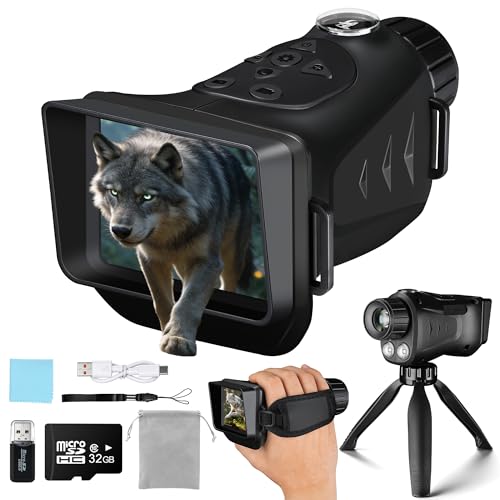
See Clearly in Total Darkness: VXF night vision monocular device comes with dual 850nm IR illuminators (wider lighting range), 4K UHD video recording, 3 levels of night vision IR filters; switch on demand to adapt to different environments, ideal for dense forest hunting, suburban patrols etc. In total darkness, animals within 100m clearly identified, human figures and buildings 100–200m away easily recognizable, delivers sharp imaging with low power consumption.

Minolta 10x25 Digital Night Vision Monocular w/ Built-in 4K HD Video Camera (Gray)
The Real-World Cost: New PVS-14 vs. Used PVS-15
The real-world cost difference favors the new PVS-14. You can purchase a new unit for between $2,000 and over $6,000, depending on tube quality and vendor. This range provides a clear, consistent pricing structure that’s easy to verify. In contrast, the used PVS-15 market lacks transparency. Without verified listings, prices vary widely and are often inconsistent, leaving you to guess what a fair price might be. With the PVS-14, you know exactly what you’re paying for, backed by documented pricing. Meanwhile, the used PVS-15 demands market research to verify a fair value, making the buying process less straightforward and riskier for your wallet. Understanding these trade-offs is crucial because night vision and thermal technologies serve different primary purposes.

AGM PVS-14 is a rugged, multi-purpose night vision monocular used globally in challenging environments.

Gen 2+ Level 1 White Phosphor IIT Equipped with a high-performance P45 white phosphor tube, delivering crisp, high-contrast images in low-light and no-light environments.

Enhanced Night Vision Performance: Equipped with a high-performance Gen 3 image intensifier tube, the AGM PVS-14E delivers clear, detailed images in complete darkness for tactical, hunting, and surveillance applications
Which NVG Still Holds Up in 2025?
The PVS-14 remains the top choice because it offers unmatched flexibility and affordability. It’s a versatile monocular you can helmet-mount, hold, or rig in various ways, all powered by a single AA battery that lasts up to 50 hours. Its simplicity and compatibility make it reliable in diverse operational scenarios. While the PVS-15 provides stereo depth perception for better situational awareness and depth judgments, it comes at roughly double the price—around $10,000. Monocular units skew depth perception while binocular sets improve it, aiding faster movement.
Tube quality is the most critical factor in night vision performance. A high-end Gen 3 PVS-14 with a figure of merit of 2,376 or higher and white phosphor offers image clarity comparable to those of premium dual-tube systems. It allows you to focus on the technology rather than the housing brand. For extended use, white phosphor offers significant benefits by reducing eye strain and fatigue, making monoculars more practical for long sessions. Unless you require binocular range-finding capabilities, the PVS-14 continues to be the most cost-effective and capable option for most users.
Choose Your NVG: 4 Questions to Match Your Mission
To match your mission, start by asking four key questions. First, do you need true depth perception? The PVS-15’s dual-tube design provides this feature, making it ideal when judging distances or navigating complex terrain. Second, consider how long you’ll wear the device. The lighter weight of the PVS-14 reduces fatigue during extended patrols, offering greater comfort over hours of use.
Third, decide whether portability or situational awareness is more important. Monocular options are simpler and more compact, perfect for quick, focused tasks. Binocular models, however, provide a wider field of view, which enhances awareness of your surroundings in complex environments. Fourth, evaluate your budget and desired specifications. Investing in models with color enhancement and higher image resolution can significantly improve clarity, with some higher-tube PVS-14 units matching or exceeding older PVS-15s in quality, often at a more accessible price.
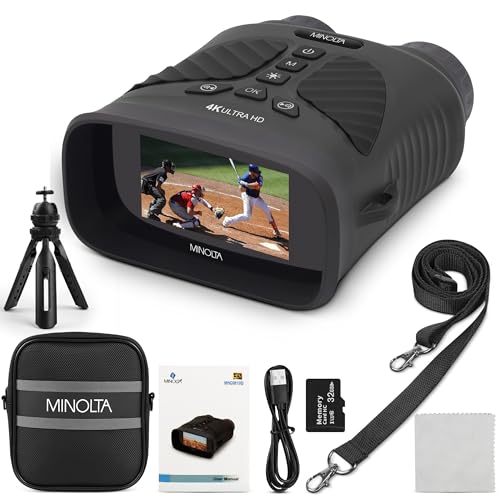
Minolta 10x25 Digital Night Vision Monocular w/ Built-in 4K HD Video Camera (Black)
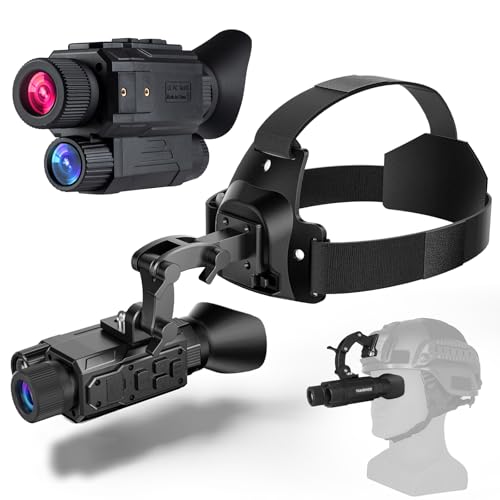
CLEARLY IN 100% DARKNESS: Upgraded YUANZIMOO night vision monocular features 850nm IR illuminator and 7 gears IR levels adjustment. Brings you a wonderful experience both daytime and 100% darkness in your wild explorations
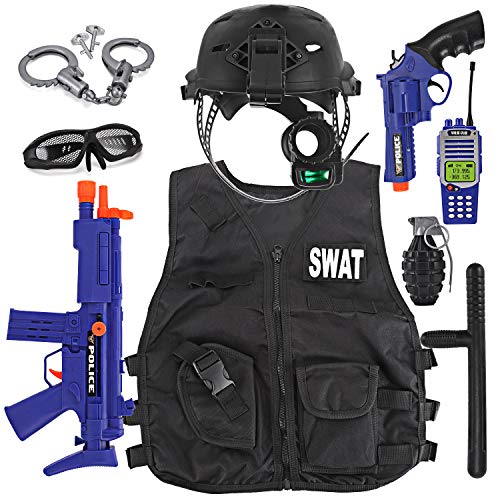
Complete SWAT Role Play Set – Includes a SWAT zippered vest, adjustable helmet, night vision monocular, toy guns, handcuffs with keys, baton, grenade, walkie-talkie, and police accessories for realistic play.