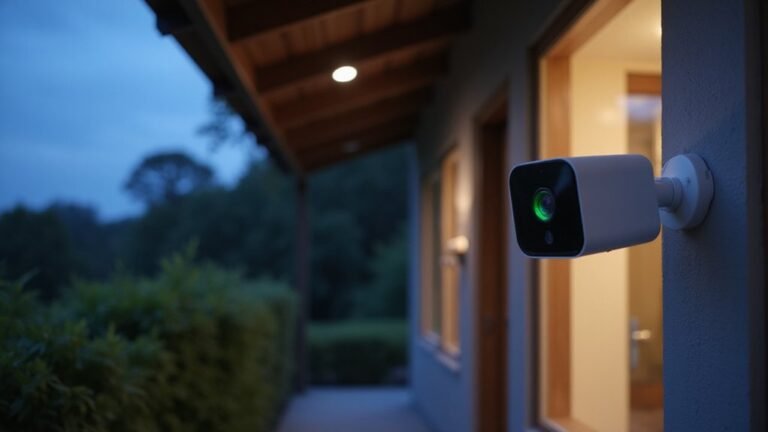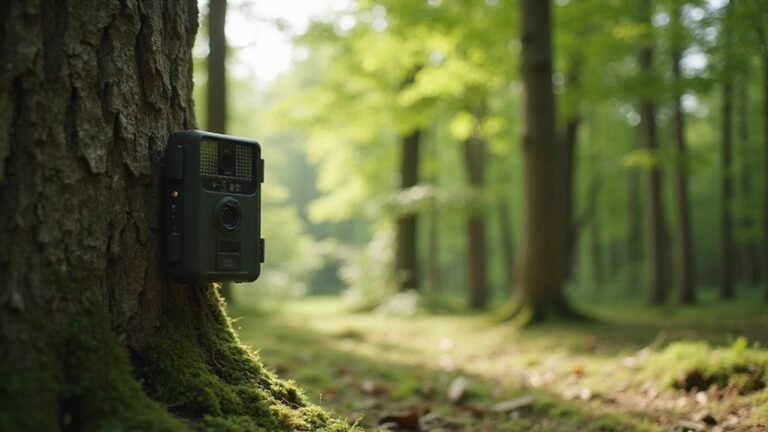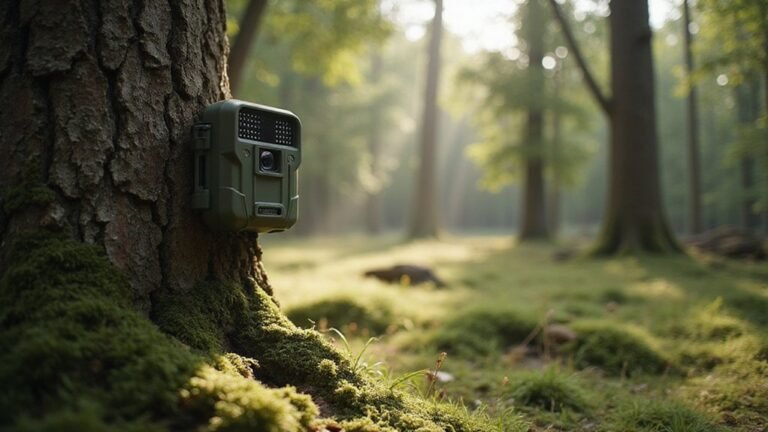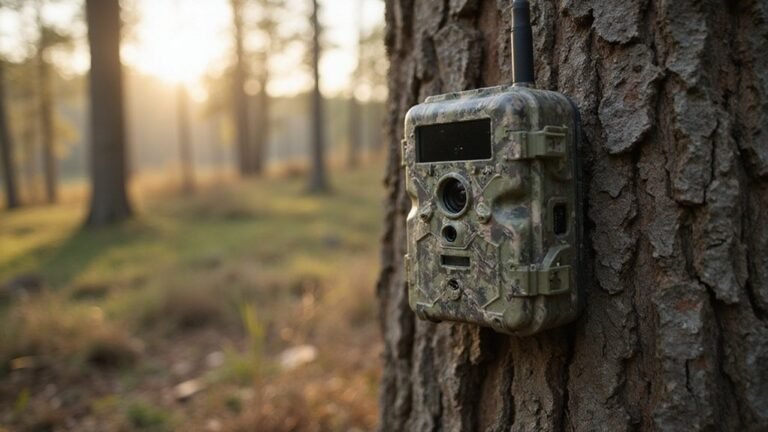
What Does PIR Mean on a Trail Camera?
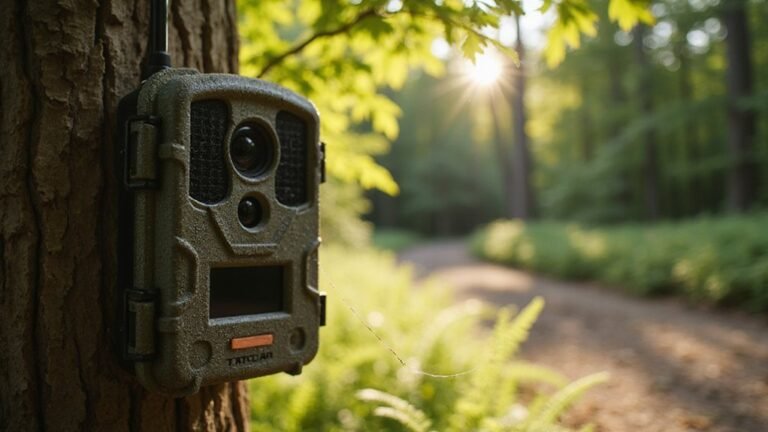
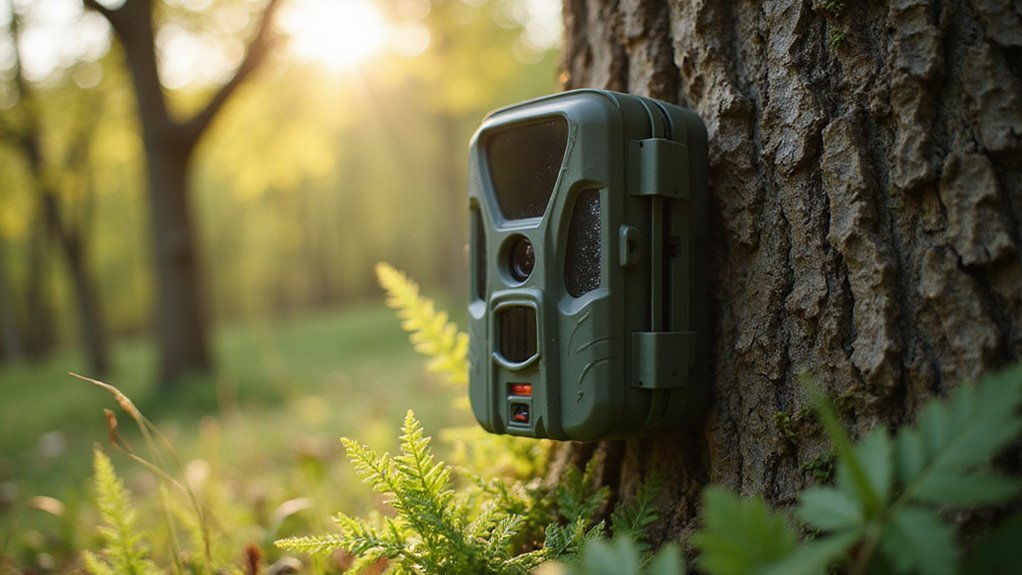
Ever wonder what PIR means on a trail camera and how it affects your wildlife photos? PIR stands for Passive Infrared, and it’s the heat-sensing technology that helps your camera detect animals.
Instead of just picking up movement, it senses the body heat of animals, reducing false triggers from wind or moving leaves.
Keep reading to learn how to optimize this feature for better shots.
What Does PIR Stand For and How Does It Work?
PIR stands for Passive Infrared sensor. It works by detecting heat emitted from objects, like humans or animals, in its field of view. The sensor remains in a low-power state, continuously monitoring for heat differentials. When a significant temperature change is detected—such as a person entering a room—the PIR activates the connected device, like a camera or light. Since it only responds to actual heat sources and remains dormant otherwise, it conserves energy by avoiding false triggers and unnecessary power use. This makes PIR sensors especially suitable for energy-efficient security systems and automation where minimizing power consumption is crucial. Additionally, most trail cameras use a Fresnel lens to expand the detection zone into multiple segments for wider coverage. Unlike thermal imaging, which detects heat signatures for night vision options, PIR sensors only detect motion from heat changes. For users comparing different types of night vision devices, understanding PIR technology helps clarify why it is not the same as advanced sensor arrays found in specialized military gear. PIR sensors can amplify faint signals using a built-in amplifier to reliably detect subtle heat changes.
Why Do Trail Cameras Use PIR Instead of Regular Motion Sensors?
Trail cameras use PIR sensors instead of regular motion sensors because PIR sensors detect heat signatures rather than just movement. This allows them to distinguish between actual animals or people and false triggers caused by moving leaves, branches, or weather conditions. PIR sensors only activate when they sense a warm-blooded creature crossing their path, significantly reducing unnecessary recordings. As a passive detection method, PIR sensors consume minimal energy, which helps conserve battery life, especially important in remote or long-term outdoor setups. In contrast, regular motion sensors often rely on active detection methods that can trigger falsely and drain batteries quickly, making PIR the more efficient choice for outdoor wildlife monitoring or security applications. Understanding how thermal scopes work reveals that PIR sensors similarly rely on heat detection technology to identify targets based on temperature differences rather than visible light. For a more comprehensive comparison of performance and cost, consider reviewing trail cameras vs. security cameras to understand which detection system best suits your needs. Building a protective housing for the sensor can further shield it from environmental interference while maintaining its heat-detection accuracy.
What Can PIR Actually Detect in the Field?
A PIR sensor detects objects based on their thermal signature, meaning it responds to movement that causes a change in heat patterns within its field of view. Larger animals like elk produce stronger thermal signals because they emit more heat, making them easier to detect. Conversely, smaller creatures such as raccoons or birds generate weaker signals that may be harder for the sensor to pick up. The sensor also responds when cooler objects move against a warmer background, especially under conditions of high thermal contrast, like on cool nights. It’s important to note that the PIR doesn’t react to motion or visible light alone; it specifically relies on the combined heat and movement signature to activate and record. For capturing clear footage in total darkness, pairing a PIR sensor with IR night vision cameras ensures reliable activation and quality image capture. Thermal cameras offer more precise detection by capturing detailed heat images rather than just sensing temperature changes.
How to Adjust PIR Sensitivity for Fewer False Triggers
To reduce false triggers from wind, vegetation, or busy backgrounds, start by lowering your PIR sensitivity to a middle, moderate setting—most cameras have low, medium, and high options. Begin with the medium setting as a baseline. Perform sensitivity testing in the exact spot where the camera will stay, ensuring consistent conditions.
For specific placements, the camera offers High or Low sensitivity options to optimize performance based on location, such as using High for distant subjects or Low for close-range scenes.
Review the first night’s captures for empty frames or missed animals. Adjust the sensitivity one step at a time, either up or down, to see how it affects detection and false alerts. Aim the camera away from swaying branches, tall grass, or busy roads to minimize wind or background movement triggers. This process of balancing detection range and false alarm rates is similar to calibrating thermal drone sensors to filter out environmental heat noise. For example, setting a detection threshold helps ignore minor background heat changes while still capturing warm-bodied targets.
If you notice a lot of blank images caused by wind or small animals, lower the sensitivity further. Conversely, if movement from distant or subtle predators isn’t triggering the camera, raise the setting slightly. After each adjustment, test again across both day and night to evaluate performance.
Keep in mind that higher sensitivity picks up more subtle movements at greater distances but also increases false alarms. Many modern PIR sensors use dual-element pyroelectric detectors that compare two zones to reduce these unwanted triggers. Using a middle-range setting helps balance detection accuracy with false trigger reduction, conserving battery life and storage by preventing unnecessary recordings.
How Does PIR Angle and Placement Affect What You Capture?
Your PIR angle and placement have a direct impact on what your camera captures. A wider PIR angle covers more ground, making it easier to center subjects in the frame. However, it can also trigger on empty space if the sensor’s detection zone extends beyond the camera’s lens view. Conversely, a narrower angle reduces unnecessary triggers but risks capturing only partial images, like a deer’s tail, when movement occurs at the edge of the detection zone. Mount the camera approximately 1 to 1.2 meters high with a slight 5 to 10-degree downward tilt. This positioning improves full-body captures and helps prevent missed shots of lower parts of animals. Position the camera at a 45-degree angle to the trail; this setup keeps animals within the detection zone longer and minimizes late triggers caused by animals approaching directly head-on. For low-light conditions, digital night vision can offer better image processing than analog alternatives. This is important because some night vision technologies, like red night vision goggles, have been banned due to their potential to disturb wildlife and compromise user safety. Choosing a model with superior low-light performance ensures clearer images even when the PIR angle is set to cover a wider area.
Why Do Deer and Birds Trigger PIR Better Than Snakes?
Deer and birds trigger PIR sensors more reliably than snakes because their bodies emit stronger thermal radiation signals. They are larger targets, with bodies that occupy more space within the sensor’s detection zone. A deer or bird’s size generates a more significant heat shift, creating a radiant energy change that’s easier for the PIR to detect quickly. Additionally, the thermal imaging technology used in modern trail cameras is engineered to prioritize these larger, more common heat sources, aligning with the sensor’s default sensitivity thresholds. This prioritization often results in a higher trigger success rate for warm-blooded animals compared to cold-blooded ones.
Snakes, on the other hand, are small, with a low-to-ground profile that produces a weaker thermal signal. Their narrow, elongated bodies emit less heat, which makes it harder for the sensor to pick up movement at normal sensitivity settings. While a snake’s movement is visible, the minimal heat emission often doesn’t produce enough radiant energy change to trip the PIR reliably. This limitation is similar to the performance trade-offs seen when comparing different thermal detection systems, where cost and sensitivity must be balanced.
This size and heat difference explain why your camera catches more deer and birds than serpents—the PIR sensor is naturally better suited for larger, warmer targets. For optimal nighttime detection, combining the PIR sensor with an infrared illuminator can boost the camera’s ability to capture clearer images of all wildlife, regardless of their heat signature.
7 Common PIR False Trigger Problems and How to Fix Placement
To prevent false triggers caused by environmental factors, proper placement of your trail camera’s PIR sensor is crucial. First, position your camera away from direct sunlight, reflective surfaces, and shifting shadows, as these can cause heat signatures that mimic animal movement. Second, avoid placing it near HVAC vents, heaters, or fans, since sudden airflow can generate heat fluctuations that trigger the sensor. Third, raise the camera height to minimize detection of small, moving heat sources like pets or insects, reducing unnecessary triggers. Fourth, keep the lens clean and ensure your mount is stable; dust and vibrations can cause false alarms. Fifth, lower the PIR sensor’s sensitivity setting to ignore minor temperature shifts that aren’t related to wildlife. Sixth, point your camera across animal trails rather than directly at heat sources to improve detection accuracy. If your camera supports DVR mode, it allows continuous recording rather than relying solely on PIR triggers, which can help capture missed activity. For optimal performance, consider positioning your camera to avoid thermal radiation from non-target objects such as rocks or tree trunks that heat up during the day. Finally, check for nearby electrical devices or machinery that may emit electromagnetic interference, which can also cause false triggers. Unlike PIR sensors that detect heat, night vision goggles amplify existing visible and near-infrared light to enhance images in low-light conditions. Implementing these placement strategies helps conserve battery and memory by filtering out non-pertinent triggers.