Does Vortex Make a Thermal Scope?
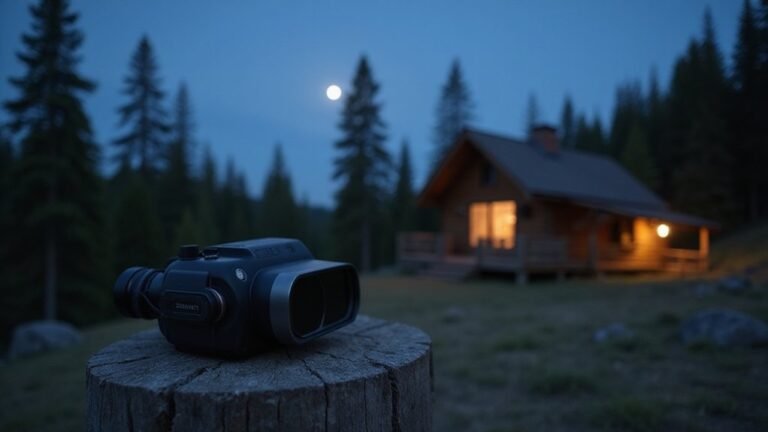
If you’re wondering whether Vortex makes a thermal scope you can mount on your rifle, the answer is no. They do offer a handheld monocular called the Vortex Veil 400, designed for detection rather than aiming.
If a mountable thermal scope is what you need, you’ll have to look elsewhere or wait for Vortex’s next release.
The full story is right below.
Yes, But It’s a Vortex Thermal Monocular, Not a Scope
The Vortex Veil 400 Thermal Monocular is a handheld device designed for thermal observation rather than weapon mounting. It features a 400×300 sensor with a 12 micrometer pixel pitch, which provides clear thermal images even at extended ranges. The device displays images on a 1024×768 OLED screen, allowing for detailed target detection and identification. The unit is fully sealed to be waterproof, fog proof, dust proof, and shockproof for use in harsh conditions. While a Stealth Cam Fusion X may require a different reset process for its trail camera functions, this thermal monocular operates independently without such setup needs.
With a maximum detection distance of approximately 1,100 yards, it is suitable for spotting heat signatures across vast distances. The monocular offers four different color palettes and three viewing modes, enabling you to adapt to various environmental conditions. Digital zoom options include 1x, 2x, and 4x, giving flexibility to focus on distant objects without sacrificing image quality. Unlike many options that require you to choose, this device is strictly for observation, making it a dedicated tool rather than a thermal scope for mounting. Building a custom unit from scratch often requires sourcing specific parts like lenses and sensors, but this device skips that complexity entirely.
Operating at a 50 Hz refresh rate, the Veil 400 delivers smooth thermal imagery, essential for quick scanning and accurate target spotting. It is a compact, rugged piece of equipment designed specifically for detection and observation rather than aiming or shooting, and it is not classified as a scope by any official standards.
Vortex Veil 400 Specs: Price, Resolution, and Range
The Vortex Veil 400 costs $1,499.99 on the street, despite a manufacturer’s suggested retail price of $2,299.99. This discount includes two rechargeable 18650 batteries, a charger, cables, a hard case, and a lifetime warranty. Its 400×300 thermal sensor delivers clear images, while the 1024×768 OLED display ensures a sharp view out to 1,100 yards. The device is built for rugged durability with a VIP warranty, making it suitable for tough conditions. Each battery provides about 4.5 hours of use, so swapping batteries in the field is straightforward. The included utility clip enhances hands-free convenience for predator control and livestock monitoring. At just 13.3 ounces, it combines portability with powerful performance, ideal for spot and track work. Unlike visible light, thermal scopes detect heat signatures to create an image, allowing the user to see animals in complete darkness or through thick brush. For those looking to save, price comparison shopping across retailers can reveal significant discounts from the MSRP. Unlike standard night vision that amplifies ambient light, this thermal scope relies entirely on infrared heat detection to function in zero-light conditions.

High-resolution 400x300 thermal sensor for exceptional clarity and long-range detection.

Fast Targeting. Wide Field of View: The RattlerV2 19-256 offers a 2.5x base magnification and a wider field of view — ideal for close- to mid-range scanning and fast-moving targets. Whether you’re hunting hogs in thick brush or predators on the move, this thermal scope keeps your target in sight and your response time sharp.

Customize the display to your personal preferences using one of the 6 color palettes options
Why You’d Want a Thermal Monocular Over a Rifle Scope
A thermal monocular is your first-step tool for detection, making it a smart choice over a rifle-mounted thermal scope. You can scan rapidly over terrain and identify heat signatures before even raising your rifle, allowing you to confirm targets safely. This approach reduces the risk of pointing your weapon at something that isn’t a confirmed threat. The device’s ergonomic design fits comfortably in one hand, leaving your other hand free to navigate brush or handle gear. It’s also lighter and more compact than a scope, which minimizes fatigue during long hunts. Plus, since it doesn’t require frequent zeroing like a rifle scope, it’s ideal for quick scouting missions. Building your own thermal monocular requires basic electronic tools and a few off-the-shelf components. Use the monocular to assess targets before firing, preserving the safety and efficiency of your workflow. To get the best results, you should adjust the focus ring until the image is crisp, matching the distance of your target. Thermal imaging enables instantaneous target acquisition, saving you critical time while scanning expansive fields or dense cover before you commit to a shot. Familiarizing yourself with essential tips and tools for mastering thermal scope sighting can further improve your accuracy when transitioning to a rifle-mounted unit.

【256x192 RESOLUTION】- Features with a 12μm sensor with an impressive NETD<25mK and a high refresh of 50Hz, enabling you to detect subtle temperature differences in various weather.

[High-Resolution Thermal Imaging]:The i4SEE EM10-256 Thermal Imaging Monocular features a 256×192 uncooled VOx infrared detector and a 10mm F1.0 lens, delivering a detection range of up to 500 meters (550 yards). With a NETD of 30mK and a 50Hz frame rate, it provides crisp, real-time thermal imaging for night vision, hunting, and outdoor adventures. Whether you're tracking game or navigating in complete darkness, this thermal monocular ensures superior performance and reliability.

【Advanced Thermal Sensing】: The GOYOJO Thermal Imaging Monocular features a state-of-the-art 256x192 thermal imaging camera sensor paired with a 12μm infrared detector. Unlike traditional night vision devices, it ensures swift and precise thermal detection, providing enhanced visibility in various lighting conditions.
How Well Does the Veil 400 See at Night?
The Veil 400 can reliably identify animals inside 250 yards during nighttime hunting. While it doesn’t excel at long-range positive identification, it performs well for typical hunting distances in low-light conditions. Its optical clarity, provided by a 12µm sensor, helps you distinguish animals from brush more easily than entry-level thermal scopes. The 400 x 300 detector combined with a 50 Hz refresh rate ensures smooth scanning and sharp images even when panning across open terrain. Power efficiency is also a focus, allowing you to hunt longer without concern for battery life. Detection range extends to approximately 1,100 yards, but detailed identifications are best kept within the 250-yard range for accurate recognition of game and predators. Unlike standard night vision, thermal goggles detect heat signatures in complete darkness, making them ideal for nocturnal hunting. For users who also manage trail cameras, understanding DVR mode on Stealth Cam can help integrate recording strategies for scouting and monitoring. When building a security box for your trail camera, you can protect it from theft and weather damage while maintaining a discreet setup.
Key Trade-Offs: Monocular Portability vs. Scope Hands-Free Use
A thermal monocular like the Vortex Veil 400 offers exceptional portability at just 13.3 ounces and measures 4.9 inches long. This compact size makes it easy to carry and quick to deploy, ideal for rapid scans and movement between observation points. Its lightweight, one-hand operation provides good ergonomic comfort, especially when you need to stay mobile in the field. The Veil 400 is designed for rugged use with a focus on ergonomic controls for single-thumb operation, ensuring reliable performance in demanding outdoor conditions. That said, the optical components and sensors that enable this performance are a major factor in why unit costs remain high regardless of form factor. For those prioritizing a direct view over a display screen, the best night vision cameras often prioritize sensor resolution and battery life over form factor. Many of these top devices similarly integrate high-quality sensors to ensure clear imagery in low light.
However, this portability comes with a trade-off. The Veil 400 cannot be mounted to a rifle, which means you cannot keep your hands free while aiming or shooting. You’ll need a separate device or method to transition from scanning to firing, adding extra steps to your process. A traditional thermal riflescope, on the other hand, mounts directly to your firearm, aligning optics seamlessly. It offers steady, continuous viewing without needing to adjust your grip or position, making it far more effective for sustained glassing from a supported stance. The choice ultimately hinges on whether mobility or stability is your priority during your activity.

TURN YOUR DAY SCOPE INTO A THERMAL OPTIC IN SECONDS — Clip-on design mounts in front of your existing scope without affecting zero, magnification, or reticle. Keep the optic you trust and add thermal only when you need it.

Laser Precision Meets Ballistic Intelligence: With a powerful built-in laser rangefinder measuring distances from 5 to 1200 yards, the HOUND provides fast, reliable readings for confident long-range shots. Its ballistic calculator instantly generates pinpoint aiming solutions by combining real-time laser data with your custom ballistic profile, turning every shot into a more precise hit.

Advanced Thermal Sensor: Equipped with 256x192 resolution, 15mm Lens and 12μm high sensitivity detector to deliver sharp thermal imaging. Its 50Hz refresh rate ensures smooth, real-time tracking for fast-moving targets
How the Veil 400 Compares to the Pulsar Axion and FLIR Scout
The Veil 400 outperforms the Pulsar Axion in resolution with its 400×300 sensor, providing a slight edge over the Axion 2 XQ35 Pro’s 384×288 sensor. This higher resolution results in sharper, more detailed thermal images, making it easier to identify objects at a distance. The Veil 400 also boasts a 50 Hz refresh rate, ensuring smooth viewing that’s ideal for tracking moving targets. While the Pulsar offers longer battery life and a more integrated app experience, it is priced $500–$900 higher than the Veil 400. Against the FLIR Scout, the Veil 400’s 1,100-yard detection range and 12 μm pixel pitch deliver better open-field imaging detail, giving you a significant advantage in wildlife or area scanning. Plus, it includes Vortex’s lifetime VIP warranty, offering peace of mind that’s rare in hunting gear. Overall, if you prioritize resolution, range, and long-term support at a more accessible price point, the Veil 400 is a compelling choice. For those weighing durability in the field, the Veil 400’s housing aligns with industry-standard thermal ratings found in top-reviewed models, ensuring consistent performance in harsh conditions. For enthusiasts seeking to expand their capabilities, building your own thermal drone can integrate a sensor module like the Veil 400’s for custom aerial surveillance. Understanding night vision camera technology helps buyers evaluate how thermal sensors differ from traditional image intensifiers for low-light use.

[HIGH SENSITIVITY DETECTOR]- 256x192 Thermal sensor, 25mm detective lens, 3.5x basic magnification and a 7.0° horizontal field of view allow targets as far as 1422 yards away to be viewed clearly.

1. Dual-Use Design – Handheld & Rifle Mounted This thermal imaging monocular features a versatile dual-use design. It can be used as a handheld thermal night vision viewer or quickly mounted on a rifle via a Picatinny/Weaver rail, meeting different outdoor observation needs.

Ultra Sensitive Thermal Sensor: cutting-edge thermal scope the ThOR LTV delivers an ultra clear visual with its 12 micron sensor and 60Hz refresh rate, providing a distortion free image
Where to Buy the Vortex Veil 400 at the Best Price
OpticsPlanet offers the Vortex Veil 400 at the best price currently available, priced at $1,419.99. This represents a significant 38% discount from the original $2,299.99 MSRP. Similar deals can be found at SportOptics or GOHUNT for about $1,499.99, but these options often have limited stock—Presleys Outdoors has only three units left. Vortex’s reputation, built on proven models like the Razor line, indicates the Veil 400 maintains strong value, and the “UNLIMITED” warranty adds extra confidence. For buyers comparing options, top night vision scopes often provide similar performance benchmarks in low-light conditions. To protect your purchase, always buy from an authorized dealer. Checking OpticsPlanet first ensures you get the lowest price, then compare with SportOptics or GOHUNT before stock runs out. With nearly 40% off retail, you’re accessing genuine thermal performance at a competitive price. For efficiently transferring footage from the field, using a reliable SD card reader ensures your game camera files are saved without corruption.

The Veil 400 delivers sharp thermal imaging for night hunts with 400×300 resolution, a 12µm pixel pitch, and a 50 Hz refresh rate. With 32 GB of built-in memory and a quick-press button for photo/video capture, you can save, relive, and share your hunts.

The Crossfire HD 4-12x44 Second Focal Plane riflescope has an HD Optical System that uses select glass elements to deliver sharp resolution, reduces chromatic aberration, and provides excellent color fidelity with edge-to-edge clarity.
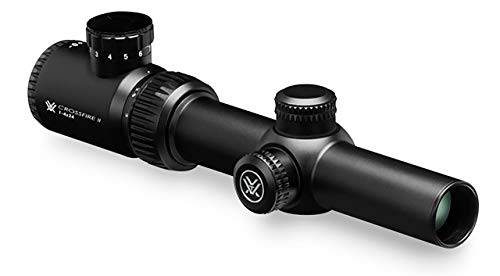
The 1-4x24 Crossfire II riflescope is one of many configurations in the Crossfire II line. The V-Brite reticle uses the V-Plex format with an illuminated the center dot.
What’s Next for Vortex’s Thermal Product Line?
Vortex’s thermal product line is poised for expansion beyond the current Veil 400 monocular. While still in its early stages, you can expect the company to introduce dedicated thermal rifle scopes and clip-on systems tailored for hunting. Vortex intends to refine its thermal technology, focusing on enhancing sensor resolution and extending detection ranges for better field performance. Although no official roadmap details a thermal riflescope yet, their emphasis on rugged, simple optics suggests a full lineup is likely. These future products will aim to bridge observation and aiming functions, utilizing existing expertise to deliver versatile, hunting-focused thermal tools. Look out for compact, reliable additions designed to improve night-hunting capabilities without heavy tactical branding.