Can You Use a Tactacam Reveal Without Cellular Service?
If you’re wondering whether you can use a Tactacam Reveal without cellular service, the short answer is yes—kind of.
You can capture photos locally on an SD card without any connection, but you won’t get remote features like live view or alerts.
Setting it up and activating it, however, requires a data plan.
Keep reading to see what you might be missing and how to make it work best for you.
Can a Tactacam Reveal Take Photos Without Cellular Service?
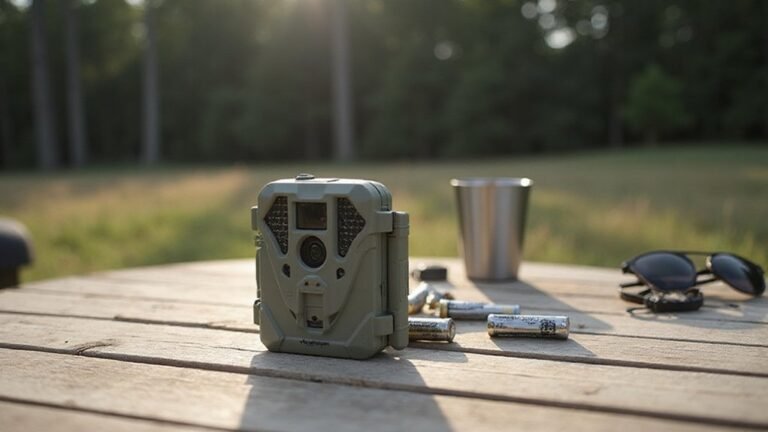
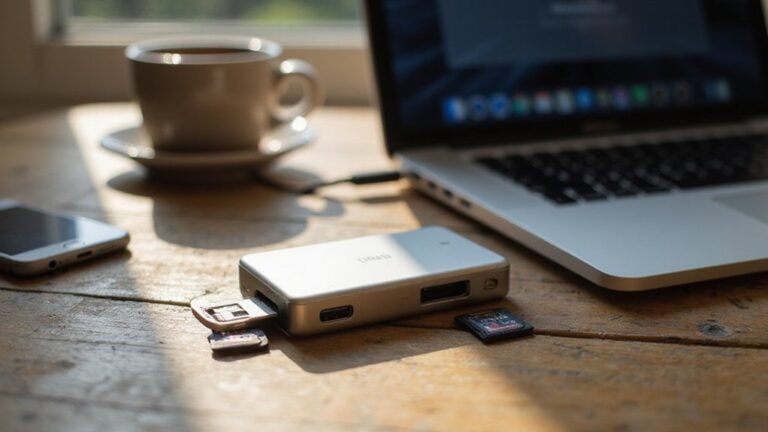
Yes, you can take photos with a Tactacam Reveal even without cellular service. When there is no service, the camera operates like a standard trail camera, triggering on motion and saving images directly to the SD card. You do not need an active plan for this core capturing function; the subscription controls only the ability to transmit images remotely. The camera records every photo locally, so you can check the SD card later by removing it and viewing the images on your computer. To ensure reliable storage, use a properly formatted Class 10 U3 SD card. Without the correct card, some photos might not save properly. This setup helps conserve battery life by avoiding constant searching for signals. Multiple users report that these models work perfectly without a cellular plan, as long as you manage the SD card yourself. Local photo capture remains fully functional regardless of service status. This is similar to how PVS-14 devices function without cellular connectivity. For low-light conditions, a separate illuminator can enhance the camera’s ability to capture clear images at night. Unlike cellular models, this offline mode also avoids the data plan costs that typically come with remote viewing features.
Which Tactacam Reveal Features Stop Working Without Cellular?
Without cellular connectivity, several key features of the Tactacam Reveal cease to function. You cannot access app-based image delivery, meaning photos stored on the SD card are only viewable by physically retrieving the device. Live View streaming is unavailable, preventing real-time in-field viewing. Notifications and remote updates disappear, so you only know a photo has been taken when you manually check the SD card. GPS tracking for locating the camera is disabled, and remote management features are lost. Motion alerts triggered by camera movement will not reach you, and battery optimization features that depend on network feedback become inactive. For a fully offline build, you can construct a security box to protect a non-cellular camera using basic tools and parts. Essentially, without cellular service, your Reveal functions as a traditional trail camera, requiring manual inspection instead of offering a connected, smart scouting experience. Traditional trail cameras do not need Wi-Fi to capture and store photos, operating solely on battery power and an SD card. For a fully offline build, you might consider using IR illuminators and basic sensors to construct your own non-cellular camera.
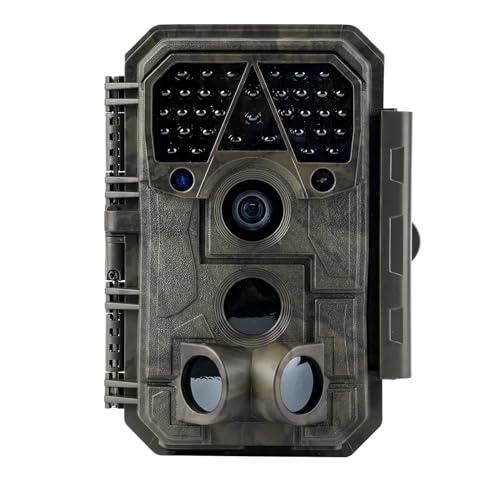
Crystal-Clear 64MP Photos & 1296p HD Video – Stunning detail day or night, thanks to advanced image tech and a high-performance f/1.6 aperture lens.
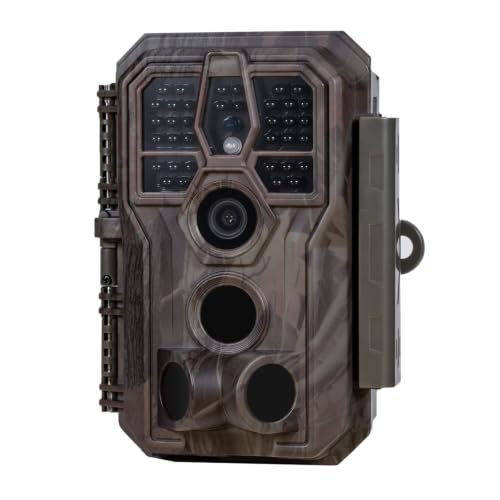
64MP Photos & 1296P HD Videos: Equipped with a high-quality optical lens and advanced image sensor, the E5S captures ultra-sharp 64MP photos and smooth 1296P HD videos.
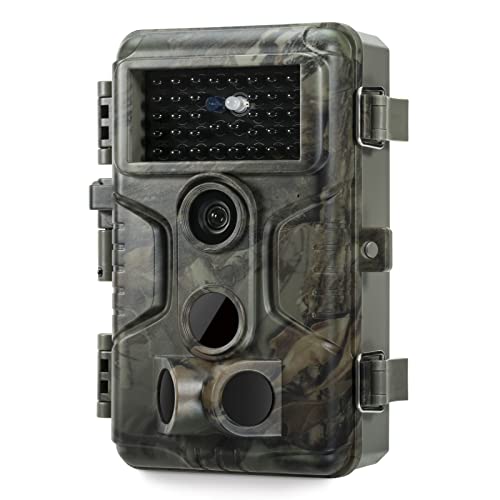
Advanced Sensor for Superior Low-Light Performance: Equipped with a Sony Starvis Sensor, this trail camera captures high-resolution images and videos even in low-light conditions, with night vision up to 100 feet.
How No-Coverage Mode Affects Battery Life and Local Storage
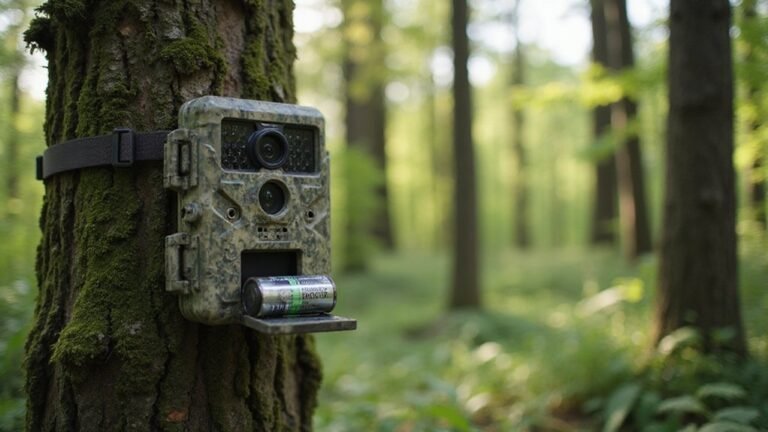
When your Tactacam Reveal operates in no-coverage mode, it switches to SD card mode and significantly reduces power consumption by skipping cellular transmission. Without LTE uploading, you avoid the energy drain associated with cellular data transfer, allowing the camera to focus solely on capturing and storing images locally on the SD card. Field tests show that in this mode, the camera can last up to 142 days on a single charge, compared to just 22 days with active cellular uploads. Even a moderate no-cell scenario extends battery life to approximately 78 days. This is thanks to intelligent power management that prioritizes conserving energy when cellular service is unavailable or disabled. For those interested in extended field monitoring, similar power optimization principles are used when you build your own thermal drone with efficient components. The setup guide from Tactacam details how to disable cellular uploads in the app to activate this low-power state. Additionally, thermal clip-ons use comparable power-saving techniques to maximize runtime during long observation sessions.
Captures are saved directly to the SD card, meaning you need to retrieve them manually later. Keep in mind that cold weather can reduce overall battery life by over 20%. Additionally, frequent triggering or motion detection events will decrease runtime regardless of whether the camera is using cellular service or not.

Compatible with Nintendo-Switch (NOT Nintendo-Switch 2)

Nintendo Switch 2 uses a new standard of expandable memory card called microSD Express (sold separately). This kind of memory card is needed for faster access speeds and to ensure games will run smoothly.

225MB/s max read speed expedites transfers, and reduces wait times
Is a Tactacam Reveal Worth It for a Property With No Cell Service?
A Tactacam Reveal is generally not worth it on a property with no cell service. The camera relies on cellular coverage to transmit images, so without a signal, it can only capture photos locally on its SD card. You won’t get remote monitoring or instant updates, making it essentially a standard trail camera at a higher price. If your goal is to check images without physically visiting the camera, the Reveal offers no advantage in no-signal areas. The cellular hardware investment then becomes unnecessary and wasteful. If coverage might improve later or you are okay with visiting the camera to retrieve images, it could still work, but for strict no-service locations, a non-cellular trail camera provides better value and simplicity. The camera is designed to function on AT&T and Verizon networks, requiring a paid plan with no free cellular option available. For comparison, a thermal monocular works independently of any network to detect heat signatures in the field. If you enjoy technical drawing, following a guide to drawing night vision goggles can help you sketch the device’s housing and lenses more accurately. A similar setup process to connecting AGM thermal devices to a phone involves using a dedicated app for local file transfer, though this still requires physical proximity to the camera.

New version trail cam: Clear Day & Night Imaging Capture sharp 64MP photos (adjustable: 5/16/36/48/56/64MP) and smooth 4K HD videos (3840x2160P /2560x1440P). The high-quality optical lens ensures crisp daytime images and night vision performance, making it ideal for wildlife observation, deer scouting, and property surveillance.

Fast trigger speed: The WOSODA trail cameras will be triggered instantly in 0.3s without delay, once detecting the movement, you will never miss any exciting moments even at night, and the trigger distance is up to 60ft.((Not included SD card,supports up to 256GB)

LET SPYPOINT SCOUT FOR YOU – Get the intel you need to pattern wildlife and increase your chances of success with quality captures saved on your trail camera’s SD card. The FORCE-4K is perfect for use as a game camera or hunting camera, making it an ideal trail cam for hunting or wildlife tracking.
Can You Activate a Tactacam Reveal Without a Cellular Plan?
You cannot activate a Tactacam Reveal without a cellular plan. During setup, the REVEAL app requires you to select a data plan; skipping this step isn’t possible. You can turn the camera on, but you must scan its QR code and follow prompts to add a carrier like AT&T or Verizon. Without choosing a plan, the camera remains unregistered and non-operational. The app forces you to scan the QR code located inside the door before any plan selection, so the setup process is strictly guided. This lack of offline functionality differs from top thermal cameras that can operate independently without a network subscription. Unlike those devices, the Tactacam lacks a standalone recording mode that would allow basic local storage without any network tie-in. This design choice highlights a key difference in the cellular vs. non-cellular trail camera debate, where non-cellular models offer full functionality without any ongoing subscription.
Without an active data plan, you lose all remote features, including image transmission, on-demand capture, and app access to your photos. Even if you manually select a carrier during setup without Wi-Fi, the camera still needs that plan to function. A battery charge alone won’t enable sending photos or alerts. Until you select a data plan, the camera essentially becomes a powered-on block with no practical use, and registration may take up to one minute only after you’ve committed to a carrier.

【 4G LTE Connectivity – No WiFi Needed】This SEHMUA 4G cellular trail camera comes with a pre-installed SIM that works with Verizon, AT&T, and T-Mobile – strong, reliable signal in remote areas like mountains, woodlands, and open fields. No hubs, no routers, no WiFi – just power on and it connects. Wherever you have cell signal, you can view live footage and receive instant alerts. Includes a 7-day unlimited data trial; after that, each game camera requires its own plan ($19.90/mo or $169.90/yr)

LIVE 2K VIDEO OVER 4G — NO WI-FI, NO HOTSPOT, NO LIMITS: Stream crisp 2K HD video straight to your phone via the 4G cellular network — perfect for deep-woods hunting leases, remote ranches, off-grid cabins, or job sites where Wi-Fi simply can't reach. Watch deer, wildlife, livestock, or trespassers in real time from miles away. Note: a low-cost cellular data subscription is required to activate the live-stream feature, similar to other connected trail cameras on the market.

【Pinpoint Detail & Built for Observing Wildlife!】 Capture evidence-grade images, stunning 48MP HD resolution photos and 2k videos. Clearly view deer, wild boar, and other animals as they pass by, day or night. The trail cameras with night vision motion activated waterproof built to endure harsh outdoor conditions. And it's the ideal companion for wildlife observers, equipped with a 940nm no-glow infrared LED that does not disturb animals at night
When Should You Choose a Non-Cellular Trail Camera Instead?
If reliable cellular coverage isn’t available where you plan to set up your camera, a non-cellular trail camera is the way to go. Don’t rely solely on coverage maps; test the signal strength at the exact location beforehand. If there’s no signal, a cellular model won’t offer its main advantage of remote access. Instead, you’ll depend on local SD card storage, which works perfectly without any connection. Understanding what drives the price of traditional night vision binoculars can help you decide if investing in a non-cellular camera is a better long-term value for your specific needs. For mounting your camera, you might also consider a sturdy T-post mount to ensure it stays securely in place.
Choose a non-cellular camera if your budget is limited, as it avoids ongoing data plan expenses. These cameras provide basic local recording without requiring remote access or a subscription. They are typically more durable and less conspicuous, making them less tempting to thieves, especially in remote areas. Such models are ideal for long-term observation when checking images physically after retrieval meets your needs. If instant alerts or remote monitoring aren’t necessary, a traditional trail camera offers a simple and reliable solution. For extended field use, consider a model with an integrated solar panel battery to eliminate frequent battery changes.

This Bundle Includes: 2 x Stealth Cam Browtine 16MP, 1 x High Speed Card Reader, and 2 x 32GB SDHC UHS-I Memory Card.
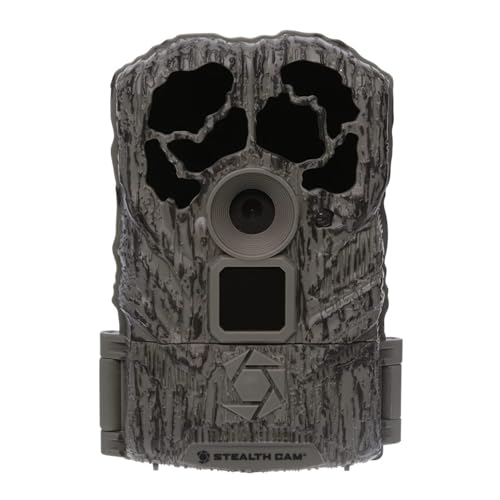
The durable Browtine 16MP trail camera features an 60ft infra-red detection range and burst mode to capture detailed information about your target area.

64MP Photos & 1296P HD Videos: Equipped with a high-quality optical lens and advanced image sensor, the E5S captures ultra-sharp 64MP photos and smooth 1296P HD videos.